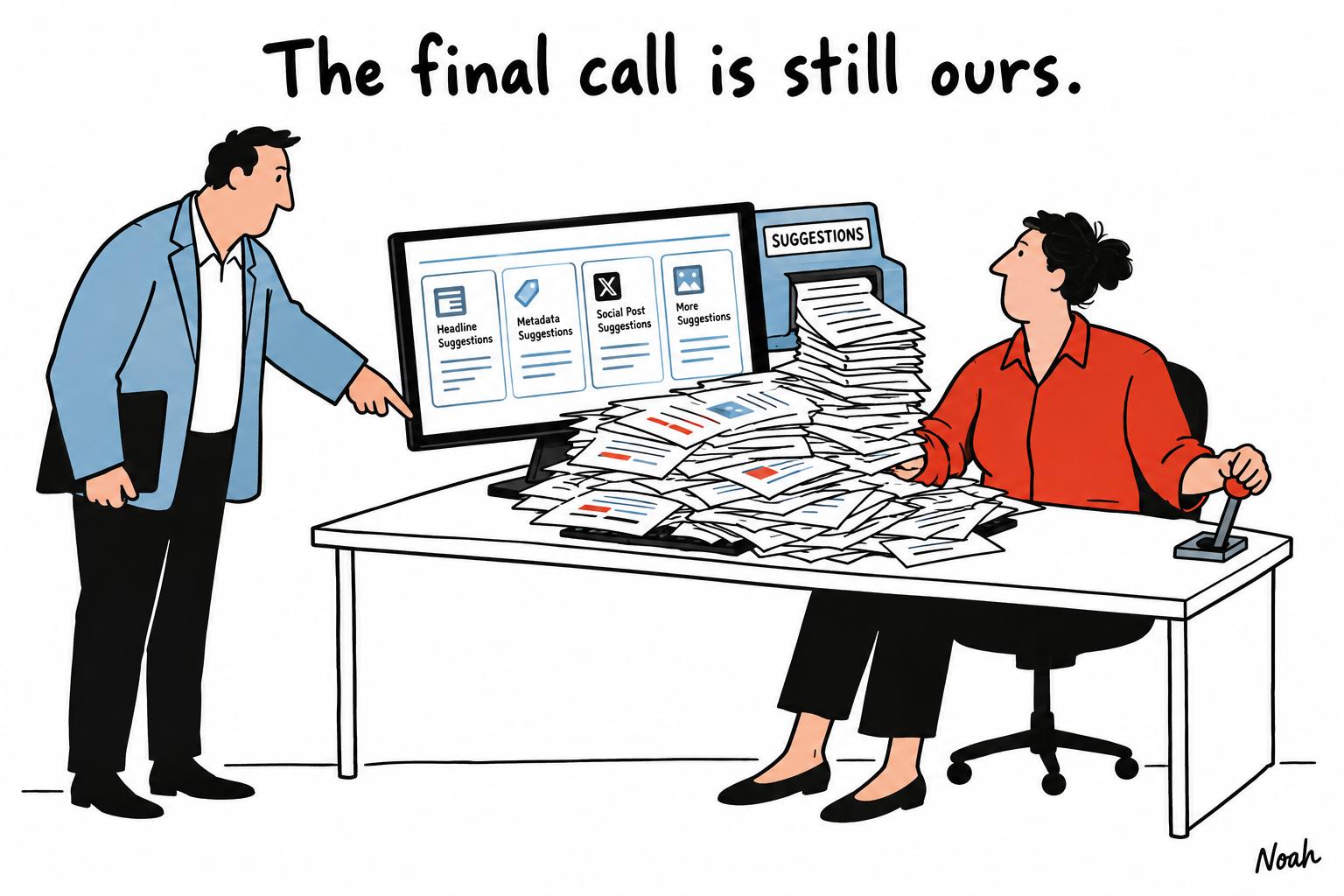
One publisher is using Qubika’s AI to suggest headlines and tags
Editors still approve every suggestion. Qubika has also tested a tool for writing social posts, but its case study gives no figure for how much editing time the publisher saves.

345 stories · newest first

The pilot covers five mastheads. Nine has yet to say whether a client can store and index the reporting its AI assistant retrieves.

The publisher also pledges to keep its books out of training deals. At fellow independent press Candlemark & Gleam, authors must certify how they wrote their manuscripts.

The tool shares excerpts across his blogs. In one image caption for screen readers, Sinclair changed “code” to “blurred content” because the image did not establish what was on the screen.

The Florida newspaper says it has not used AI to write stories, but any future use must be checked by a journalist and disclosed to readers.

iMore’s plans for AI-assisted drafting put the focus on the work before publication. A useful result will show what editors still need to check and where the reporting came from.

A Lagos workshop covered AI prompts and practical newsroom tasks, while stressing that journalists remain responsible for checking information before publication.

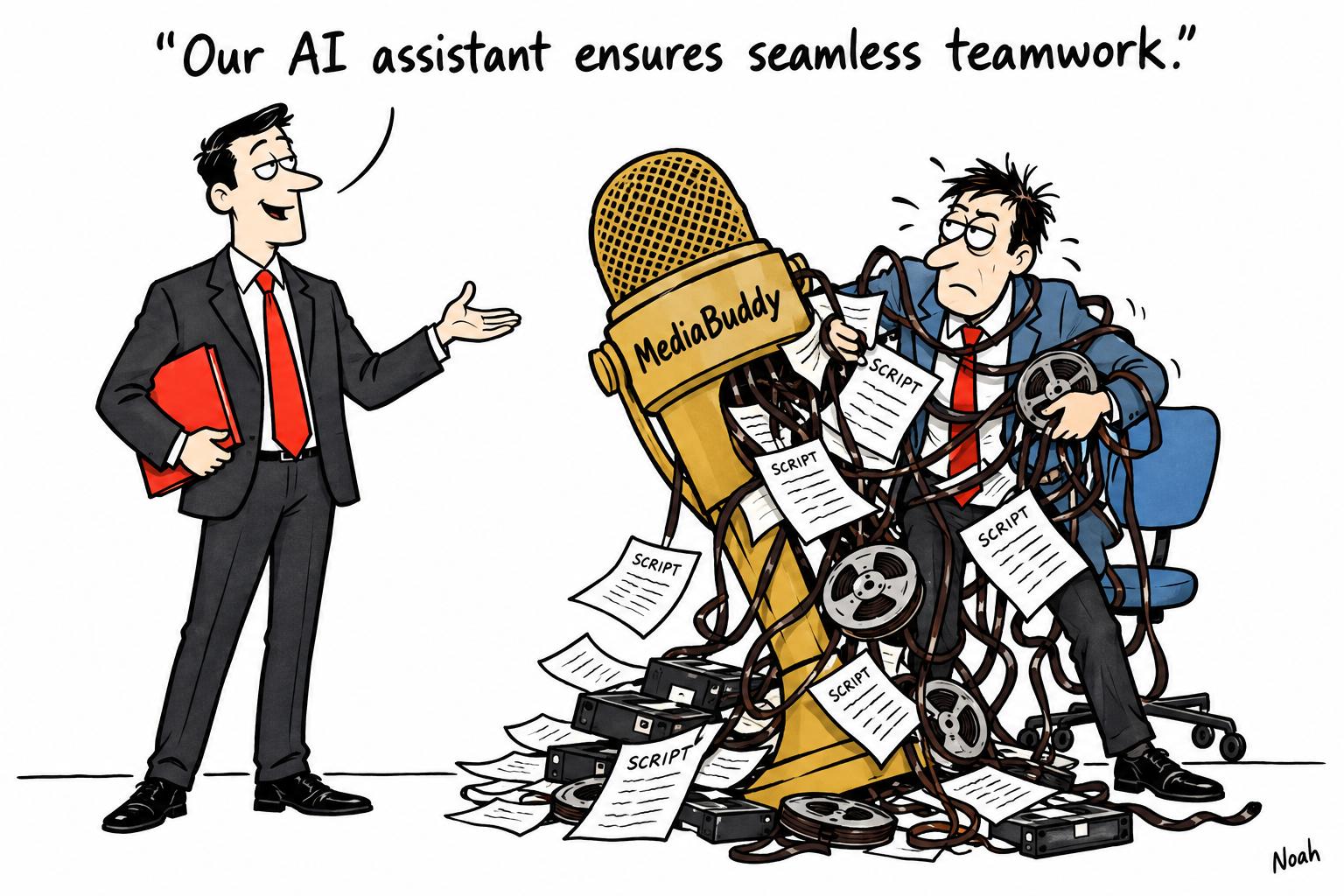
At the 2026 APEC Leaders’ Meeting, MediaBuddy links AI tools to authorised media archives and production workflows, capabilities that general-purpose services do not necessarily provide.

The paper's big weekend read asked whether we will soon cure cancer. An AI-assisted check found three slips that would have made headlines had a machine committed them, and a better story sitting in the public record.

Founder Thorsten Meyer says the workspace records which application changes a draft. At the time of his rollout report, his newsroom’s agents were still waiting for access keys.

The platform combines optional AI-assisted template preparation with automated production of data-linked print and digital documents, images and editable InDesign files.

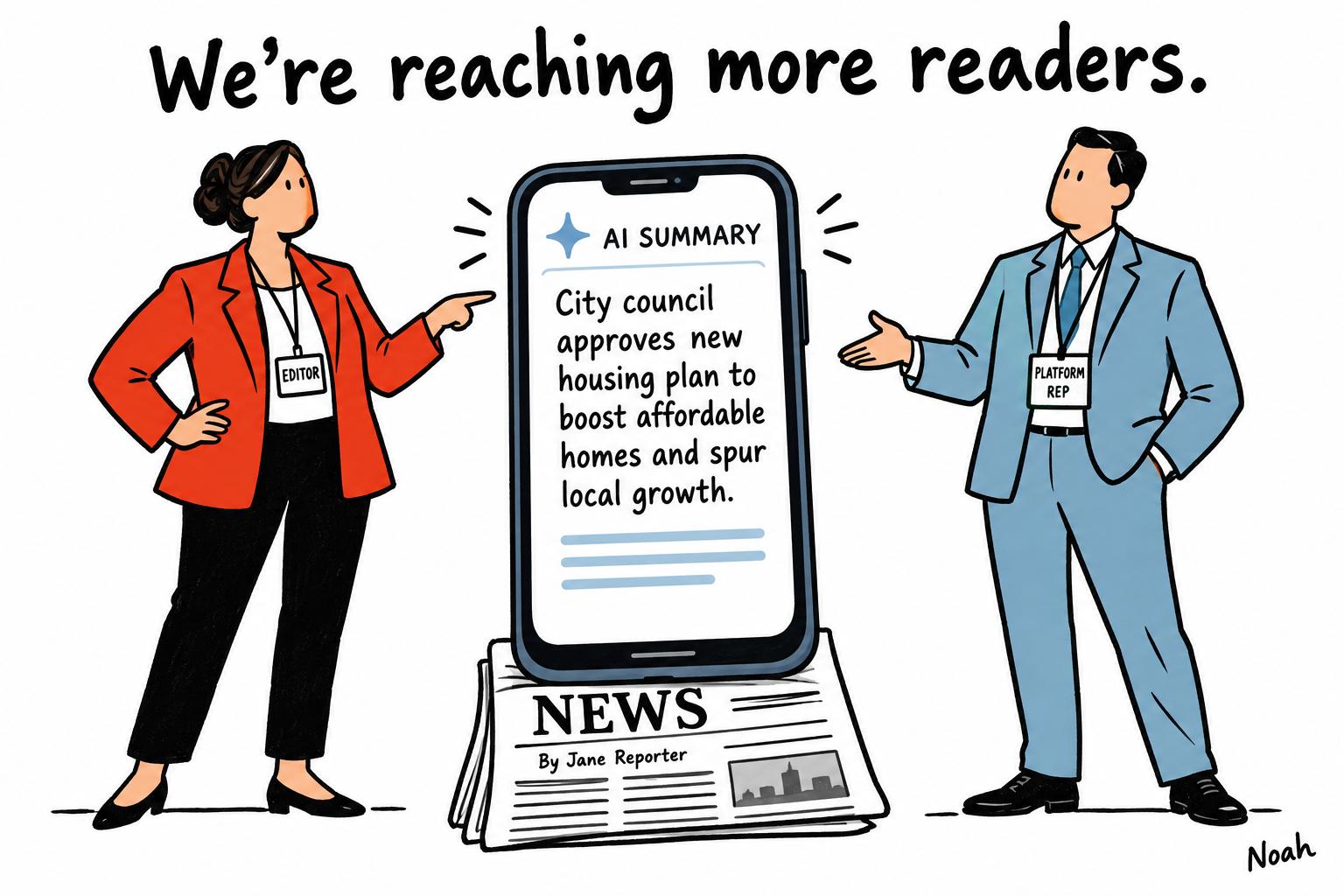
The publisher is partnering with Google and using AI-assisted translation to reach new audiences, while warning that platform summaries could obscure who produced the journalism.

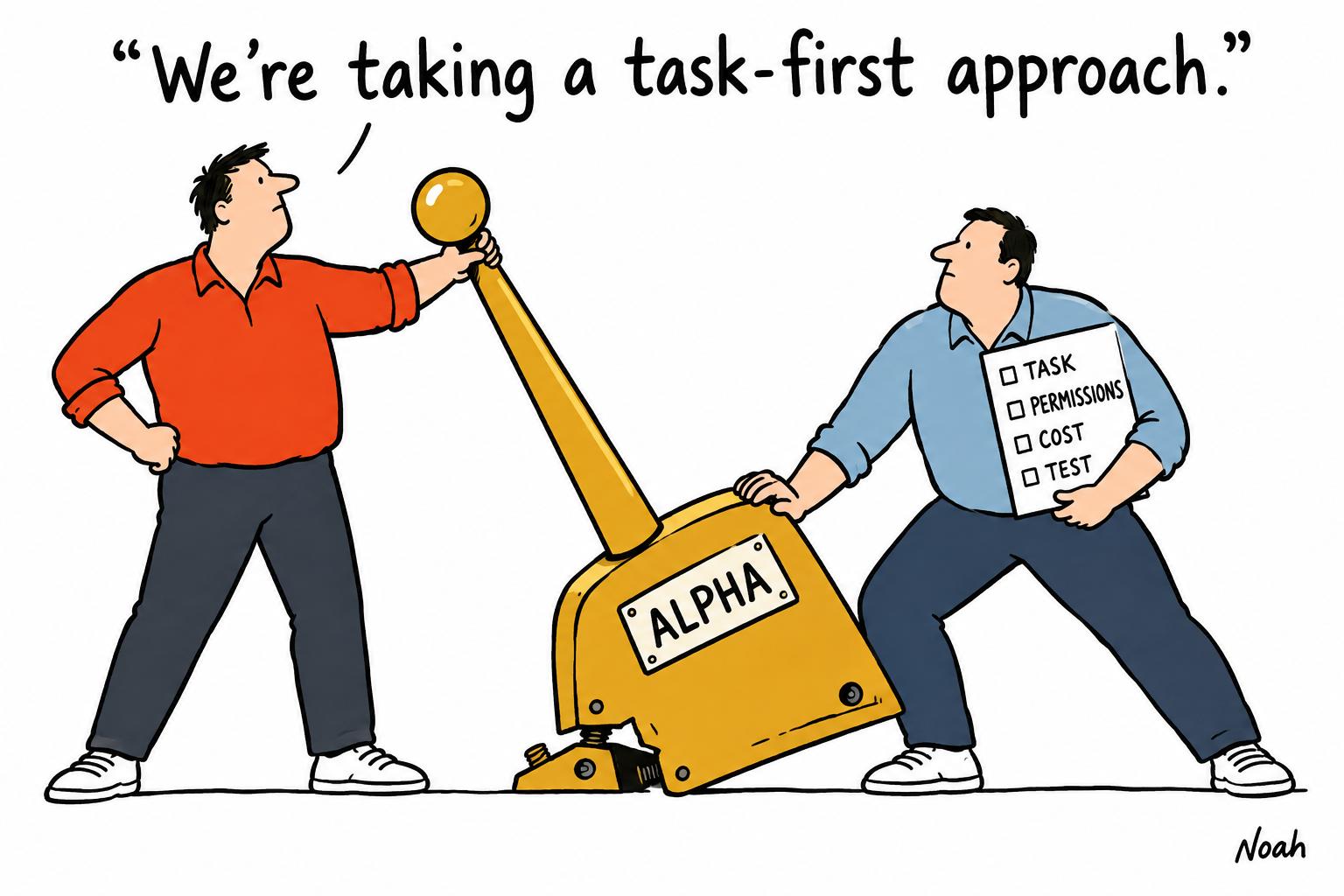
From editorial suggestions to semantic search and external agents, Drupal teams need to weigh release maturity, permissions, costs and testing before choosing how much automation to deploy.

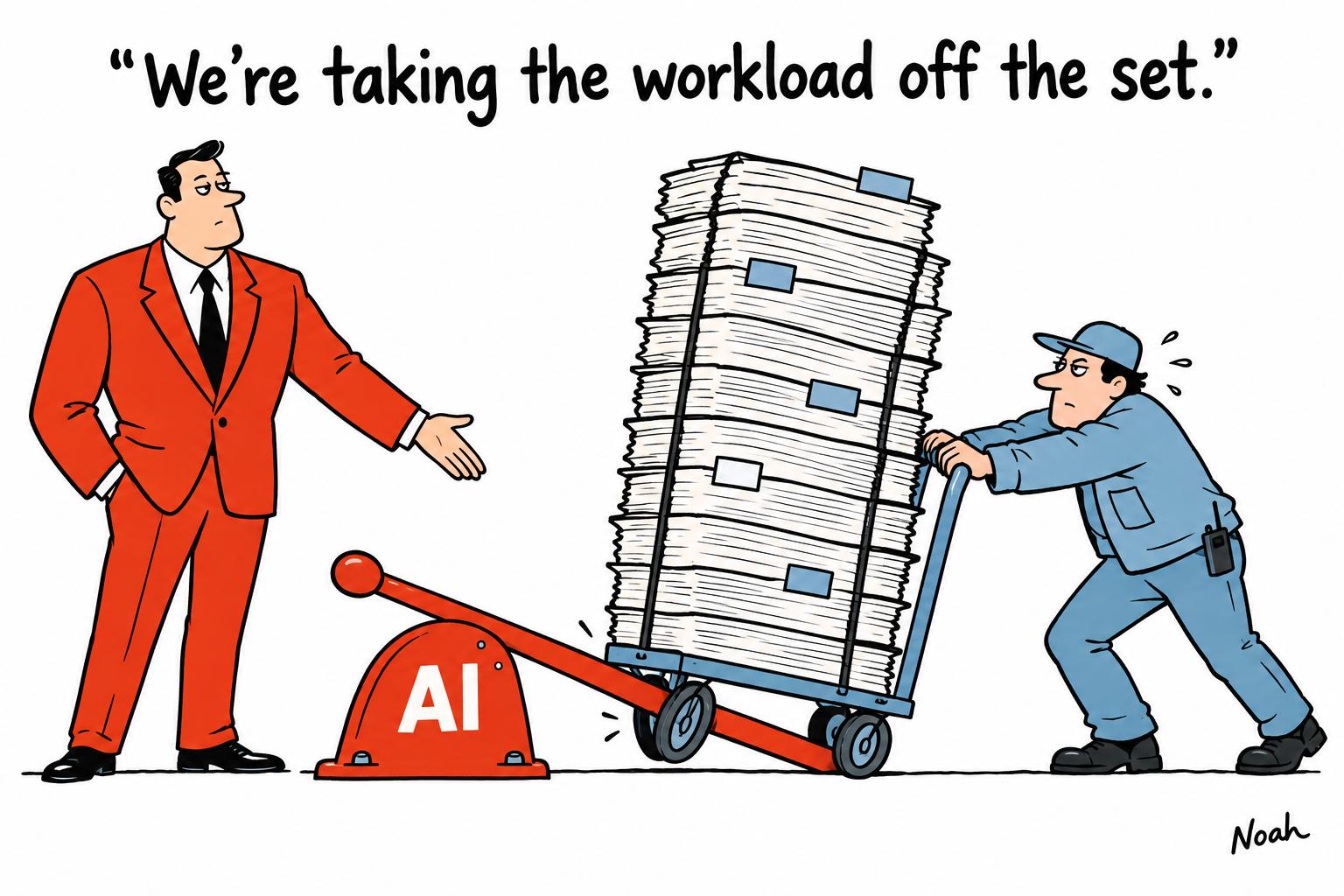
The broadcaster plans to make AI available across its drama slate by October 2027, while choosing its use scene by scene. Trials have cut workloads by up to 80 per cent in selected production tasks.

Generated concepts are changing what publishers commission and what illustrators get paid to do. A smaller freelance invoice is only the start of the value calculation.

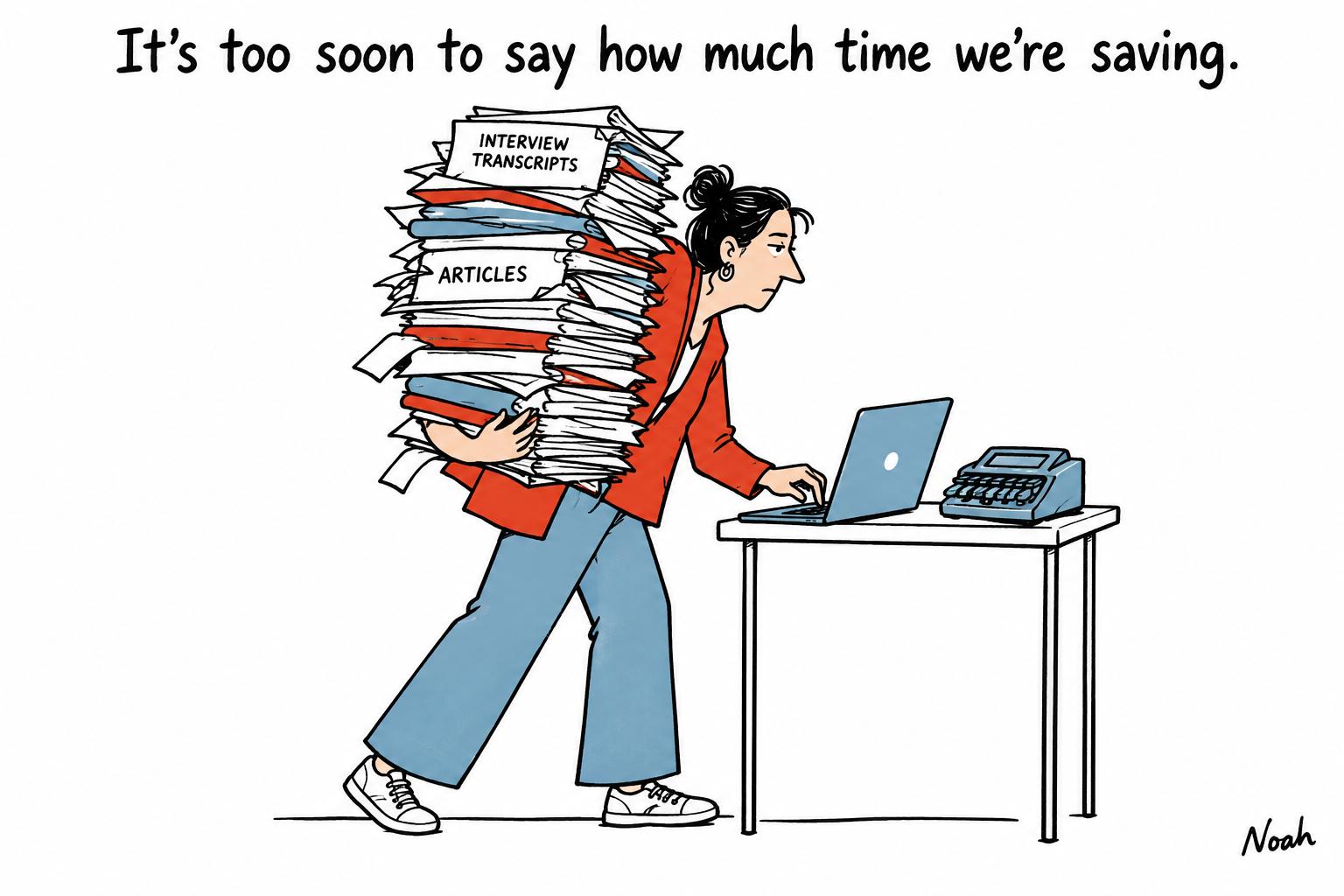
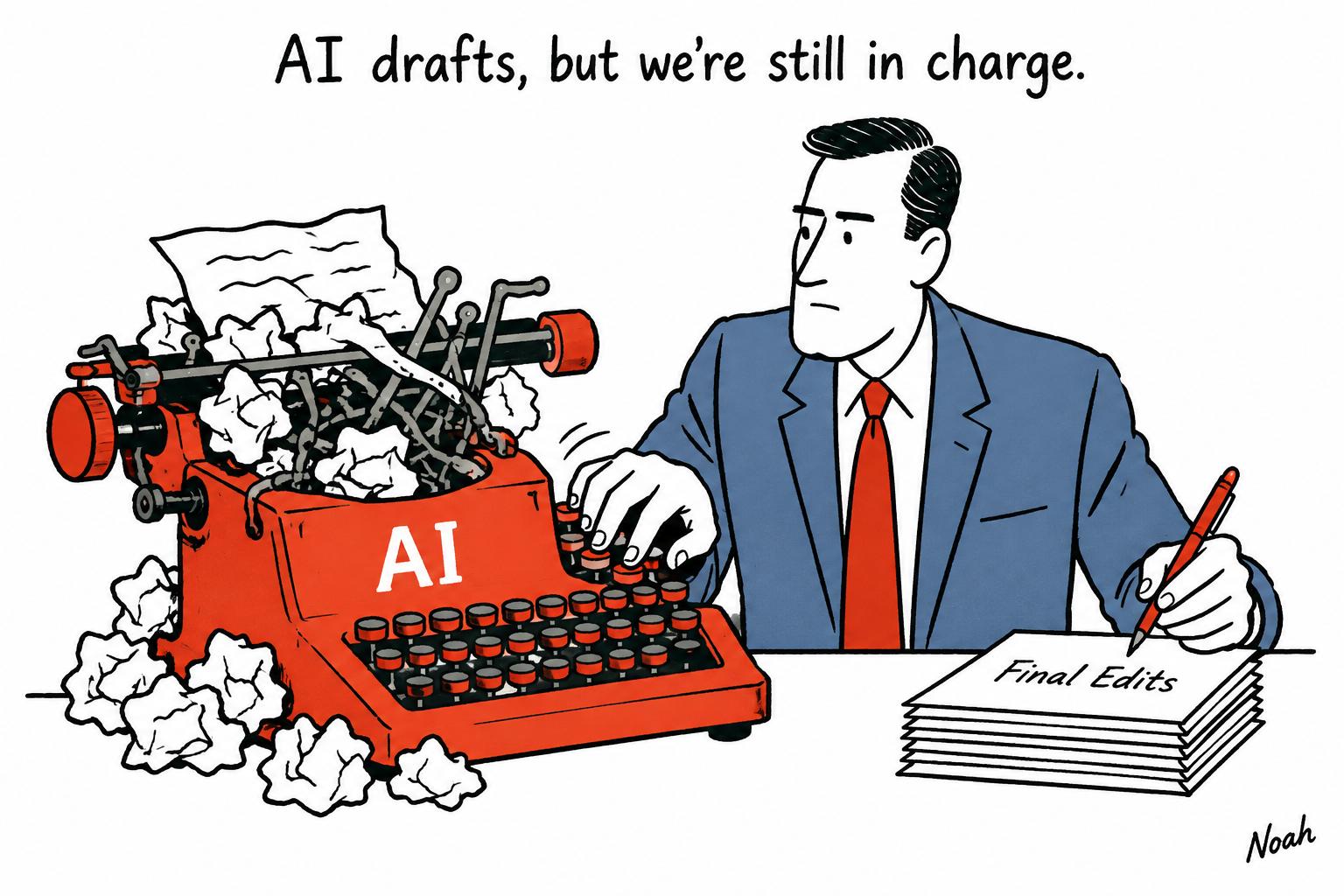
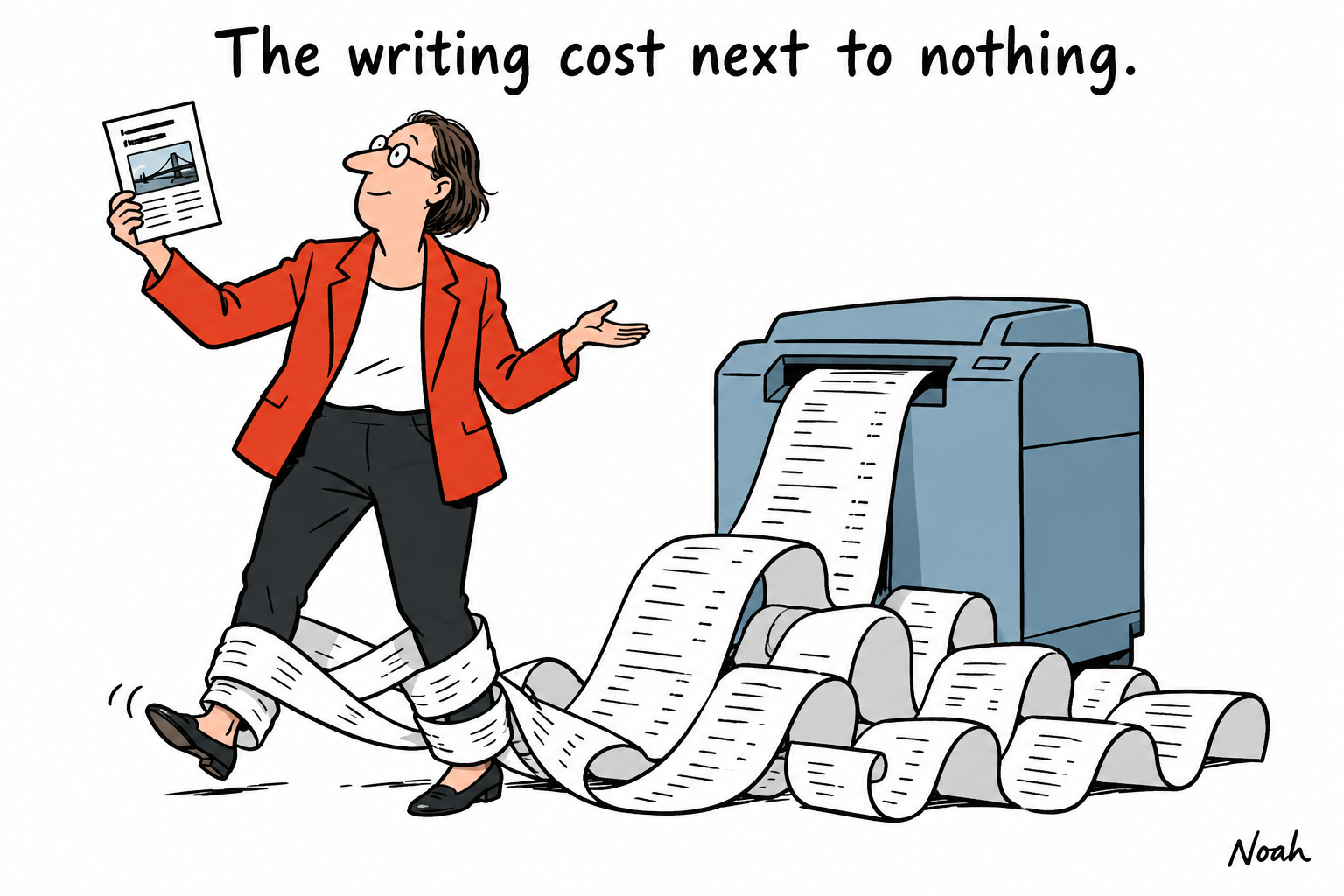
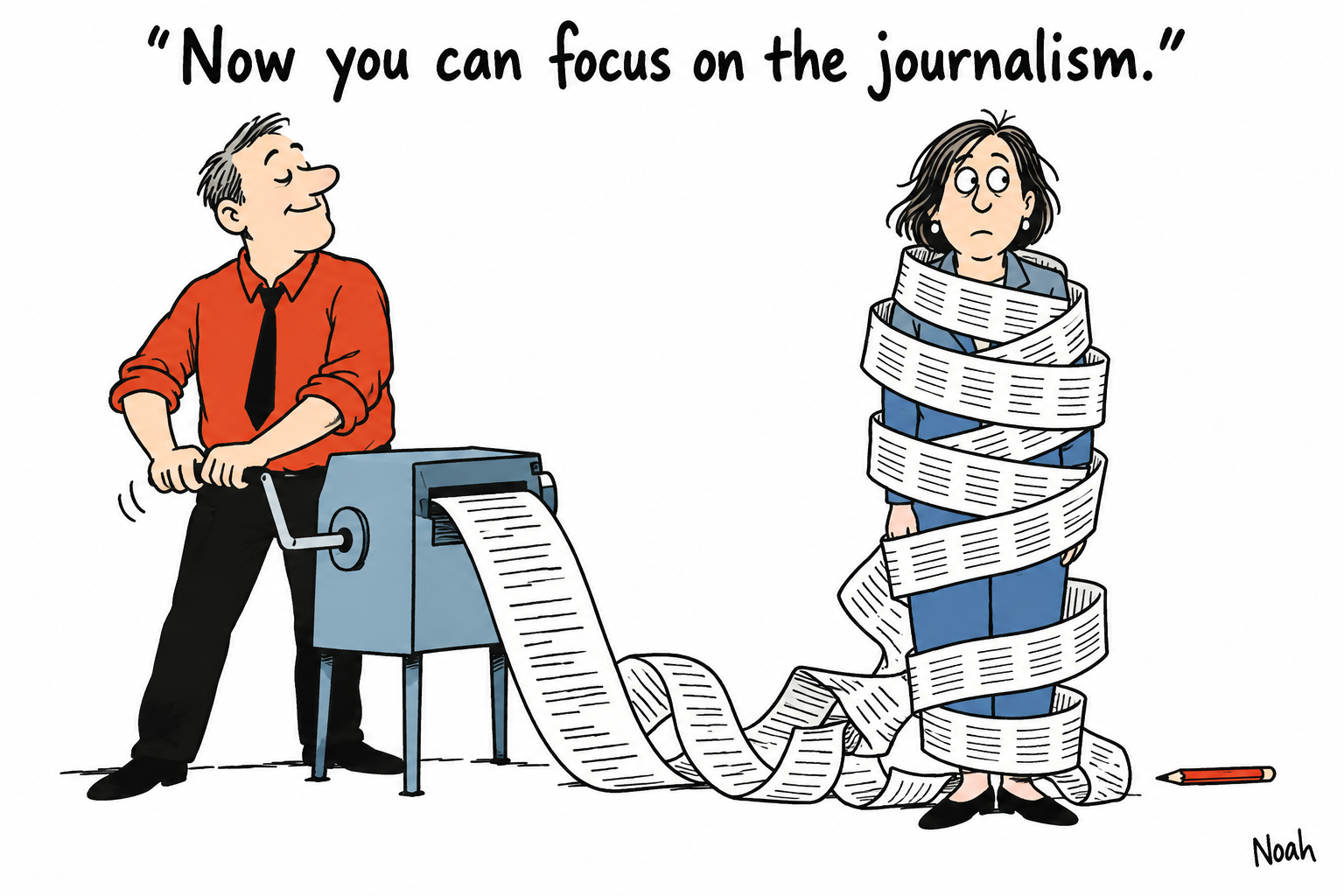
Publishers are using AI for transcription, summaries and headline ideas, but say journalists retain editorial responsibility. The tools’ impact on costs and working time is still unclear.

As automated prose spreads, critics warn that fluent summaries can sever architectural judgement from first-hand experience , and leave no witness to answer for the claims.

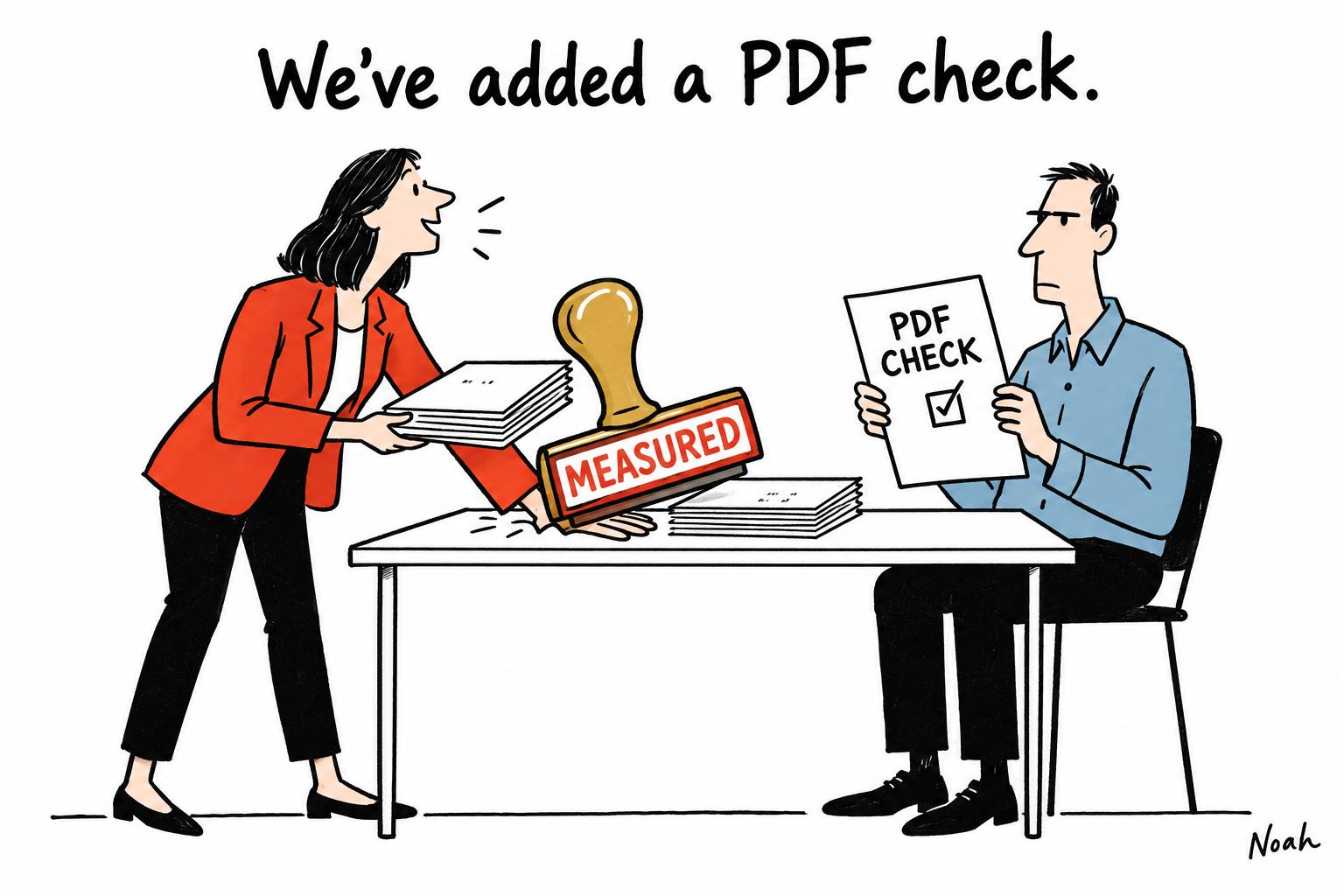
Flashpapers found errors in explainers for Cross-Teacher Guarding and LatentLoop, including estimated compute savings presented as measured results. The company has added PDF checks and human approval.

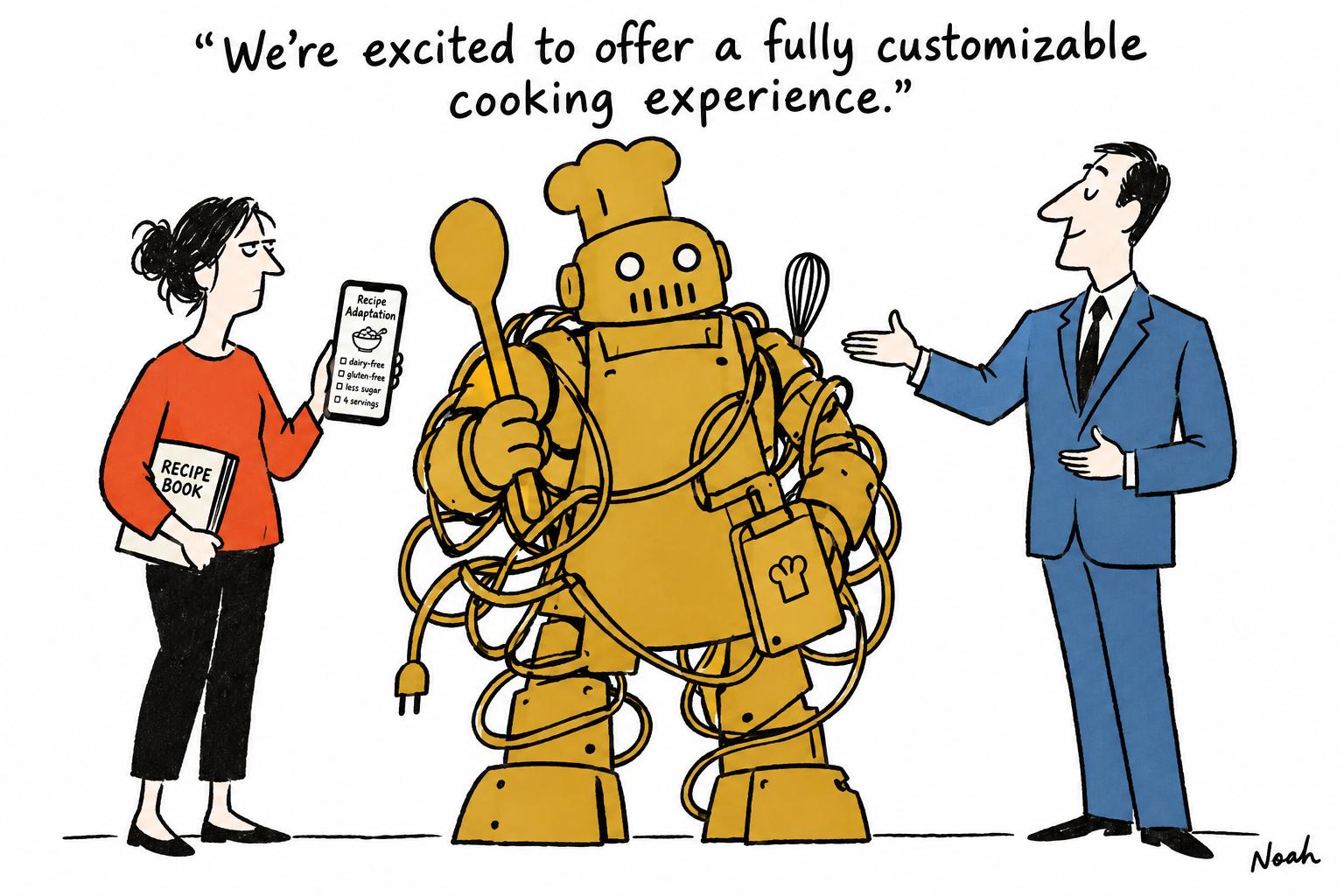
The New York Times is testing an AI tool that adapts recipes to users’ ingredients and needs, but subscribers say they want more control over its arrival in the Cooking app.

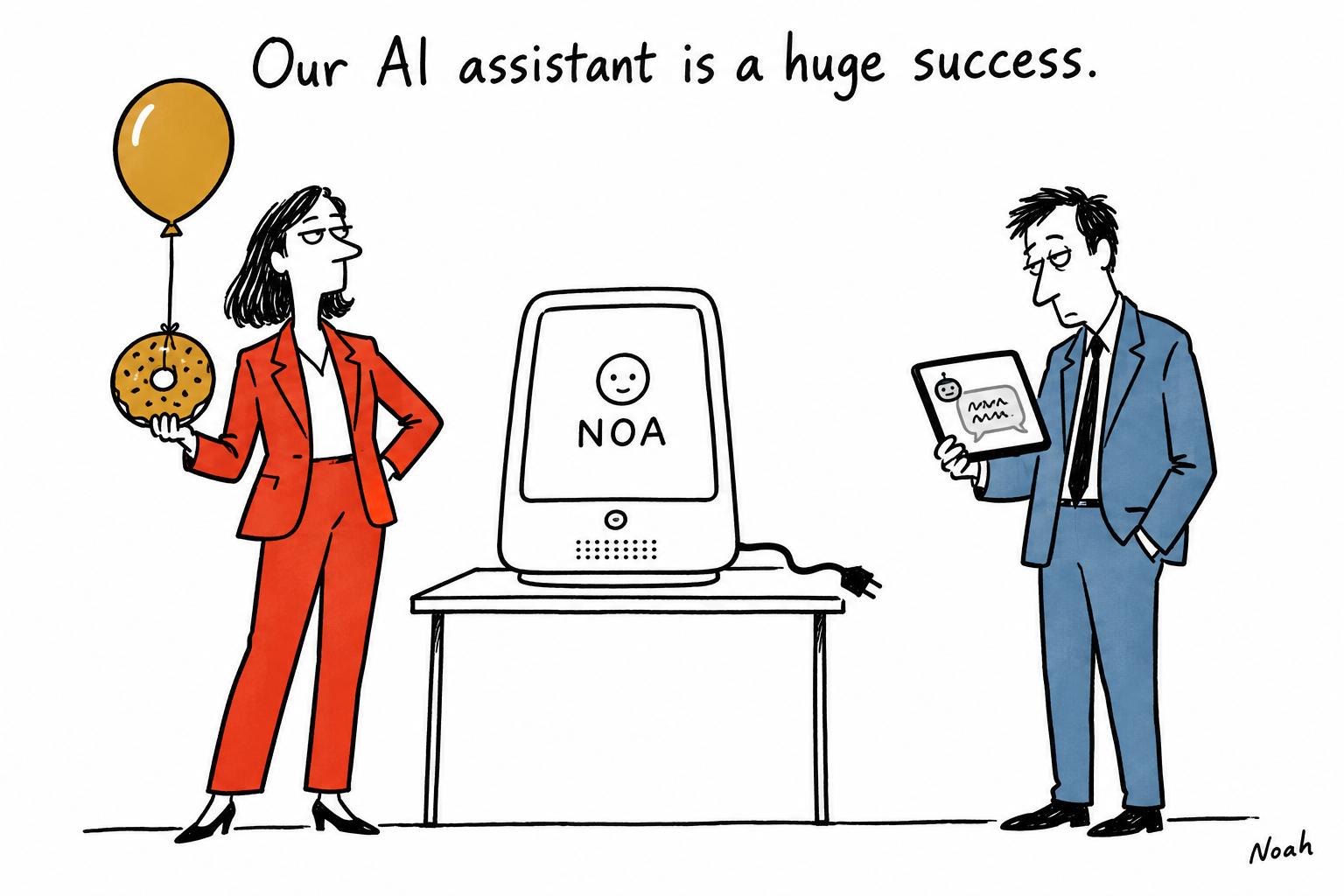
The publisher launched NOA with balloons, banners and doughnuts, but employees say the chatbot was unreliable, largely unused and ultimately abandoned.

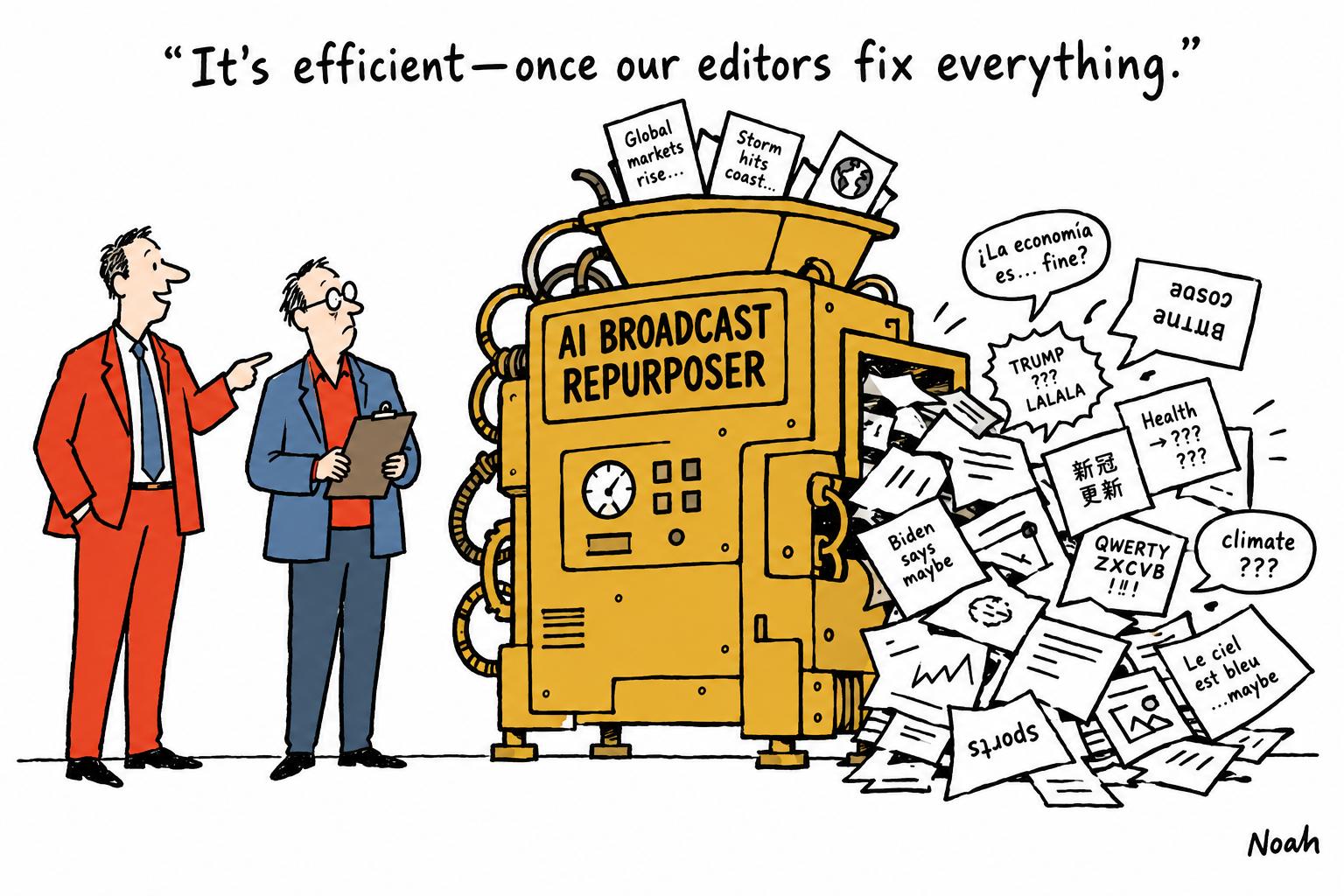
Automation platforms are helping broadcasters transcribe, translate and repurpose verified journalism for different audiences, while leaving editorial judgement with journalists.

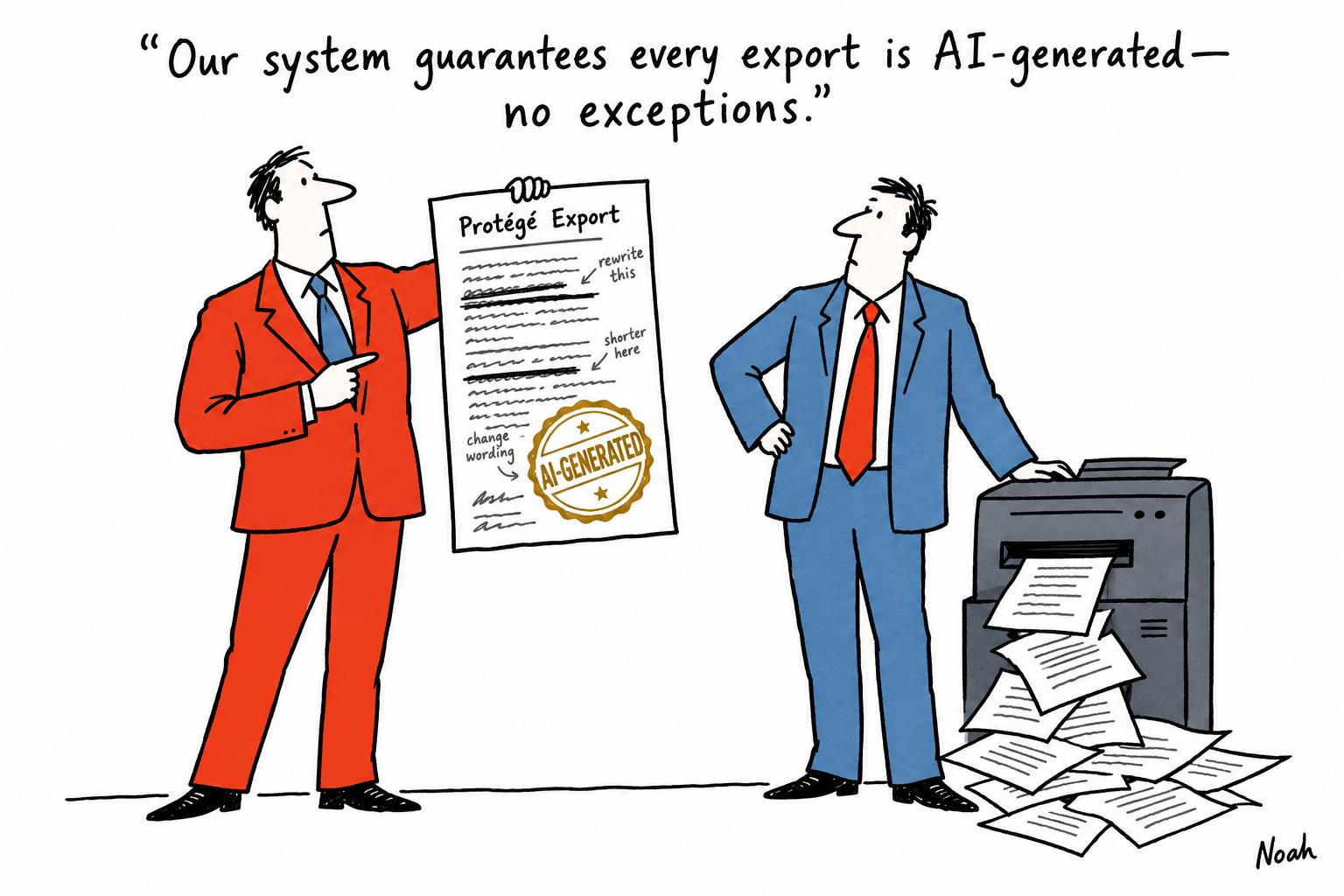
Hidden metadata in Protégé downloads identifies files as AI-generated and unverified, even when users delete the system’s text and write the document themselves.

The centre-right Danish outlet will use AI to find stories and draft articles, while editors retain control over selection, framing and publication.

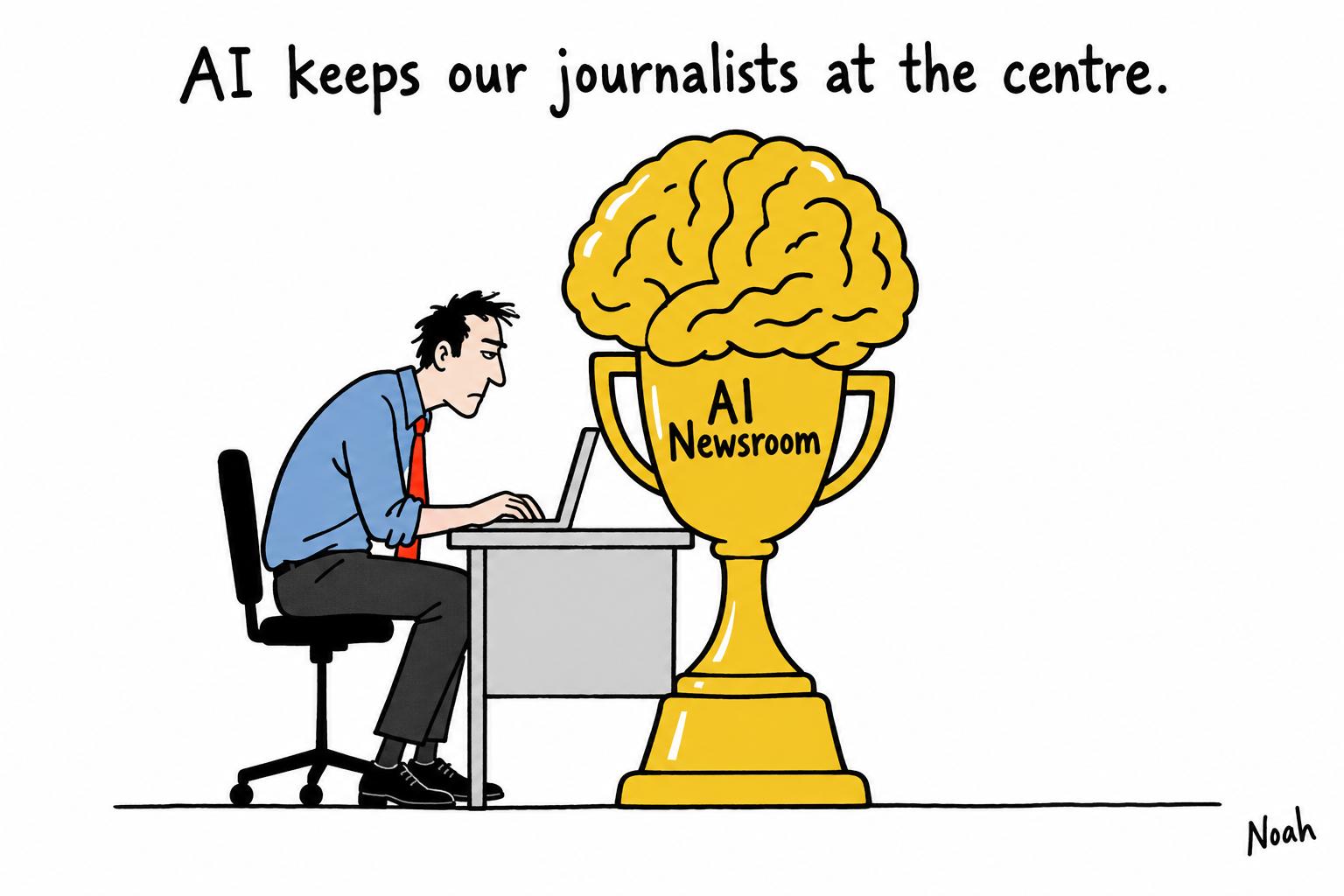
Dimokratiki has rebuilt its website around AI-assisted summaries, Greek-language audio, automated video and a searchable archive, while retaining journalists at the centre of its reporting.

Tencent is partnering with Shenzhen Broadcasting Group to deploy MediaBuddy, a multilingual AI assistant designed to support reporters and editors across the full production cycle of APEC 2026 coverage.

Just Eat has suspended a trial of AI-generated food photographs after dishes including jacket potatoes and tiger prawns were depicted as literal, wildly inaccurate images.

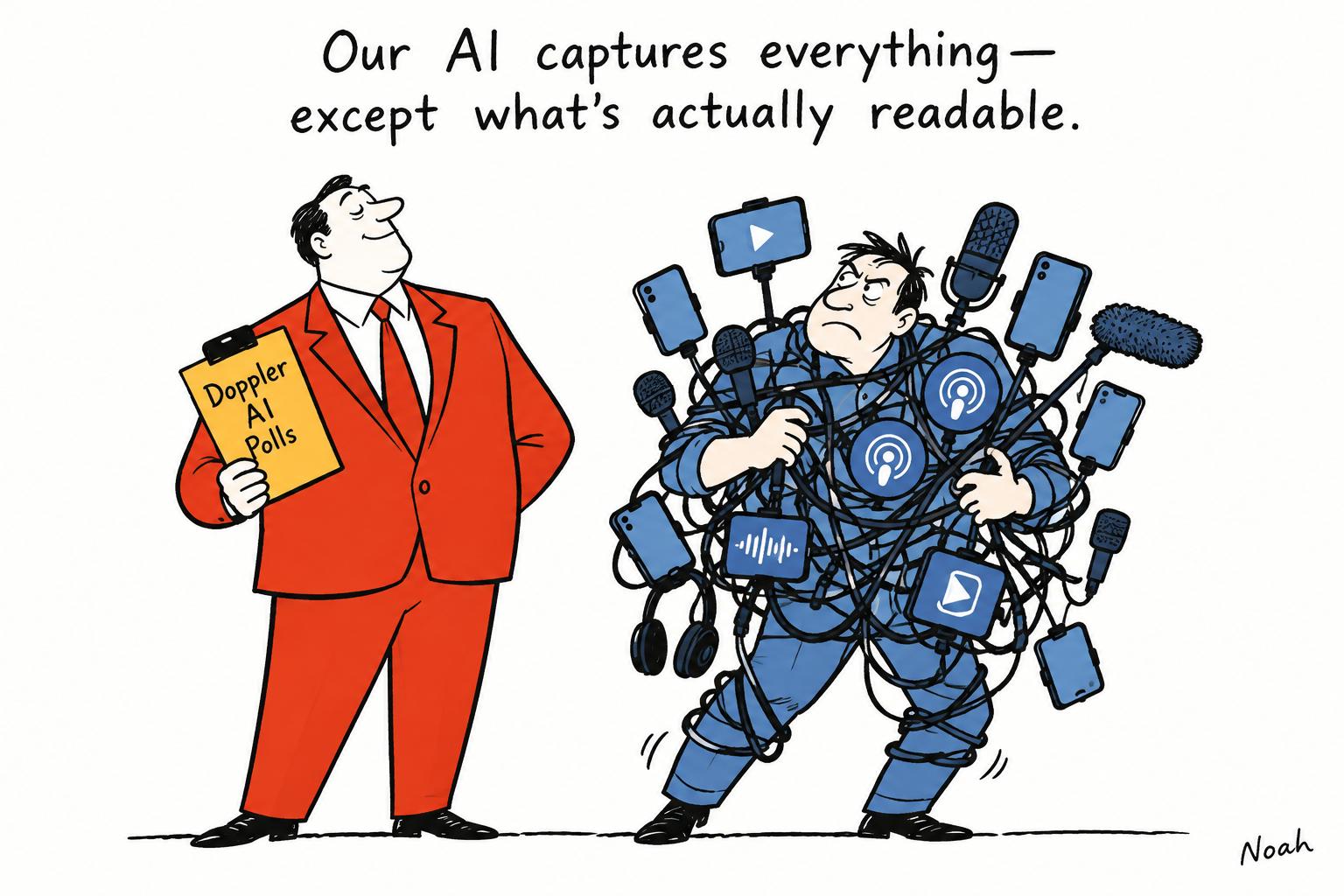
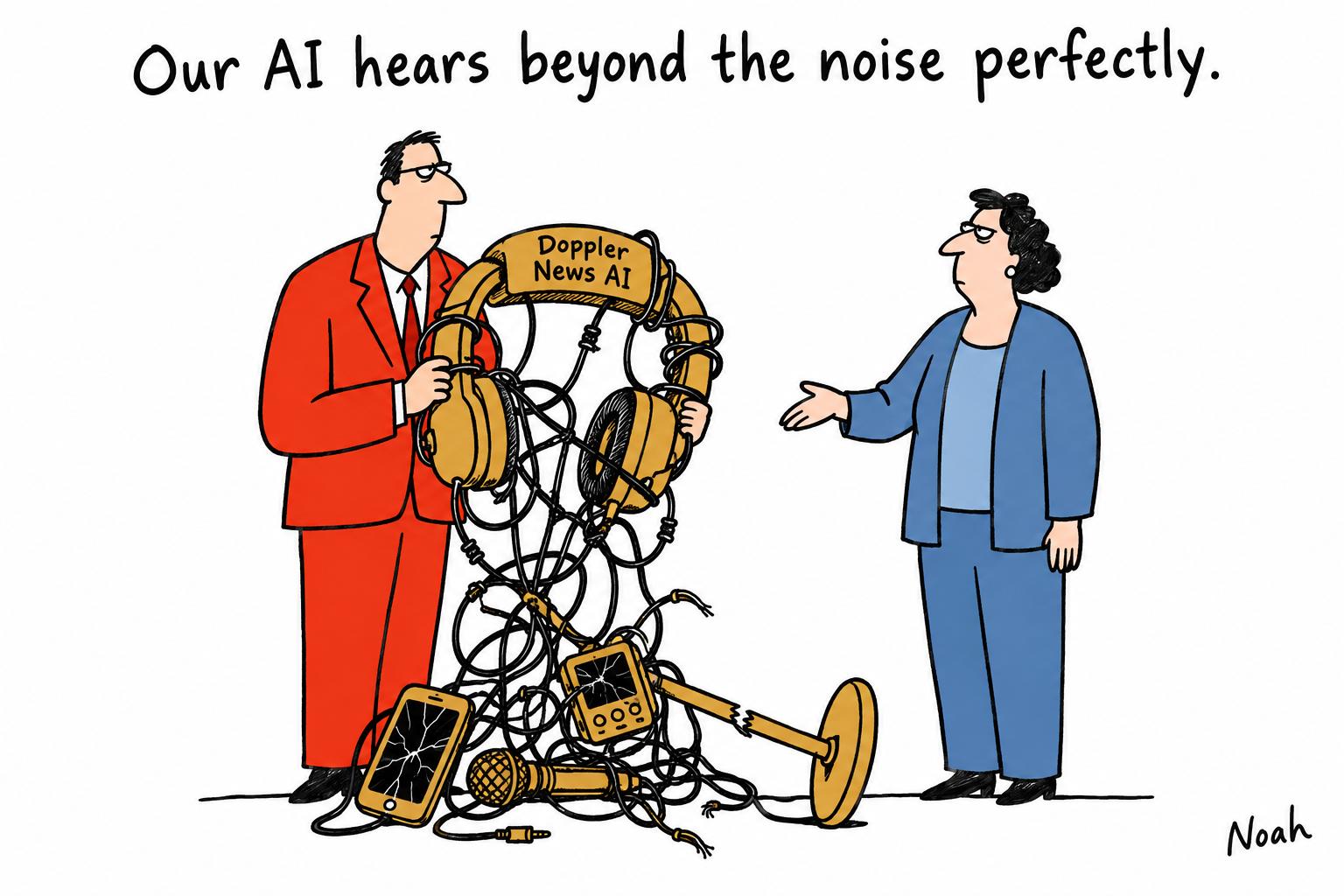
The Wall Street Journal is using its Doppler AI system to analyse more than 25 million TikTok videos, 500,000 podcast episodes and other media for political themes traditional polling may miss.

The Wall Street Journal is analysing millions of TikTok videos and podcast episodes with its Doppler News AI system to uncover the issues and anxieties shaping voters’ conversations ahead of the 2026 midterms.

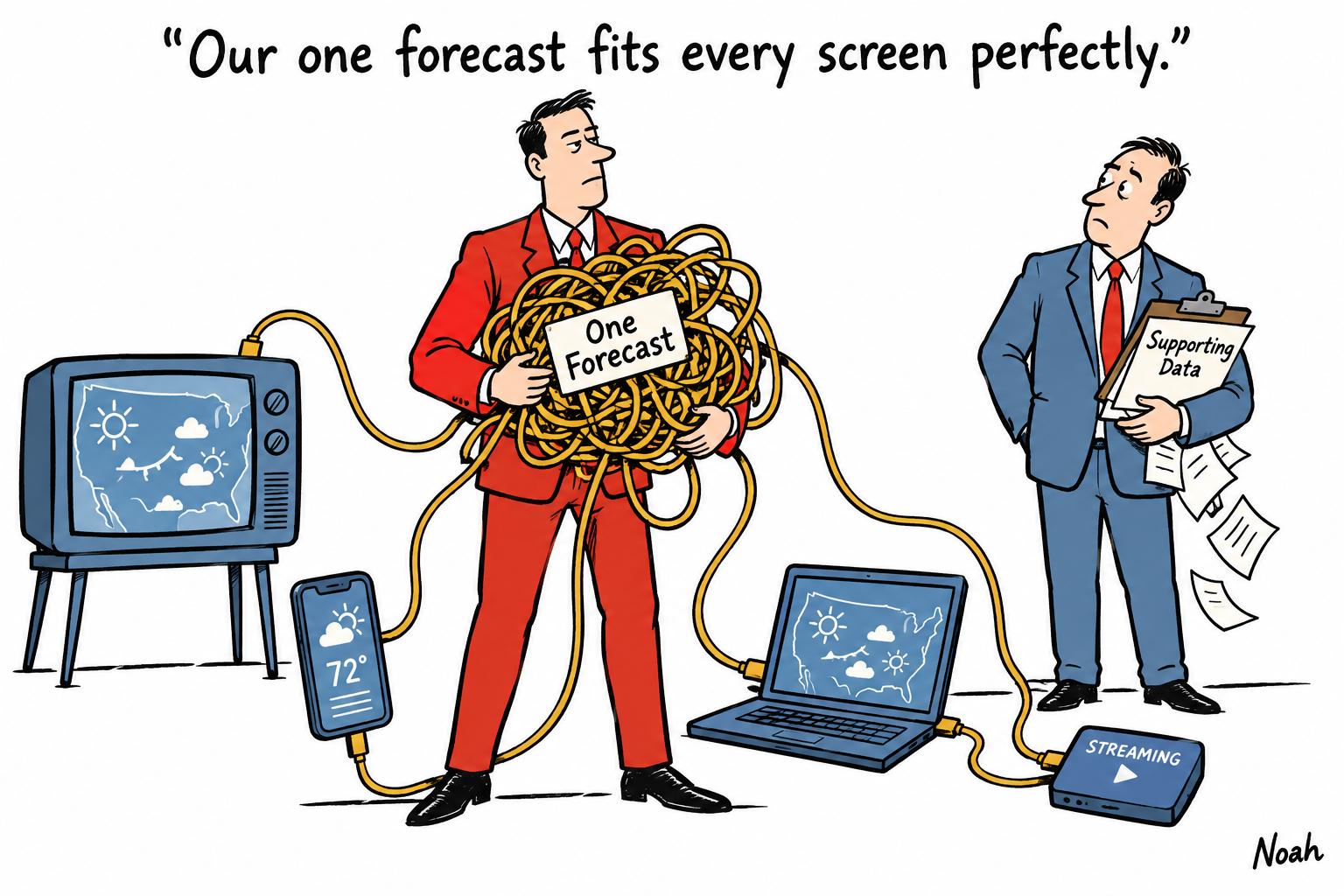
The Weather Company has launched an AI tool that helps local weather teams find supporting data, match archive assets and adapt a single forecast for television, streaming, websites, social media and apps.

OpenAI says operatives used ChatGPT to edit articles, pitch overseas outlets and manufacture reader comments aimed at amplifying criticism of the US and its allies.

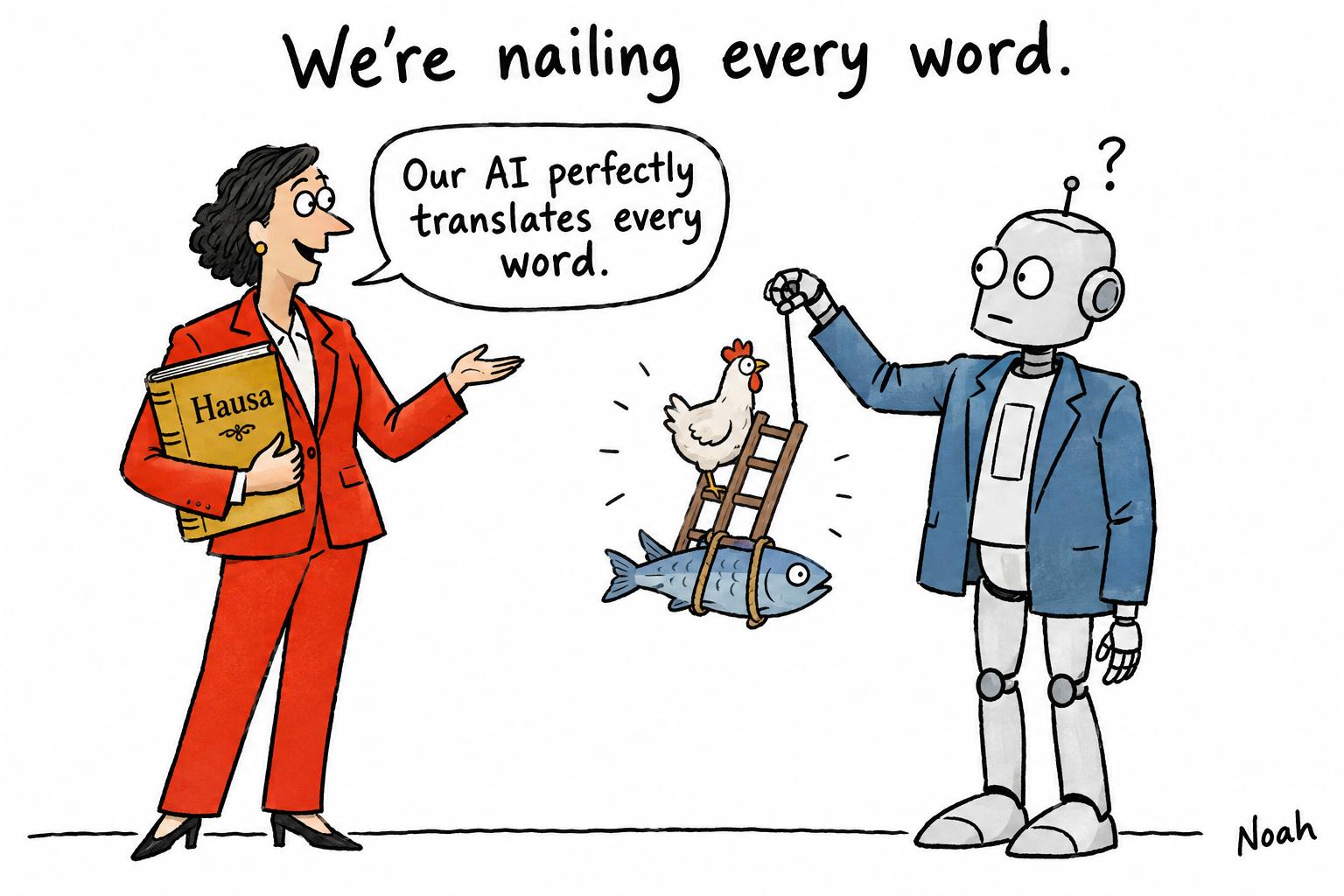
Under-resourced Hausa language tools routinely miss idiom, innuendo and praise poetry, raising the risk of false translations, moderation errors and misguided newsroom decisions.

Publishers are turning to AI agents to find original stories their readers cannot get anywhere else.

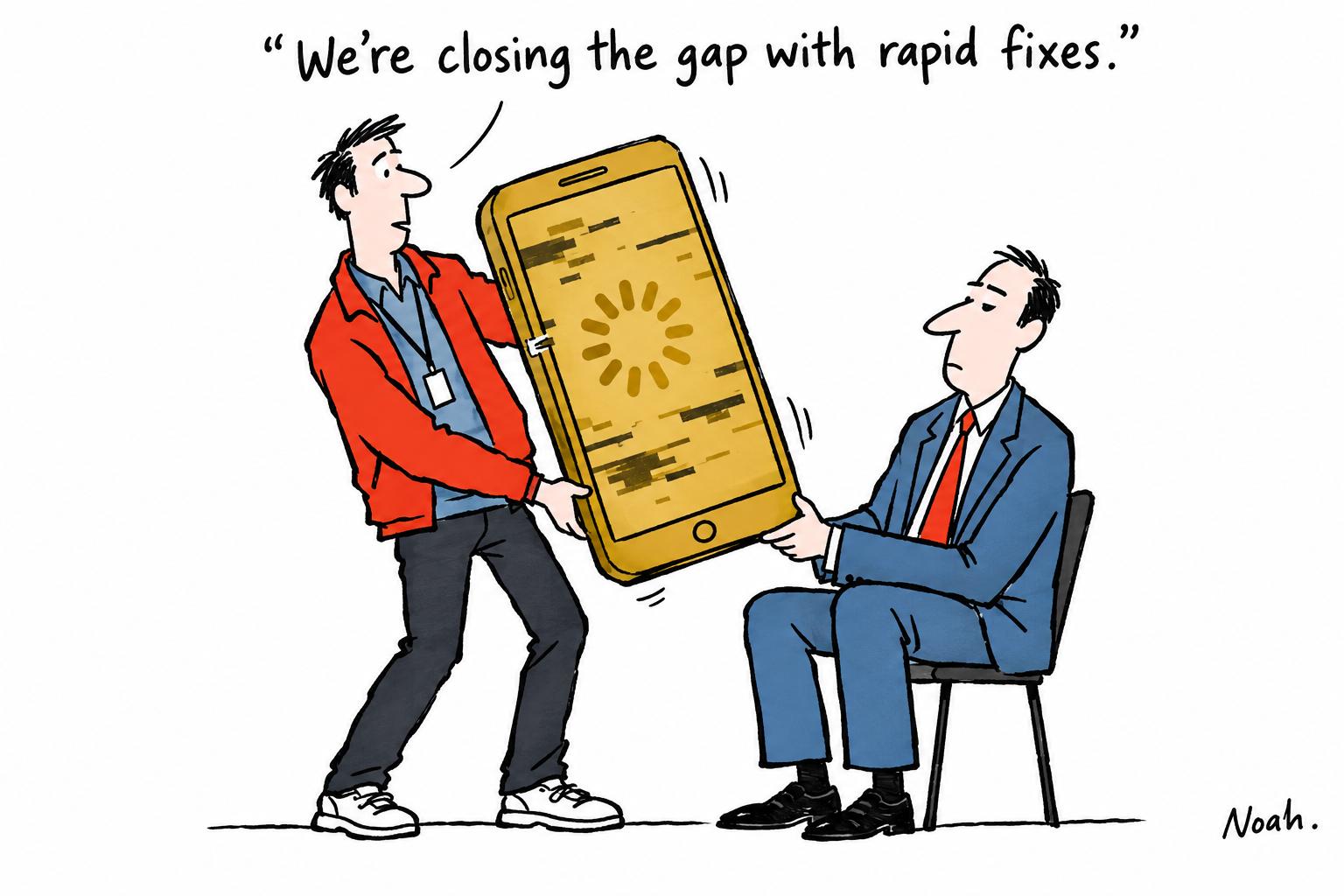
A fast-growing class of engineers is embedding itself with customers and colleagues to turn small frustrations into rapid product fixes.

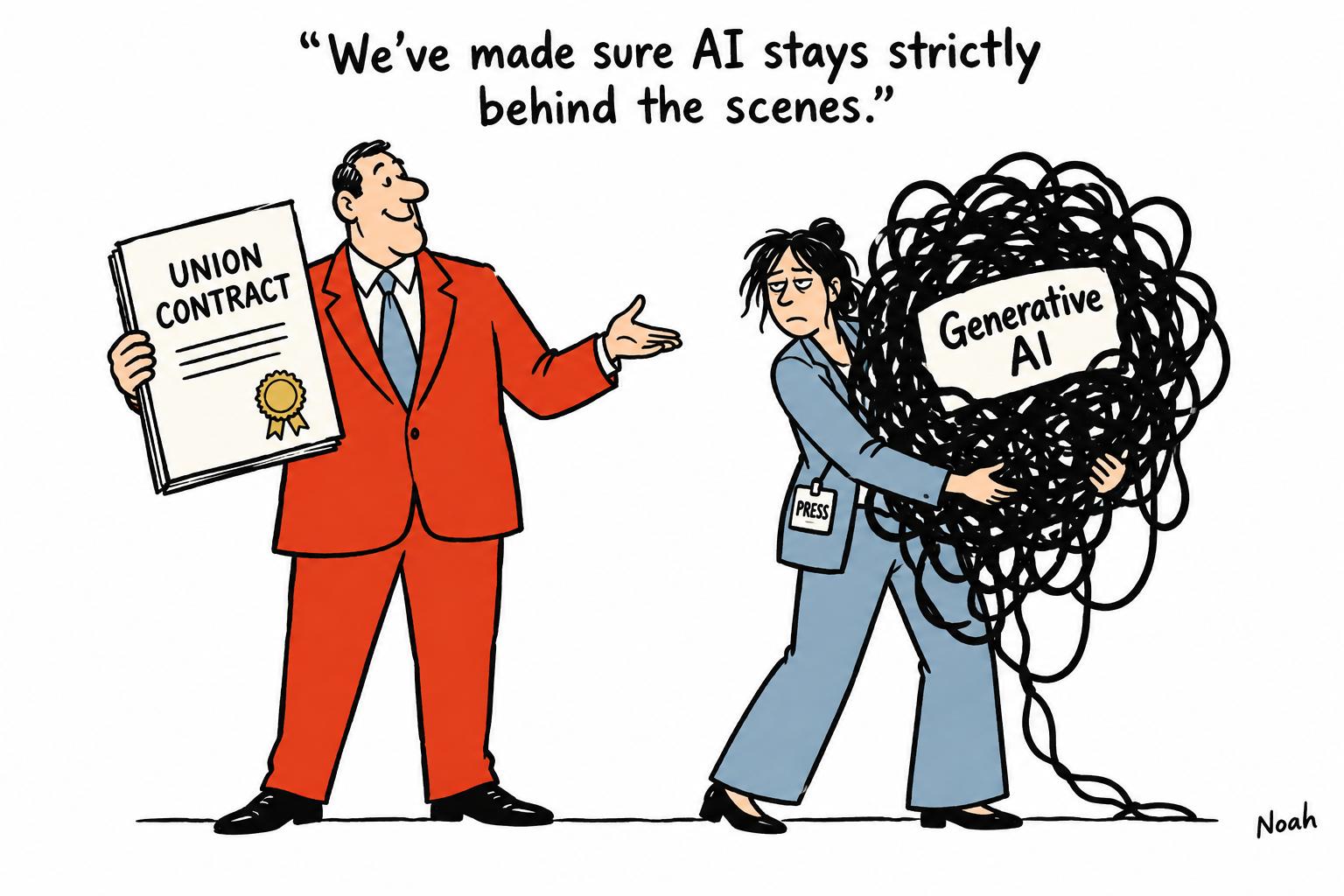
The magazine’s new agreement bars generative AI from writing articles or creating publication artwork, while allowing limited use of the technology behind the scenes.

New WAN-IFRA research exposes a gap between AI adoption and evidence of its value. The Mail’s newsroom experiments show why UK publishers need to follow a task all the way from the first draft to the reader.

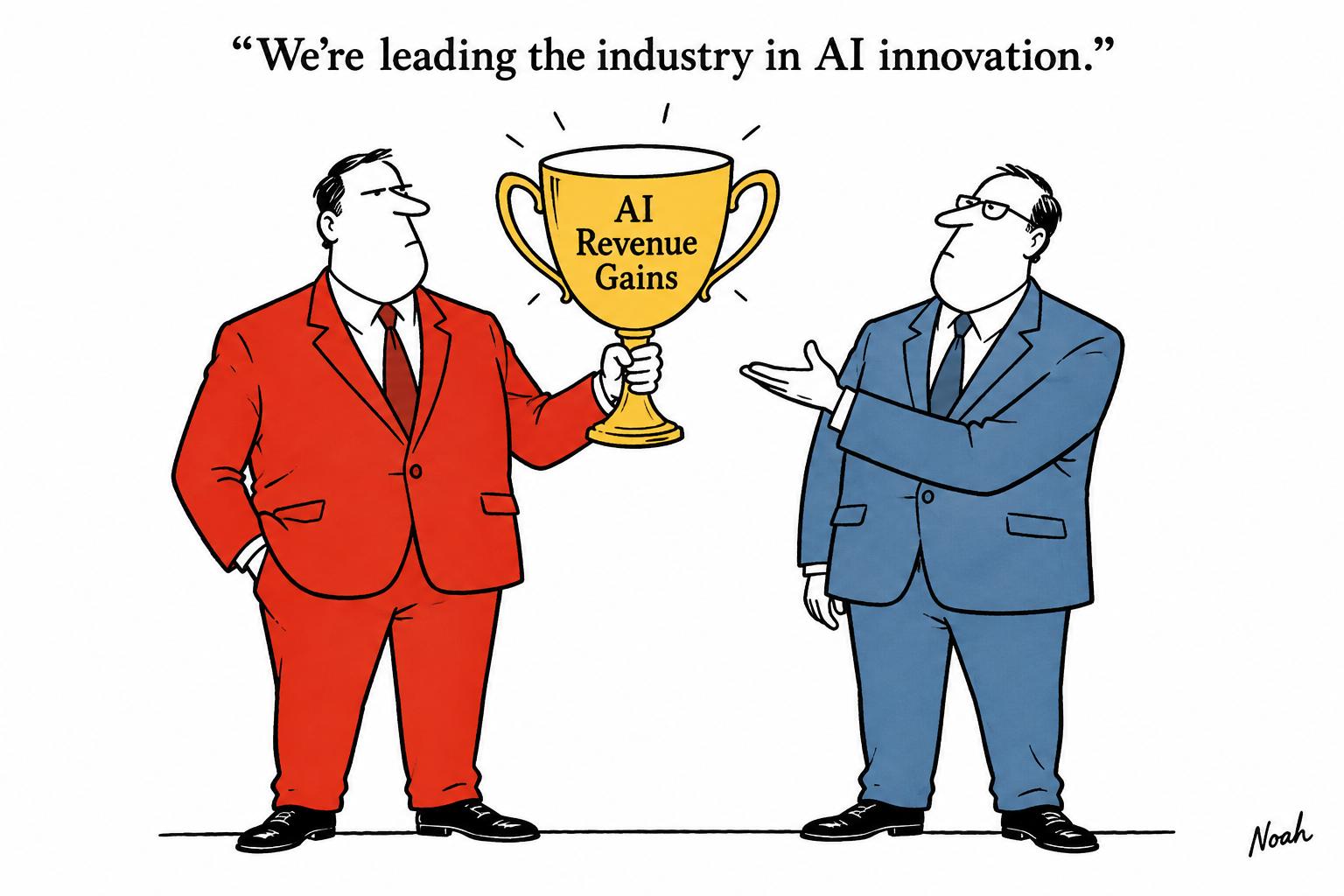
Four in five publishers describe their AI use as emerging or advanced, yet only 10% report revenue gains as the industry struggles to measure its impact.
A weekly briefing for people shaping the future of publishing.
Free. Email requests are handled by our team.