StrongMocha pitches story cards as a shared desk for editors and AI agents
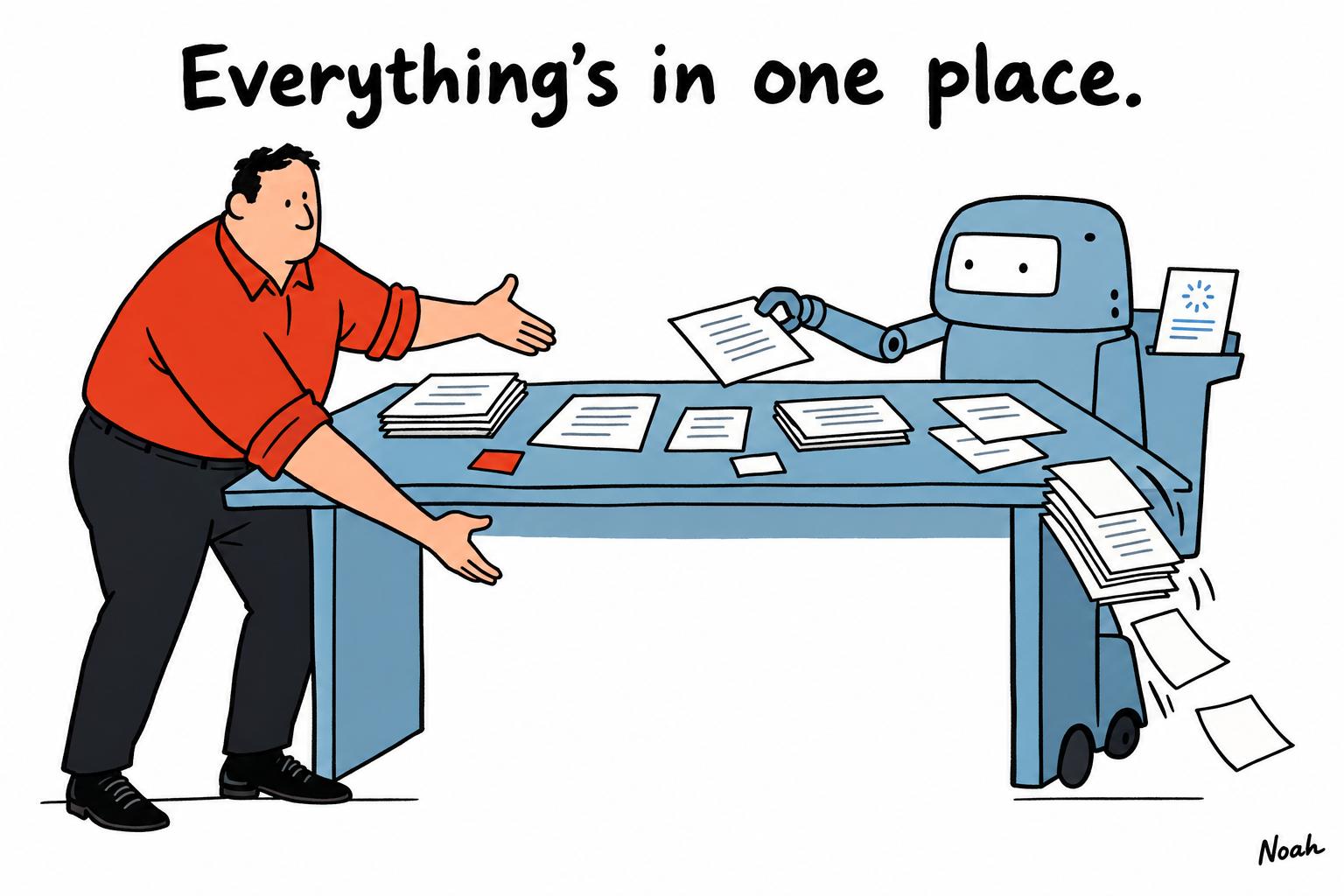
Cartoon · AI-generated
Founder Thorsten Meyer says Thrymvault will bring assignments, drafts and agent updates into one traceable workspace, though some features are still rolling out and its impact has not been measured.
StrongMocha News Group founder Thorsten Meyer says the organisation is developing Thrymvault as a shared workspace for editors and AI agents, replacing scattered chat exchanges with a visible record of each story’s progress. His account, published on 13 November 2026, describes a system intended to keep editorial instructions, draft links and agent updates together. Some elements remain in rollout, and the account does not establish how widely the workspace is currently used across the group.
Meyer points to a day when nine articles were handled using chat and a task tracker built for code projects. In that arrangement, he said, editors could struggle to establish a story’s status, ensure a headline request reached the right agent or share a finished explainer as a link. The proposed alternative is to treat each story as continuing work: a card moves through stages, carries its draft and open questions, and holds the discussion between editor and agent. The account does not clarify whether those nine articles were processed using Thrymvault.
The workflow is designed to keep editorial oversight with people while giving agents a structured place to carry out assigned tasks. Editors can move a story card and leave instructions; agents are expected to update its status and respond in the same thread. Meyer says changes are attributed to the approved application that made them, and agents can add or edit material but cannot delete it. Thrymvault’s own website presents the product as a workspace for content teams, but that product description does not independently verify StrongMocha’s implementation or the effectiveness of its controls.
Meyer describes three ways for agents to connect: an MCP server with 20 tools, a REST API and a command-line tool. He says agent guidance is provided in plain text and in a machine-readable format generated from the same tool catalogue, with the aim of keeping instructions consistent with the available functions. These are descriptions of the system’s intended access model, not evidence of an independent security assessment. A separate discussion of Thrymvault’s proposed controls likewise cautions that such safeguards are product claims, not security certification.
The rationale for keeping work on story cards is that a continuing assignment can involve sourcing, drafting, graphics, deadlines and several rounds of direction, more than a single chat exchange can readily preserve. Meyer also describes a separate database for recording editorial decisions, such as changes to headline rules, while keeping the rules themselves accessible to agents. The wider StrongMocha environment includes DojoClaw, which its website describes as a content-production and publishing system; Thrymvault is presented instead as the workspace for tracking assignments, instructions and changes. Neither product’s self-published descriptions amount to independent evidence of improved editorial performance.
Meyer presents traceable changes as a possible aid to review and correction, but provides no measured results for accuracy, publication speed or correction rates. Nor does his account establish that every part of the proposed workflow is in routine use. Some templates and the handling of agent mentions are still being rolled out, while a second machine on standby and hourly backups are described as future steps. The available information does not confirm when those measures will be operational.
Inspired by headline at: [1]
Sources by paragraph: - Paragraph 1: [2], [3] - Paragraph 2: [2], [3] - Paragraph 3: [2], [3], [4] - Paragraph 4: [3], [5] - Paragraph 5: [4], [7] - Paragraph 6: [2], [3], [6]
Source: Noah Wire Services · Original