W.TEC trains NAN journalists to use AI without outsourcing verification
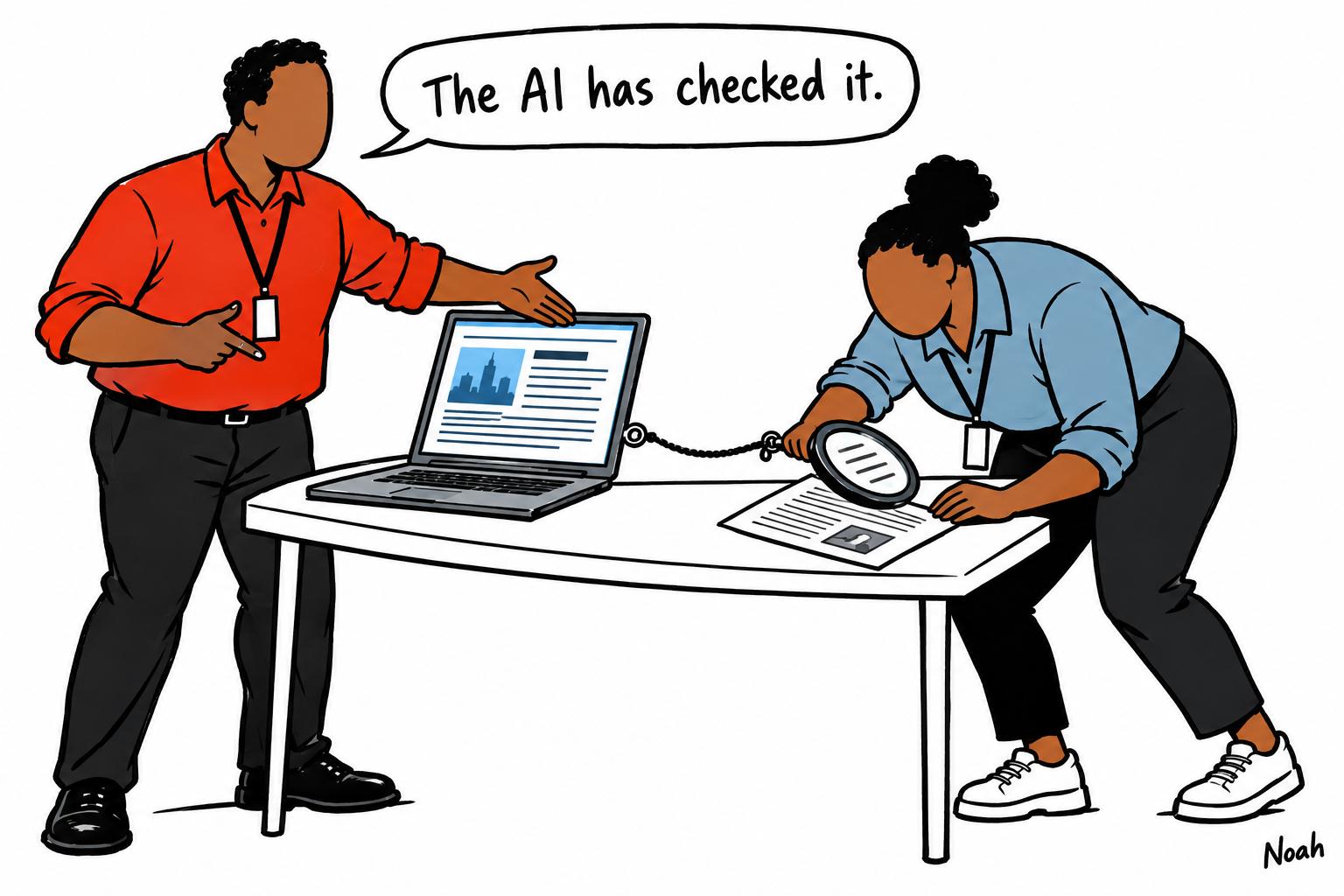
Cartoon · AI-generated
A Lagos workshop covered AI prompts and practical newsroom tasks, while stressing that journalists remain responsible for checking information before publication.
The Women’s Technology Empowerment Centre has delivered training for News Agency of Nigeria staff in Lagos on using artificial intelligence, writing effective prompts and checking digital material. The programme was intended to help journalists apply AI in their work while improving their ability to assess content shared on social media and messaging services, according to Galaxy TV.
Oluyinka Fadare, NAN’s Head of Multimedia Operations, said journalists need to establish whether material is genuine before publishing it. She also highlighted prompt engineering as a way to get more relevant responses from AI tools during research. W.TEC media liaison Odutola Adeyemi described AI as a significant technological shift and argued that professionals need to build relevant skills as the technology develops, Galaxy TV reported.
The training covered practical uses including summarising lengthy documents, drafting interview questions, translating or simplifying complex material and organising research notes. W.TEC curriculum manager Leslie Tarabina also discussed using AI to support multimedia work, such as producing video and news presentations. These applications may help with particular tasks, but they do not establish whether information is true.
That distinction is central to the Associated Press’s guidance on generative AI. The AP says AI-generated material should be treated as unverified and assessed under established editorial standards; the technology does not take over journalists’ responsibility for gathering and checking facts. Its guidance also cautions against putting confidential information into AI tools and recommends tracing material to its original source and checking suspicious images or claims against reliable reporting.
The AP’s advice on AI-assisted data journalism makes a similar point: tools can help analyse large amounts of information, but their results may be inconsistent or difficult to reproduce. Journalists should record how AI was used and verify the work it produces, the organisation says. In some cases, checking AI-assisted output may add to the workload rather than reduce it.
AI literacy also matters beyond newsroom productivity. UNESCO’s journalism-education handbook encourages journalists to explain the technology’s effects on companies, governments and the public, while examining its limits and possible human-rights implications. That broader approach treats AI not simply as a set of newsroom tools, but as a subject requiring informed and critical reporting.
The Lagos workshop forms part of a wider pattern of digital-skills training for journalists. Google said its 2017 initiative with the World Bank and Code for Africa aimed to train more than 6,000 journalists across 12 African cities, including Lagos and Abuja, in areas such as mobile reporting, verification and data visualisation. The separate W.TEC programme brings that skills focus to AI, while the central editorial obligation remains unchanged: journalists must judge and verify information before publishing it.
Inspired by headline at: [1]
Sources by paragraph: - Paragraph 1: [2] - Paragraph 2: [2] - Paragraph 3: [2] - Paragraph 4: [3] - Paragraph 5: [6] - Paragraph 6: [4] - Paragraph 7: [5]
Source: Noah Wire Services · Original