SPH Media plugs into AI while seeking to keep journalism visible
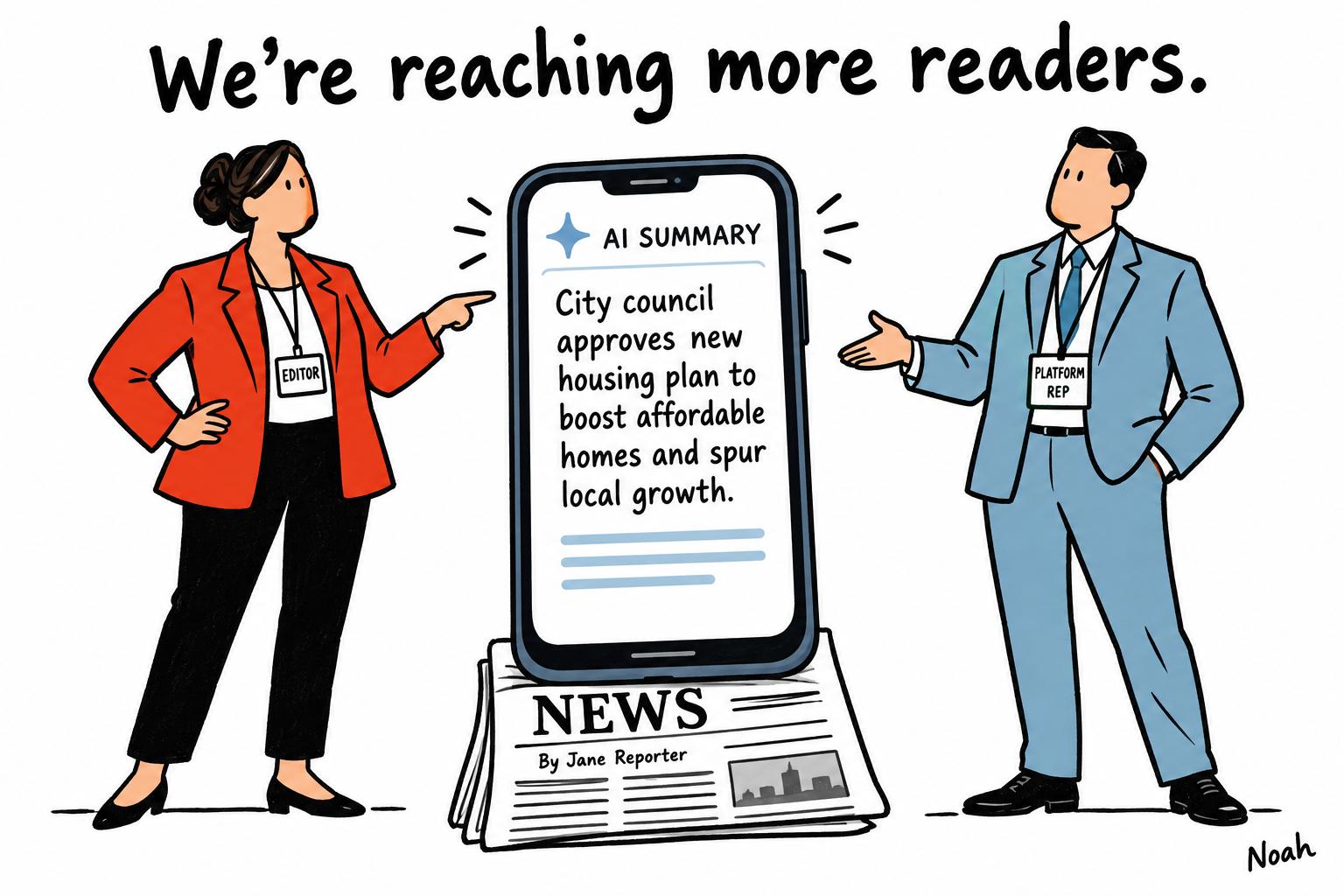
Cartoon · AI-generated
The publisher is partnering with Google and using AI-assisted translation to reach new audiences, while warning that platform summaries could obscure who produced the journalism.
SPH Media is choosing to work with artificial-intelligence platforms rather than stand aside as they become a more common route to news, executive chairman Chan Yeng Kit has said. He is concerned that publishers could lose their connection with audiences if people receive summaries of journalism through AI services without knowing which news organisations produced the underlying work. The Tow Center for Digital Journalism’s research into the relationship between platforms and publishers provides a wider context: technology can extend a publisher’s reach, but also leave it exposed to decisions made by companies that control distribution. [1?] Wait map body no citations. This source map marker forbidden. revise remove.
The publisher’s agreement with Google is intended to widen the reach of SPH Media journalism and develop newsroom expertise in areas including AI verification and responsible use of the technology. The collaboration also covers talent development and audience engagement, with a programme intended to support emerging journalism talent. The plans describe aims and activities, not proven results: it remains to be seen whether closer integration will strengthen publishers’ position or increase their dependence on a major platform. The Straits Times reported that the partnership also envisages new advertising formats and greater use of SPH journalism in Google search results to surface Singapore-focused perspectives. [3]
SPH Media is also using AI-assisted translation to make existing journalism accessible to readers who do not speak its original language. Lianhe Zaobao has launched an English-language website, where selected Chinese-language articles are translated with AI and then checked and edited by people. The publication’s editor-in-chief, Lee Huay Leng, has described the edition as a means of introducing readers from different backgrounds to the newspaper’s reporting and viewpoints. The process remains under development, and editors check details such as names and quotations because machine translation can make mistakes. [4]
The English edition is intended to reach younger readers, people from other language communities and international audiences interested in Singapore. Chan has also discussed the prospect of extending translation to Berita Harian and Tamil Murasu. The Straits Times reported that such versions form part of SPH Media’s broader plans, although the supplied account of Lianhe Zaobao’s launch describes the English site as an ongoing effort rather than a finished model. [2] [4]
The expansion of AI in newsrooms does not remove the need for human reporting and editorial judgement. The Associated Press says AI-generated material should be treated as unverified and that journalists remain responsible for checking facts and ensuring published information is accurate and fair. ProPublica likewise requires staff review of AI-assisted work and says it must meet the organisation’s normal editorial standards. Both organisations frame AI as a possible aid, not a substitute for original reporting or accountability. [6] [7]
For SPH Media, the challenge is to gain access to emerging channels without allowing technology to obscure the journalism and organisations behind them. Chan has argued that trust-building, interviewing and editorial decisions remain human work, while acknowledging that the media industry cannot yet know the full effects of AI. The Tow Center’s research highlights the wider tension: publishers may benefit from platform reach while facing risks to their control over distribution and their civic role. SPH Media’s approach, as described by Chan, is to adapt its products and participate in new channels while continuing to invest in journalism. [2] [5]
Inspired by headline at: [1]
Sources by paragraph: - Paragraph 1: [2], [5] - Paragraph 2: [3] - Paragraph 3: [4] - Paragraph 4: [2], [4] - Paragraph 5: [6], [7] - Paragraph 6: [2], [5]
Source: Noah Wire Services · Original