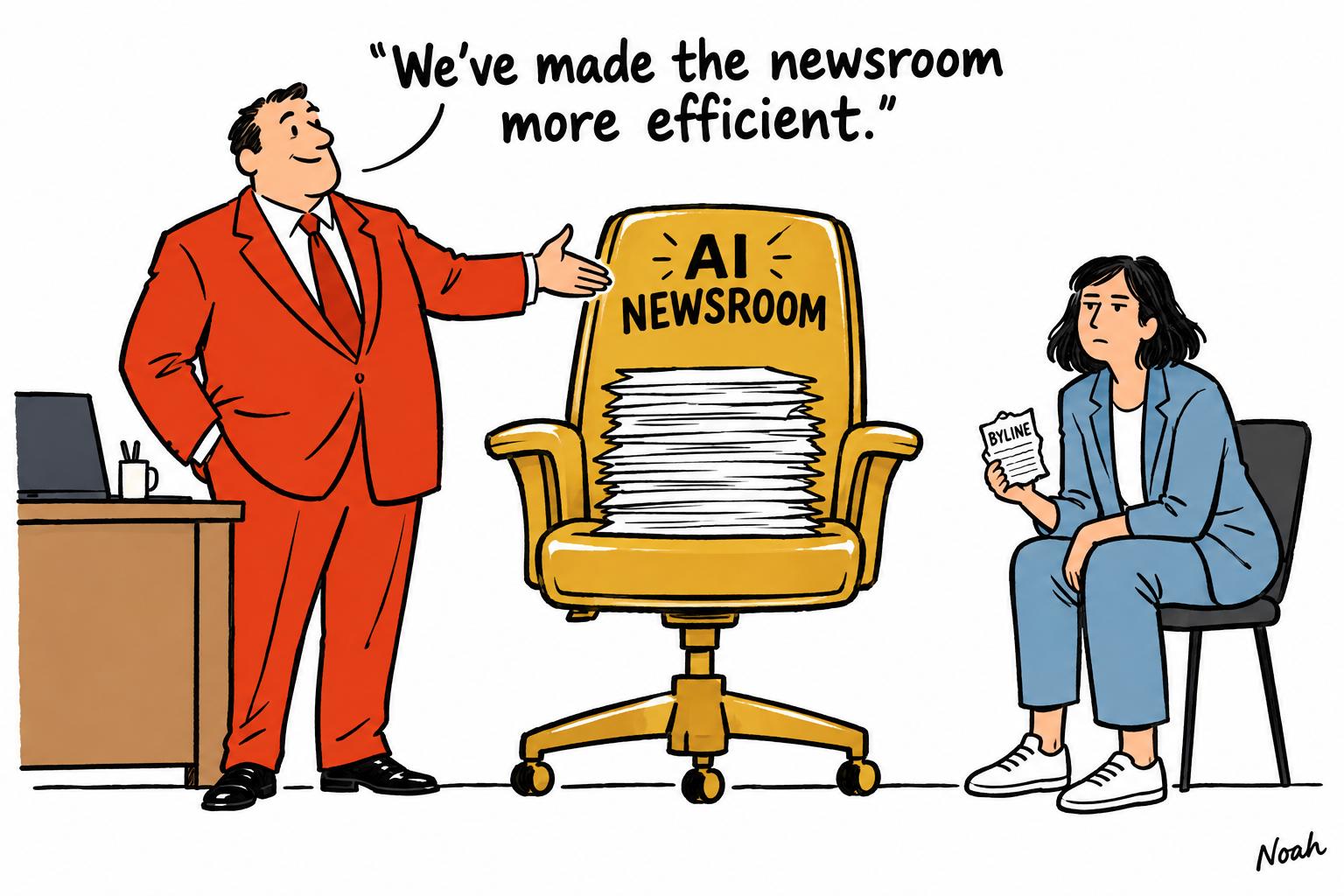
People Inc. builds a feed that tells AI partners when a story has changed
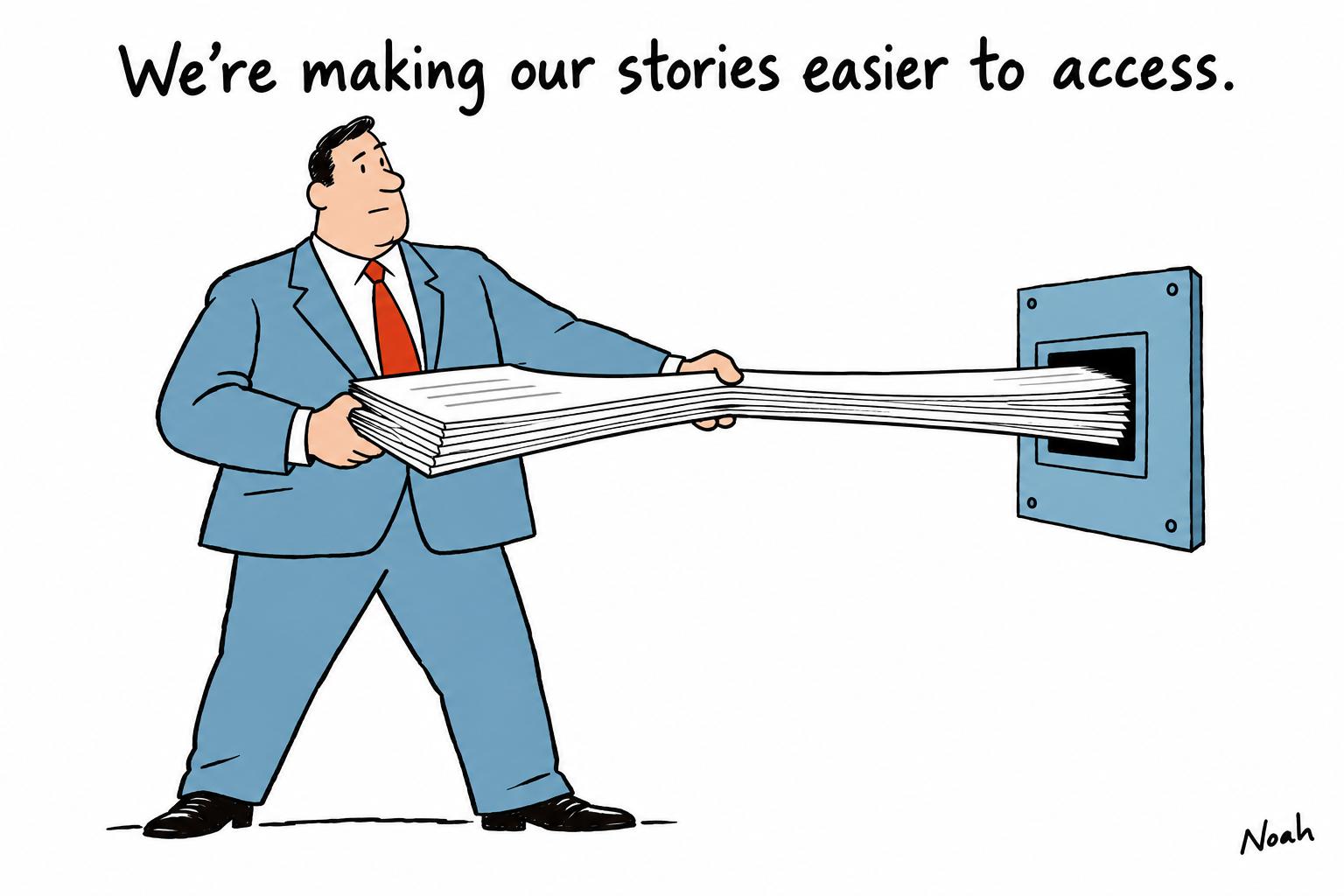
The publisher can send a byline, an update date and rights information with each article. Which partners use the feed, and what they pay for access, remain open questions.

131 stories · newest first

Readers liked the idea of hearing the paper’s top five stories. Listening figures told a different story. The newsroom found a second use for the scripts in videos presented by its journalists.

Digital teams took over five local editions at the end of September. A correction in Siegburg shows what can slip through when nobody calls the school at the centre of the story.

McClatchy is weaving automated tools into editorial and business operations after major newsroom cuts, as staff challenge how AI-reworked stories are produced, credited and disclosed.

A delegation from nine African countries explored how AI is being used in Chinese newsrooms, while raising concerns about accuracy, misinformation, ethics and the need to preserve human judgement.

Publishers are rolling out systems to automate routine work, but research suggests few have changed roles or workflows. Adapting to AI will take more than giving journalists new tools.

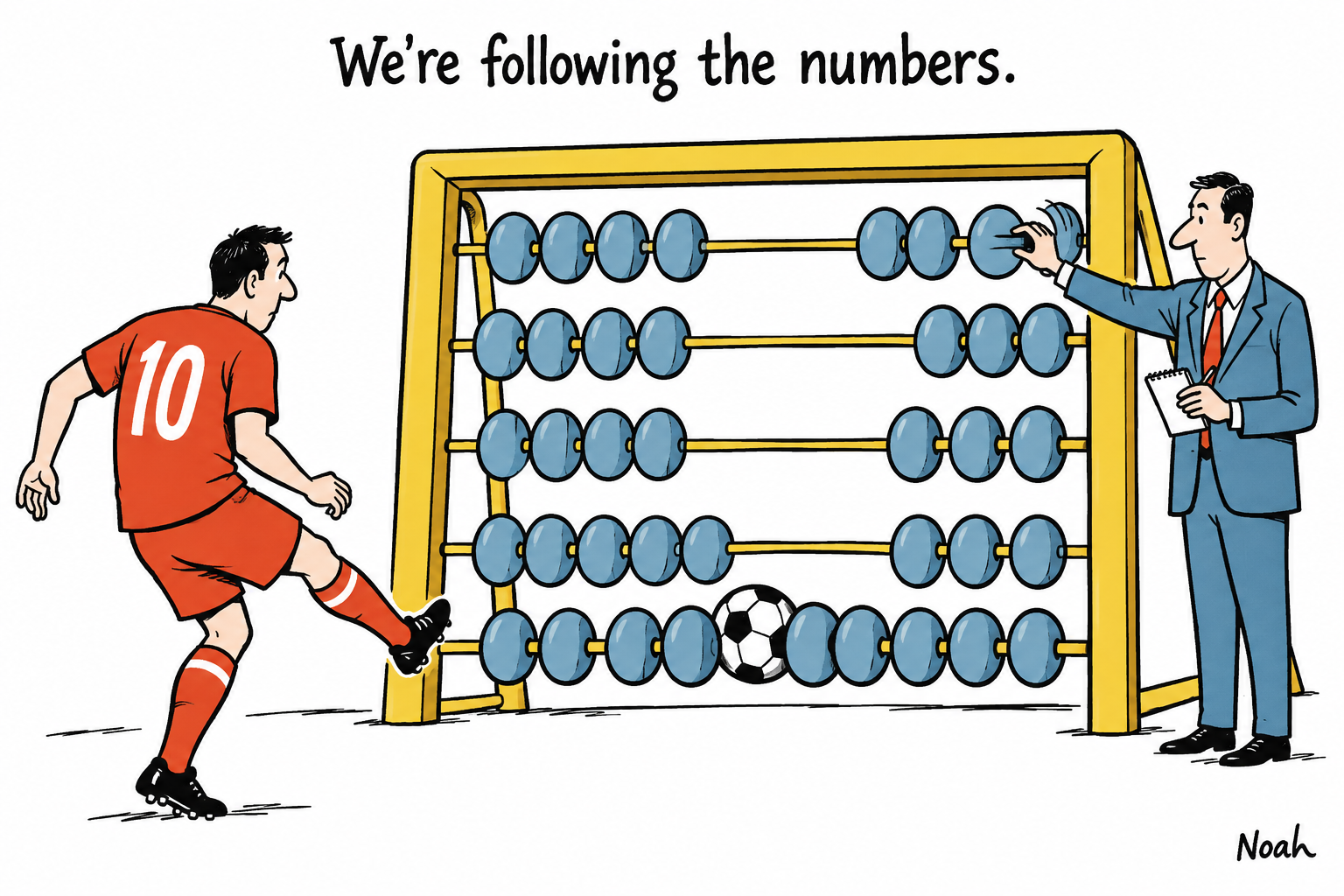
The regional publisher has more paying digital subscriptions and lower reported revenue per user. Across the Mail, Mirror and Sun, the harder question is what makes a reader stay.

About seven in ten voters under 30 backed Democratic House candidates, while economic anxiety and dissatisfaction with the administration shaped the wider result. The polling points to a Republican setback among younger voters, but cannot s

The partnership will help Collective Newsroom adapt existing BBC News material into short-form and vertical video, with the companies stressing editorial oversight and human judgement.

The Washington community newsroom says AI has cut comment-moderation work to about an hour a day, but clear rules and staff oversight remain essential.

Writers say publishers are defending their rights against AI companies while using the technology to produce marketing and editorial work, deepening a crisis of trust across the industry.

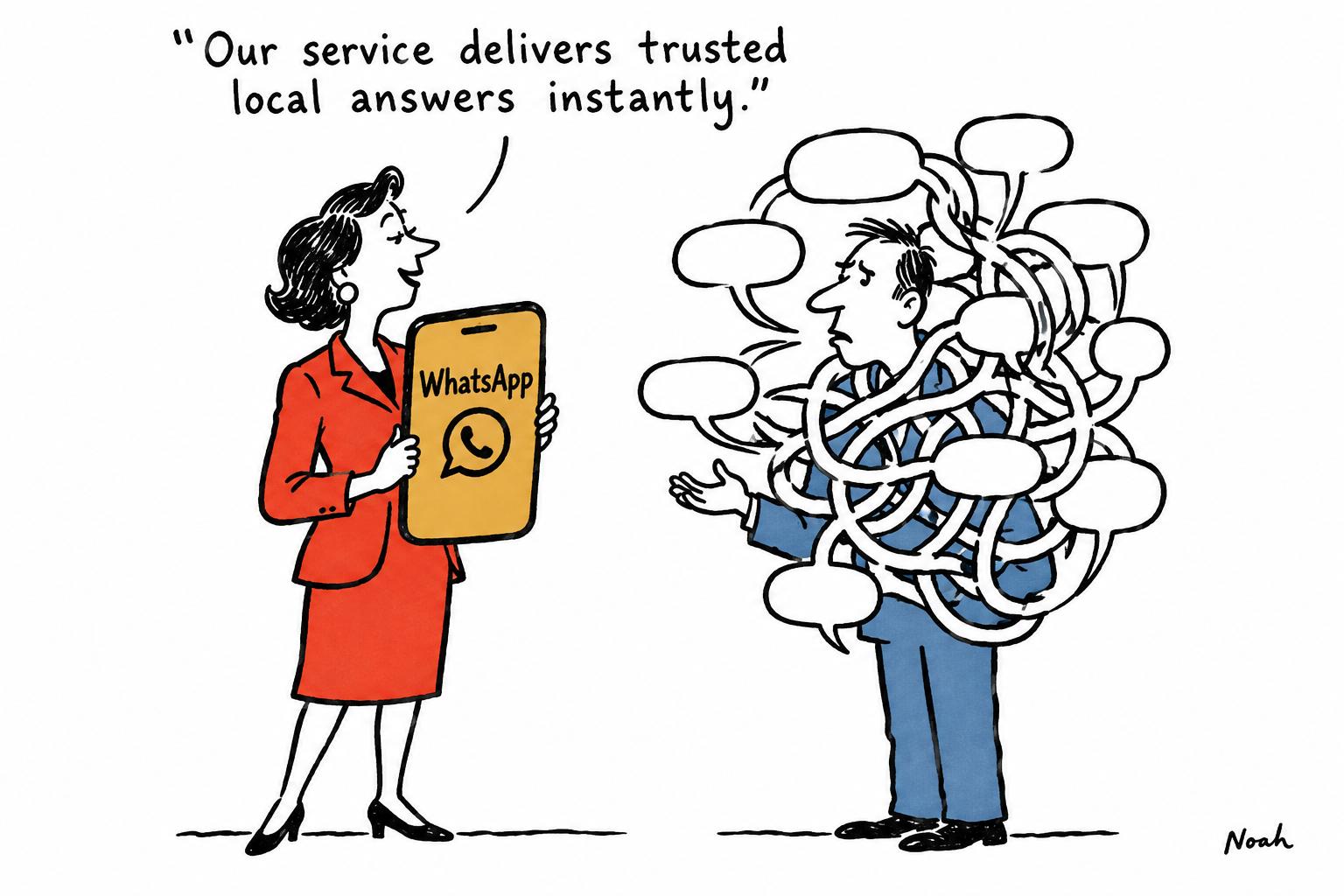
Readers can text or WhatsApp election questions to AsAmNews and receive answers drawn from its own reporting and selected partner outlets, with human oversight.

TV station groups are shifting the AI debate from adoption to execution, weighing in-house control against vendor expertise while targeting measurable gains in workflows, content and advertising.

The FT’s discussion experiment points to a useful reader product. As Discourse makes conversations easier for AI to consume, publishers need a stronger invitation for people—and a business case that goes beyond comment counts.

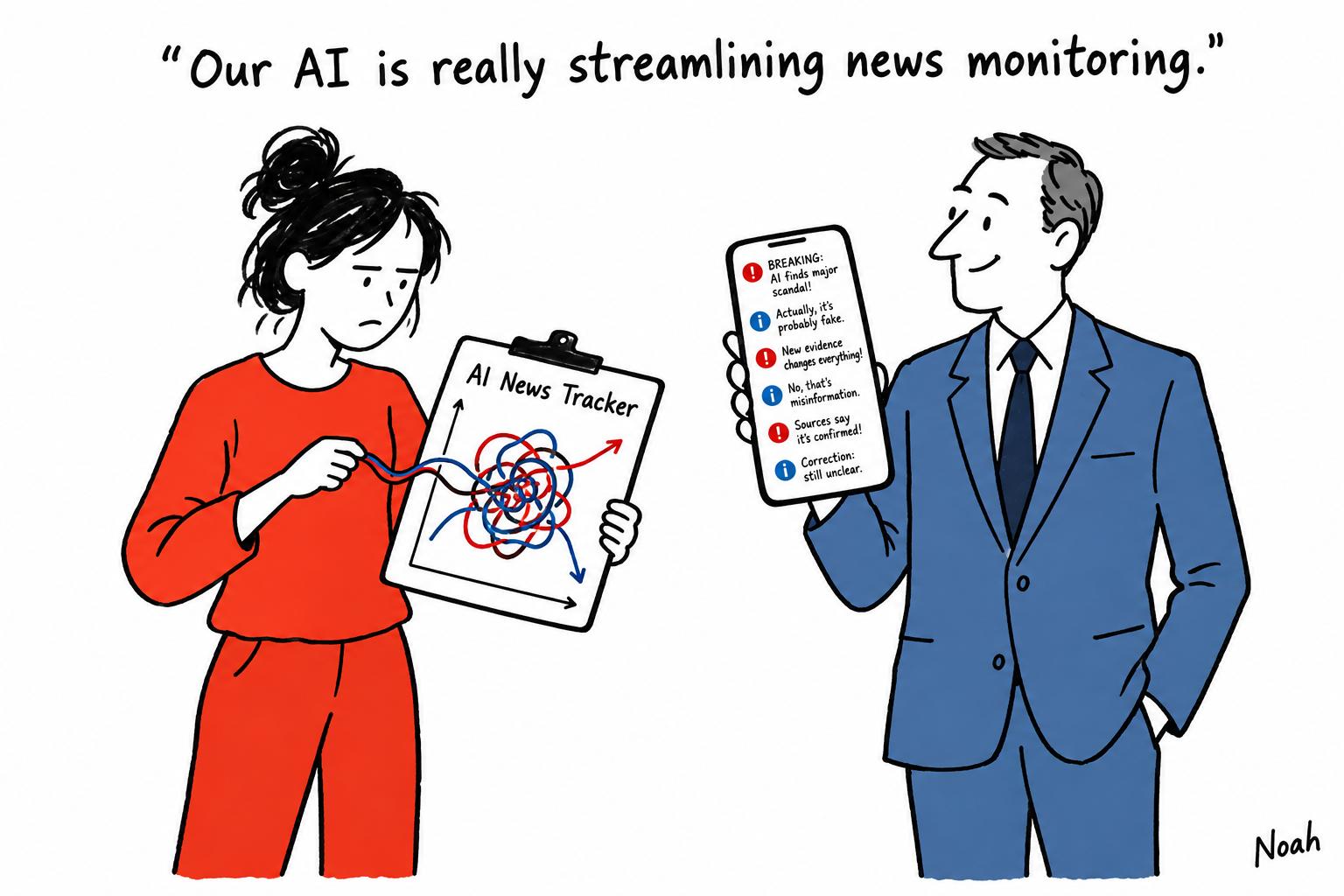
BeatNews is helping two major-market television newsrooms track public records and agency updates, as its student founders prepare to expand the service across the US.

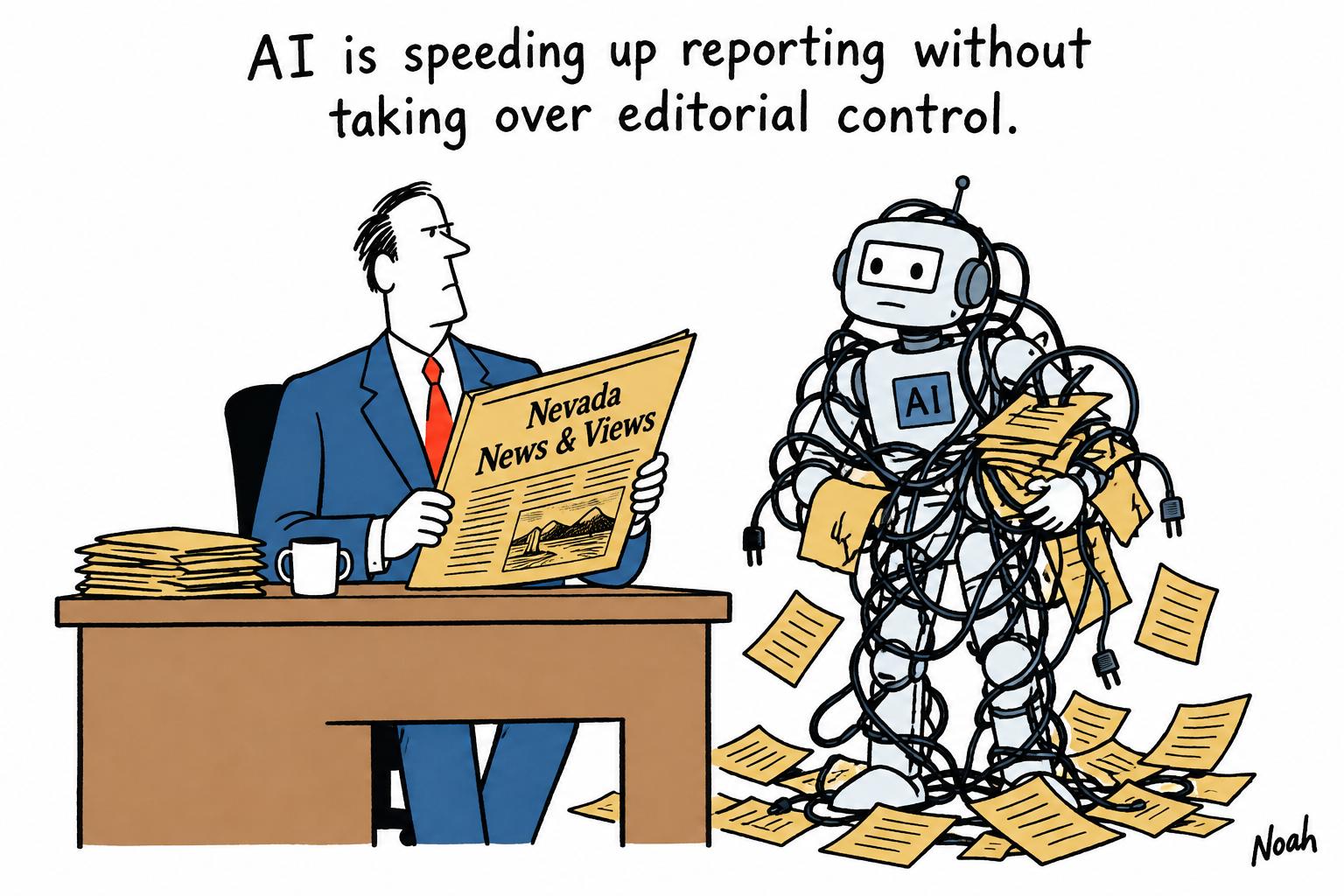
Falling search referrals and direct visits are squeezing major publishers, but Nevada News & Views says AI-assisted reporting can help smaller newsrooms work faster while keeping human journalists in charge.

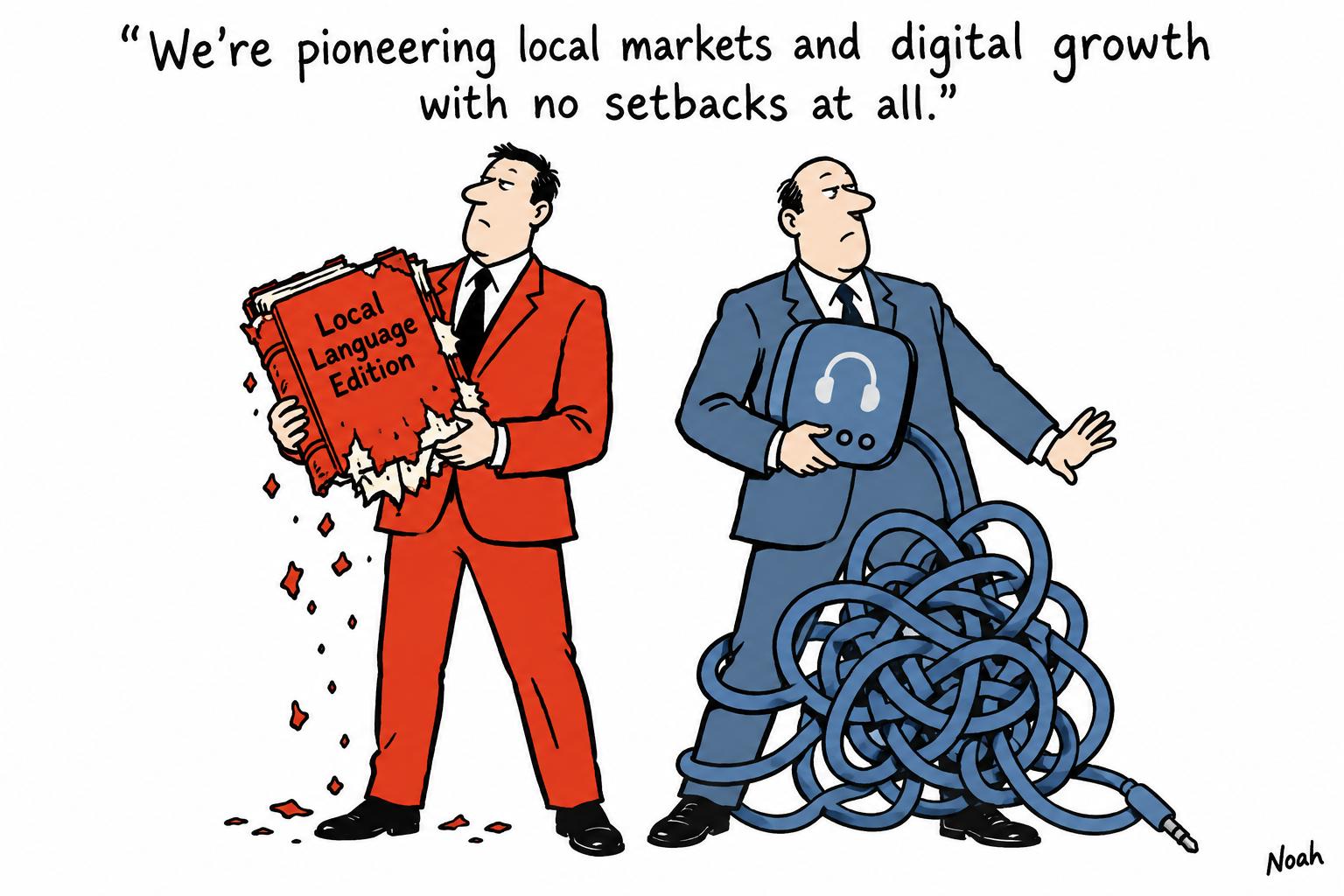
Publishers are racing to exploit audiobook growth and digital platforms while confronting AI-driven job losses, shrinking margins and the erosion of local-language markets.

The Guardian has made subscription sharing a premium benefit. Noah’s forecast favours wider UK availability; the harder question is whether invited readers create habits, retention and new payments.

AI promises faster, cheaper production for under-resourced Caribbean publishers, but regional leaders warn that unchecked adoption could cost jobs, weaken trust and flatten the distinctive voice of Caribbean journalism.

Media Trust Group is set to launch a converged digital newsroom linking Daily Trust, Trust TV, Trust Radio, Aminiya and Digital Trust to speed up reporting and reach audiences across platforms.

Employees at major US publishers say managers are promoting ChatGPT and Claude for everyday work, exposing a widening gap between the industry’s public resistance to AI and its internal adoption.

The New York Times, Agence France-Presse and The Economist have joined SPUR, which has launched an open-source standard to track how AI systems retrieve and use journalism.

The Swedish newspaper is creating virtual reader groups from 60 in-depth interviews, giving editorial and product teams a new way to test ideas and explore audience perspectives.

More than 1,000 news organisations are joining a global campaign to defend fact-based journalism as audiences increasingly turn to social media, influencers and AI for news.

Publishers must focus on proving value, trust, and usefulness in an AI-saturated landscape Transition from advertising reliance towards subscriptions and circulation income Emphasis on audience segmentation, relevance, and experiences to st

News organisations are shifting focus towards community-building to reconnect with audiences Success varies: B2B publishers excel while general news outlets face challenges Building genuine communities requires patience, specialised focus,

Economist launches Economist Play, a $15/month multimedia bundle combining videos, podcasts, and newsletters Strategy aims to reach a younger, gender-balanced audience with mobile-first content Emphasis on newsroom authenticity through face

The Wall Street Journal is taking a measured approach to artificial intelligence, with its head of digital, Taneth Evans, saying every new tool must prove it genuinely improves journalism or helps readers understand the world more clearly.

Forbes launches Forbes Creator to leverage social media personalities New platform combines journalistic content with creator autonomy Aims to expand reach, diversify content, and develop commercial opportunities Forbes is deepening its pus

Social media and video now the primary news sources globally Trust in news drops to a historic low of 37%, with Americans trusting only 25% News organisations face the challenge of rebuilding trust amidst AI content proliferation Forget the

News organisations are reducing their story counts to boost engagement Examples show that fewer stories can lead to increased traffic and readership Challenges include journalistic instincts and the pressure to cover major events extensivel

Highlights the NYT’s clear strategic vision driven by purpose Emphasises the importance of distinctive content to survive amid tech dominance Questions the future of audience-first journalism in an era of declining trust When Meredith Kopit

Dow Jones and The Wall Street Journal launching a new sports-business vertical in July Focuses on sport as a fast-growing asset class for investors and owners Part of a wider media trend to treat sports as a lucrative commercial sector The
The Wall Street Journal uses TikTok to engage younger readers Emphasises exclusivity, authenticity, and verification in social videos Aims to reinforce subscriptions and attract new audiences through social-first storytelling The Wall Stree
Highlights the importance of audience teams in newsrooms Critiques their ongoing marginalisation despite proven value Advocates for promoting audience specialists to leadership roles This first appeared in our weekly newsletter Editor’s pic
Gen Z remains the primary audience for TikTok but shows signs of waning trust Users nostalgic for earlier, less commercial days and more cautious about content Creators and users increasingly turn to alternatives like YouTube amidst TikTok’
A weekly briefing for people shaping the future of publishing.
Free. Email requests are handled by our team.