How local newsrooms can turn verified event details into AI teasers before deadline
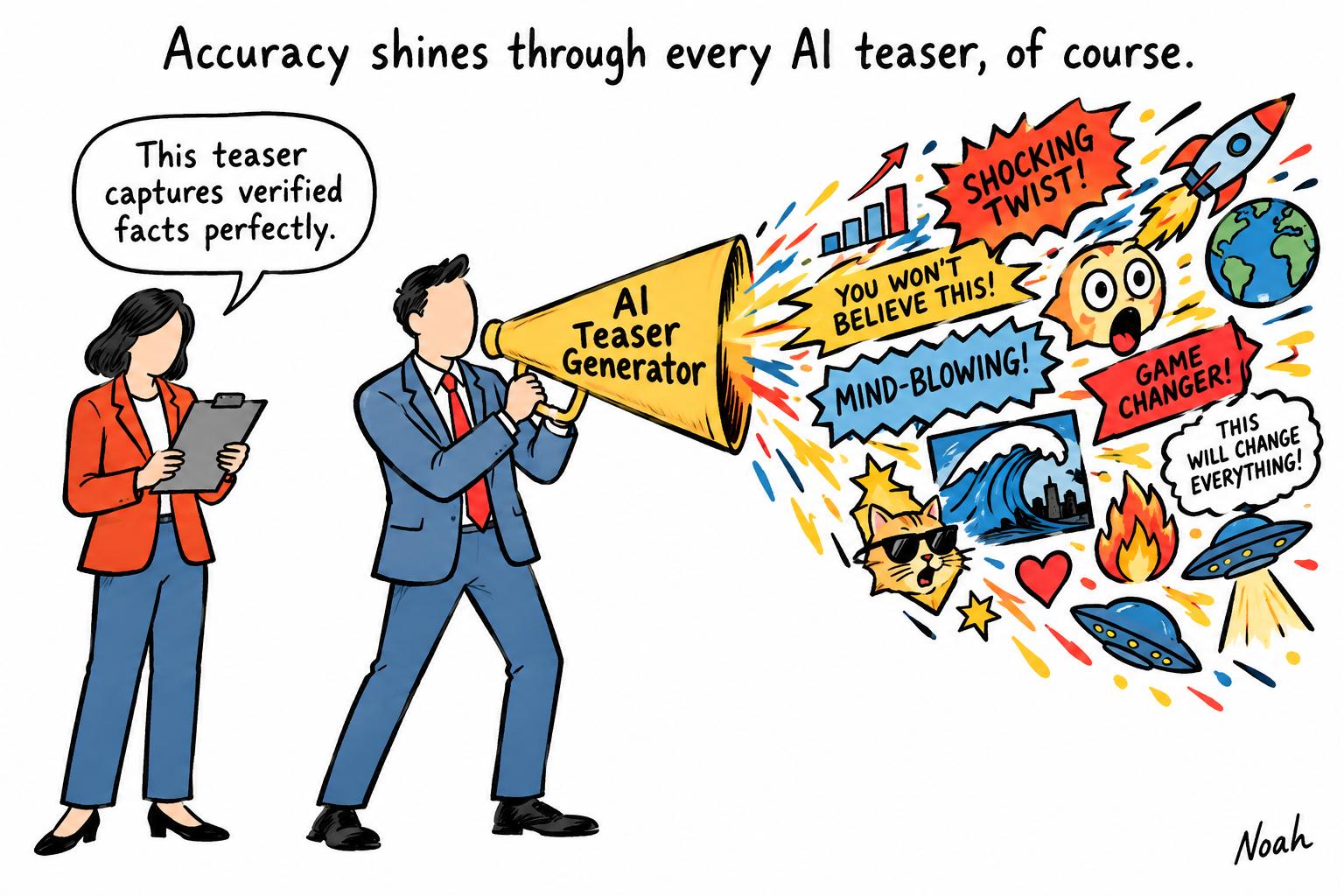
Cartoon · AI-generated
A disciplined workflow can help small newsrooms produce 20- to 30-second event teasers quickly, while keeping facts accurate and generated visuals clearly promotional.
For local newsrooms working against the clock, a short event teaser can be a practical way to turn a flyer and a deadline into something publishable. The workflow described by OCNJ Daily centres on a narrow, disciplined task: produce a 20- to 30-second clip that tells readers what is happening, when and where it is happening, and why it may be worth their evening. That approach closely matches other guides for small newsrooms, which stress that AI can speed up explainer and promo production without sacrificing editorial control, provided the story is built from verified facts rather than guesswork.
The first step is to treat the opening portion of the job as reporting, not production. According to the workflow, the initial minutes should be spent checking the organiser’s details, the flyer and any previous coverage, so the team can lock down the essentials: what the event is, when it begins, where it will be held, who it is for and one specific detail that gives it texture. That caution is echoed in other event-teaser guides, which recommend breaking a brief into a small number of discrete scene studies and keeping the facts anchored in the organiser’s material before any clip is generated.
Once the facts are confirmed, the brief is converted into a shot list. The article advises newsrooms to think in plain language and to keep the visuals atmospheric rather than documentary, using a few simple scenes such as an exterior at dusk, people exchanging cards, a speaker at a podium or a crowd in a hall. Similar guidance from other AI teaser workflows recommends structuring the video around a handful of visual beats: an opening hook, a middle reveal and a closing invitation. The point is not to recreate the event before it happens, but to suggest its mood and give the audience a clear reason to click or attend.
That distinction matters because a teaser is promotional copy in visual form, not a substitute for reporting. The piece warns against implying that generated scenes are actual footage of the organiser, attendees or venue activity, and it makes clear that newsroom staff should avoid inventing details that are not on the flyer or confirmed by the organiser. Other guides for event promotion make the same point more broadly: when there is no real footage, the safest material is venue imagery, atmosphere shots, previously published images or supplied photographs, all framed honestly as promotional content.
The caption carries the burden the video cannot. The suggested template places the event name, day, date, time and venue up front, then adds one concrete hook before directing readers to the full listing. The article recommends keeping the copy short, especially on platforms that reward brevity, and putting the key practical details at the top so they are not missed. That structure aligns with other short-form event guides, which usually finish with a call to action after the hook and a small number of highlights.
Before publication, the newsroom is urged to run a final accuracy check. Every detail in the caption should trace back to the organiser, the link should resolve correctly and the generated visuals should not be sold as real event coverage. The broader message across the related guides is that AI can compress a once time-consuming task into a deadline-friendly workflow, but only if journalists keep the same standards they would apply to any other published item. Saved shot lists and captions can then be reused the next time the same event returns, turning a one-off scramble into a repeatable newsroom routine.
Inspired by headline at: [1]
Sources by paragraph: - Paragraph 1: [2], [3] - Paragraph 2: [2], [3] - Paragraph 3: [3], [4] - Paragraph 4: [5], [6] - Paragraph 5: [2], [4], [7]
Source: Noah Wire Services · Original