DMG’s social shows have buyers. The margin matters more
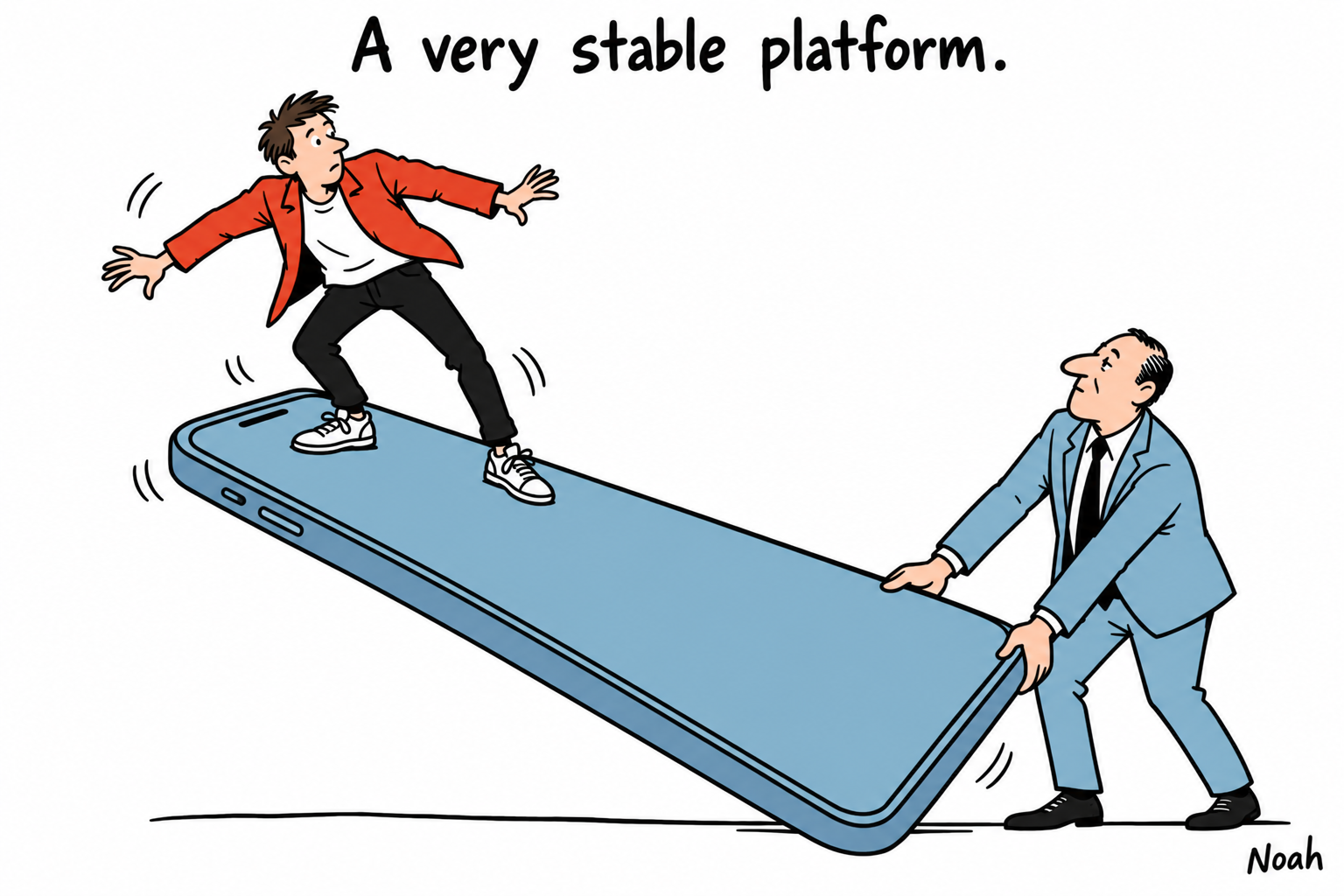
Cartoon · AI-generated
DMG has found advertisers willing to buy social video without a newspaper or website campaign attached. On 28 October, New Media director Nathan Aspell said those social-only commissions accounted for 30% of the division’s revenue. That is evidence of demand. It leaves the more awkward question of what the work costs to deliver.
The division’s absolute revenue and profit have not been disclosed. Its sales result deserves attention, but publishers considering a similar operation should resist treating it as a ready-made business case. Advertisers gain another way to reach an audience; the publisher takes on production commitments and a payroll that continues between campaigns.
A show is something a buyer can understand
Aspell describes 25 salaried creators working alongside producers and editors. DMG owns the formats they develop, including PM for a Day and a social version of Metro’s Rush Hour Crush. A recognisable premise gives viewers something to return to and a sales team something more specific to offer than access to a large account.
That is a sensible change in the sales proposition. It also invites a comparison with a production agency. If each advertiser needs a heavily customised series, repeated approvals and extra distribution, the publisher may have sold skilled work rather than created a product it can sell again cheaply. A successful first commission does not settle that distinction.
DMG’s Nationwide partnership makes the offer tangible. Announced on 4 November 2025, it combined the Spent! podcast with sponsorship of the This Is Money TikTok channel and plans for eight content formats. It shows an advertiser involved in a broader content proposition. Because the deal spans channels, it does not prove the size of a social-only budget or a subsequent renewal.
The question for a smaller publisher is which part of the model it could reproduce. An established financial audience or a familiar local sporting ritual may give a series a reason to exist. Hiring creators and publishing more clips cannot supply that reason on their own.
More advertiser work can mean a thinner margin
LBG Media’s 27 October trading update illustrates why revenue mix matters. For the year ended 30 September 2026, Direct revenue, which includes work made for advertisers and agencies, rose 69%, or 57% excluding the Uncovered acquisition. Indirect revenue, including platform revenue-sharing and website advertising, fell 50%.
The group expects adjusted EBITDA, an earnings measure, of about £16.5m, down 35% on the previous year. These are trading estimates ahead of full results. LBG’s June half-year account had already explained that Direct revenue carried lower margins than Indirect, while investment in sales and operations also weighed on earnings.
Those figures do not establish DMG’s economics. They do challenge an easy reading of the opportunity: moving closer to advertisers does not automatically replace the earnings lost elsewhere. An operation can win more commissions while the group makes less money.
Sponsorship, platform payments and affiliate commerce also involve different bargains. In commissioned work, an advertiser pays for agreed production and distribution. A platform sets its own revenue-sharing terms. An affiliate commission depends on an eligible purchase. Combining all three under social revenue can obscure which activity is worth expanding.
Owning a format is not the same as owning its audience
Publisher ownership of a show gives the business rights it can reuse and develop. It may help it sell another episode, change a sponsor or make a version for another outlet. Viewers, however, may be attached to the presenter. The ownership of the name does not oblige them to watch a replacement.
That makes the production method part of the asset. A format is more durable when another team can understand its premise, make a convincing episode and work within clear rights. Otherwise the publisher may own a title while the scarce commercial value remains with a person it must keep.
Salaried creators can build that method over time. They also turn gaps between campaigns into the publisher’s cost. A comparison with freelance bookings should include development time, unused capacity and management, rather than count only the days when a sponsor is paying.
Everywhere offers a different arrangement. Launched in September by Andy Goldsmith, Mike Wooller and Craig Eastwood, it provides a commercial sales operation across creators’ channels. In a Podnews interview on 11 September, its founders said it takes a revenue share and leaves creators owning their content. It had no live campaigns at that point.
That is an alternative division of risk and ownership, not evidence that representation earns more than employment. A publisher needs to decide whether it is buying a personality, building a production capability or developing an asset it can keep. The contracts and costs should reflect the answer.
Cheap production raises the question of distinctiveness
Amazon expanded its product-video generator to the UK in November 2025. It says advertisers can create up to six 15-second variants from product information within minutes at no additional production cost. That is not free advertising, and there is no basis here for claiming it has displaced publisher shows.
It does make generic production a less persuasive reason to hire a publisher. The stronger offer is a recognisable audience, an editorial sensibility or a host whose involvement means something. AI may reduce parts of the production bill; it does not automatically supply any of those advantages.
Commercial work also needs to be recognisable as commercial work. The ASA’s current guidance calls for advertising to be identifiable upfront and warns that a platform’s paid-partnership label may not always be sufficient. A sponsor buying the audience’s trust should not require the publisher to conceal who is paying.
The feed remains someone else’s property
A publisher can own the show and invoice the advertiser while remaining dependent on a platform for distribution. Changes to a feed can affect delivery. If the commercial promise is a particular audience or volume of exposure, the price must allow for what happens when the original distribution plan falls short.
Views alone are a poor substitute for that promise. They do not automatically mean unique people, attentive viewing or sales. A sponsor seeking a business outcome needs an agreed way to observe it. A publisher seeking a repeat order needs to know whether the buyer valued the result enough to pay again.
Keeping usable footage, captions and versions for other outlets can reduce some dependency where rights permit. It is preparation, not a guarantee that the audience will follow the programme elsewhere. That remains a separate relationship to earn.
The second commission is the revealing one
Take a hypothetical four-episode commission priced at £24,000. Creator and production time of £10,000, editing and other delivery costs of £4,000, and sales and account work of £3,000 leave £7,000 before shared overheads. An unpriced £5,000 revision or extra distribution commitment cuts that remainder to £2,000. These are illustrative figures, not DMG’s prices.
The headline fee has not changed. The quality of the business has. Approval rounds, usage rights and additional distribution matter because they can consume the margin after the sale has been celebrated.
DMG’s result shows that social audiences can attract advertiser budgets in their own right. It does not yet tell an outsider how profitable or repeatable that work is. The useful lesson is to investigate those economics, not copy the payroll. A worthwhile second commission would reveal more than another large viewing figure.
Research note
Research used company announcements, financial updates, original reporting and an interview transcript. Automated forecasts were unavailable. No replacement probabilities have been supplied.
Sources
- Digiday: One year in: DMG Media’s social-only briefs account for 30% of New Media revenue
- DMG New Media: DMG New Media commercial site
- dmg media: Head of New Media on growth plans
- dmg media: New podcast, new partnership
- LBG Media: Half-year results for six months ended 31 March 2026
- ASA/CAP: Recognising ads: Social media and influencer marketing
- LBG Media: Full year trading update
- Podnews Weekly Review: Everywhere founders interview, 11 September 2026
- Amazon Ads: Video Generator expansion, 11 November 2025
Source: Tomorrow’s Publisher