Goncourt winner Jaenada says he used AI three times — including to plant a clue
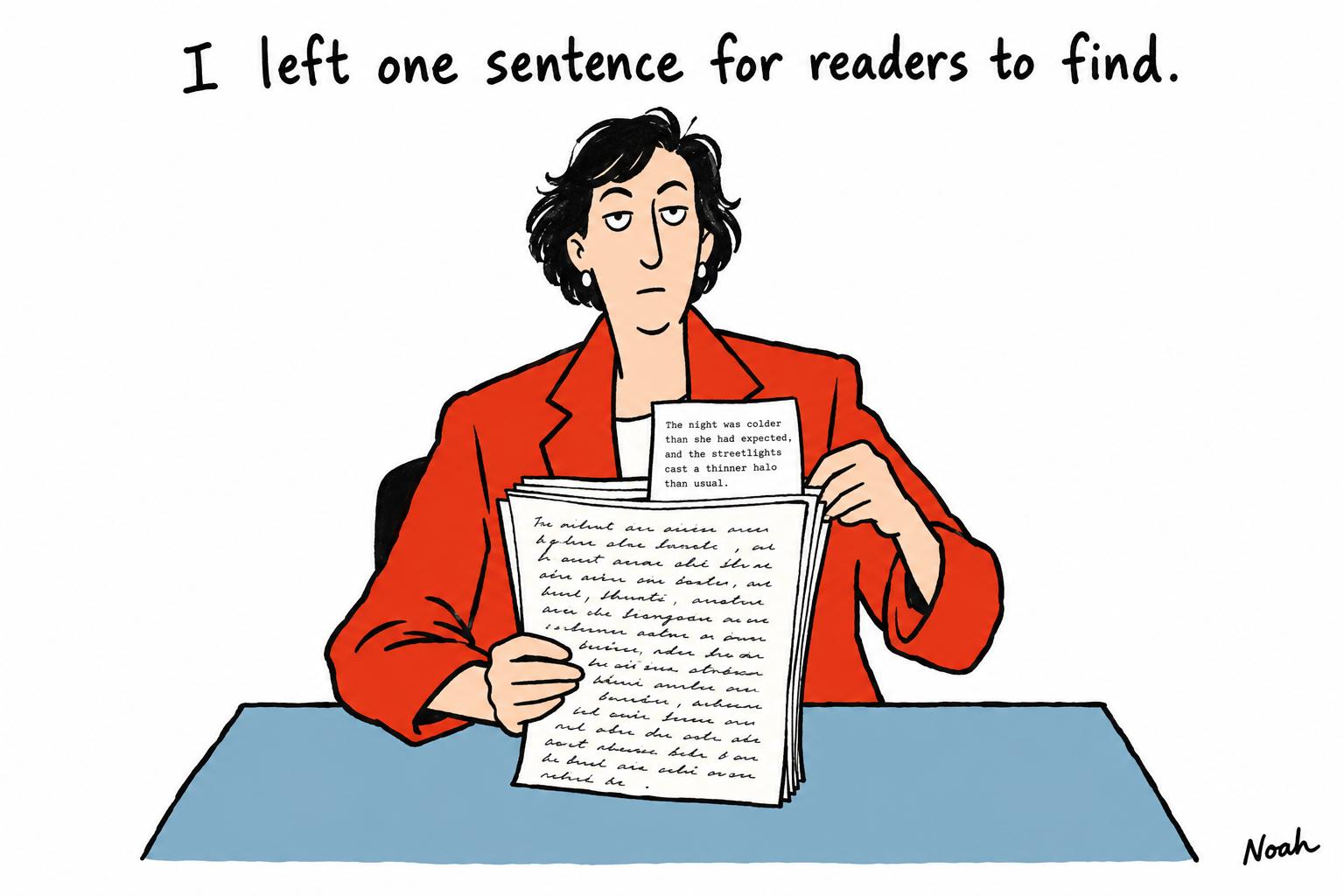
Cartoon · AI-generated
The 2026 laureate says he used AI for research and to test its limits, while leaving a ChatGPT-generated sentence in his novel for readers to find.
Philippe Jaenada has described using artificial intelligence three times while writing the novel that won him the 2026 Prix Goncourt, presenting the experiments as limited and deliberate rather than an attempt to outsource his work. Speaking to France Inter the day after the award, he said writers should engage with the technology while ensuring it does not take their place, La Dépêche reported.
One use was to leave a sentence generated by ChatGPT in the novel as a challenge for readers to spot. He also turned to AI for research and used another exchange to highlight the software’s capacity to produce nonsensical answers. According to 20 Minutes, the book itself recounts an exchange with ChatGPT and Claude about whether paving stones or hair dry more quickly, including answers Jaenada considered inaccurate.
The admission was not, however, a sudden disclosure: 20 Minutes noted that Jaenada had already discussed these experiments in the novel. His approach also sits within a broader debate about how authors should disclose AI’s role in their work, and whether clearly identifying machine-generated passages could help readers understand how a book was made.
That debate had intensified after Thélyson Orélien’s novel C’était ça ou mourir was removed from the Goncourt selection amid allegations of extensive AI use and plagiarism. The Académie Goncourt said its decision was intended to protect the award’s integrity and its recognition of literature written by human authors, Le Parisien reported. Orélien rejected the suggestion that the criticism was only about his book and said he felt there was an effort to silence him.
The allegations should not be treated as established fact. A Canadian Press report published by Global News said Orélien denied using AI, while also noting that detection scores are not definitive proof of how much of a text was machine-generated. The controversy nevertheless brought questions of authorship and transparency into sharp focus during the prize season.
Jaenada’s winning novel returns to the 1949 killing of Louise Cansot, a 29-year-old woman found dead in Paris. TV5MONDE reported that the academy awarded him six votes, against three for Sylvain Prudhomme, and placed the book within Jaenada’s wider body of investigative writing. His account of three limited uses of AI therefore adds a distinct strand to the discussion: not only whether writers use the tools, but how openly they explain their role.
Inspired by headline at: [1]
Sources by paragraph: - Paragraph 1: [2] - Paragraph 2: [3] - Paragraph 3: [3] - Paragraph 4: [4] - Paragraph 5: [6] - Paragraph 6: [5]
Source: Noah Wire Services · Original