Yahoo signs a collective AI licence. Now follow the royalties
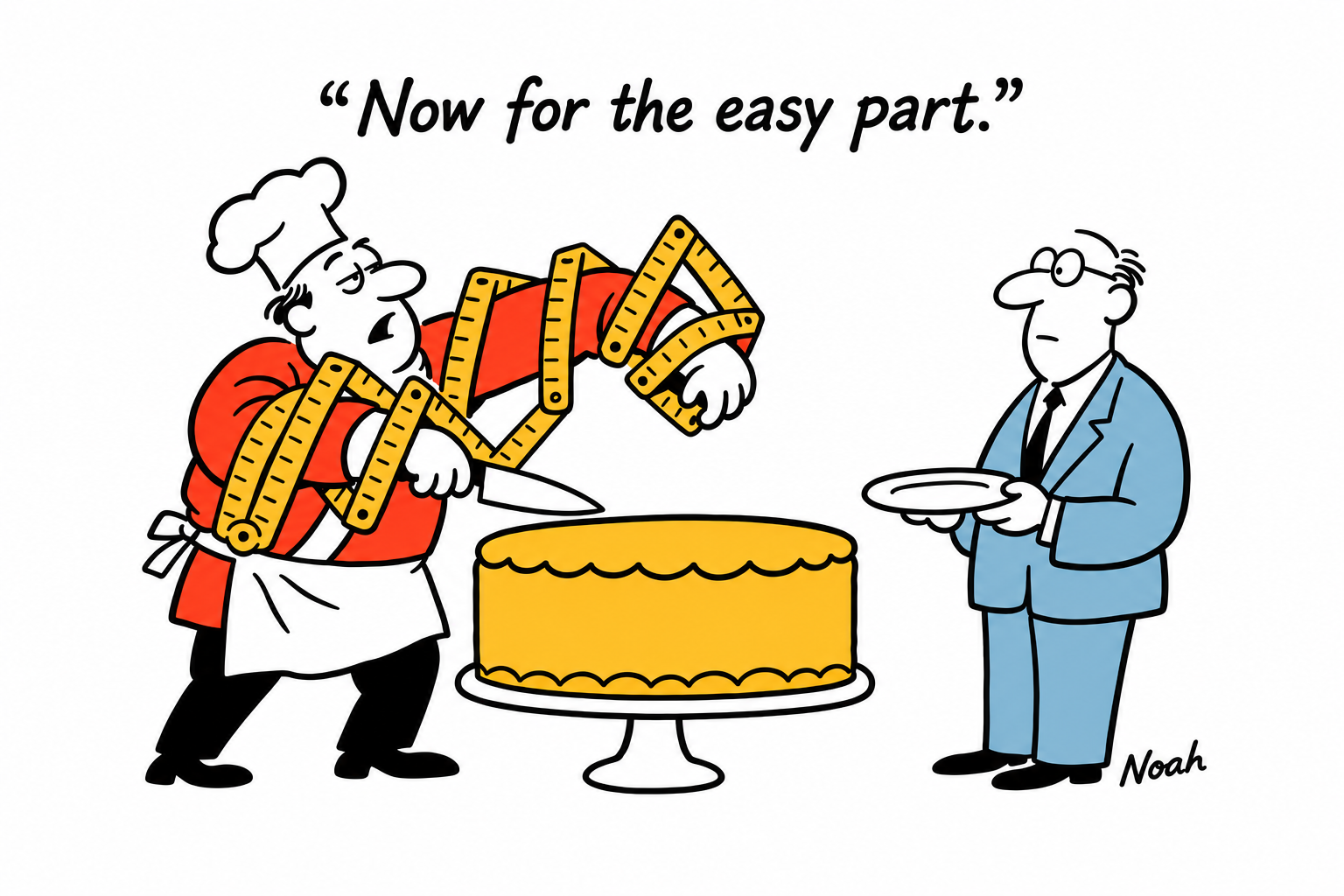
Cartoon · AI-generated
Yahoo has become the first commercial customer of the Internet Licensing Collective, turning a proposal for shared AI content licensing into a deal. For publishers too small to negotiate individually, that creates a potential route to payment when their work helps an AI answer. Yahoo gains a simpler way to secure permission across participating content. Publishers still bear the work of identifying rights they can license and checking what they earn.
The agreement, announced on 12 November, is a useful advance. The decision now is whether the collective can produce an intelligible, checkable royalty statement. Joining a scheme and forecasting income from it are different commitments. A publisher should be able to trace the second to money received, the applicable rules and its own licensed work.
The UK connection is immediate. Yahoo said on 10 November that its rebuilt Search, combining conventional results with Scout AI answers, was available on desktop and mobile web in the UK and Europe. That is a distribution claim from Yahoo, rather than evidence of UK publisher earnings.
The collective lists The Guardian, Future and Mediahuis among its supporters. Those names establish interest across British and European publishing, but do not establish participation in this particular deal. ILC’s publisher guidance explicitly requires an opt-in for each specific licence. A supporter list is neither Yahoo’s licensed catalogue nor a roll-call of royalty recipients.
Noah, a research and forecasting service, puts the chance of at least one publisher in the Guardian, Future, Newsquest or Mediahuis groups receiving a cash royalty distribution from Yahoo’s ILC licence between 15 November 2026 and 14 May 2027 at 53%, with an uncertainty range of 25% to 78%. The signed buyer creates a route to payment, but licence-specific participation and settlement remain unverified. One recipient would satisfy that forecast; dependable or material income is a higher commercial bar.
ILC co-founder Doug Leeds told Sara Guaglione in Digiday’s 12 November interview: “a song is a song is a song, and content is very different”. An article can supply an answer, check one fact or inform it without appearing as a citation.
Leeds did not disclose Yahoo’s fee or the exact allocation formula to Digiday. The absence of those figures from the published account does not establish what participating publishers can inspect privately. It does mean outsiders cannot calculate a newspaper’s likely return from the announcement.
Nor can an economic model supply the missing tariff. Mather Economics’ November report, The Price of Intelligence, estimates that AI firms could rationally value protected content access at 15% to 35% of revenue, depending on collective coverage and other assumptions. Its footnote says willingness to pay “does not imply that any particular AI firm has agreed to specific license terms”.
That qualification comes from authors Matt Lindsay, Nathan Hart and Benji Stalvey themselves. Their estimate models the profit an AI business would lose without access, rather than reporting a negotiated share. The authors say ILC neither commissioned nor paid for their study. They also explicitly support collective licensing’s premise. The work deserves consideration on its assumptions, not conversion into a claim about Yahoo’s cheque.
Two calculations, not one
The first calculation is what the AI company pays. The second is how participating publishers divide the available money. A growing buyer can enlarge the pool while an individual publisher receives less if the eligible repertoire expands faster than its contribution. That is a consequence of sharing a finite pool, not a prediction that ILC will disadvantage small publishers.
ILC’s public licence explanation ties fees to AI product revenue and allocations to the contribution of individual works. It distinguishes primary material, supporting information, background knowledge and a publication’s brand being referenced. It also distinguishes the economics of different products and geographic markets. These are allocation principles, not published numerical weights.
There is a sound reason to resist a single payment per citation. A specialist source might resolve the central question while several other links provide background. Counting every link equally could reward visibility rather than usefulness. Recognising uncited contributions could pay for work that a citation-only system misses, provided those contributions can be identified reliably.
But replacing a simple count with a judgement about value raises a harder measurement question. If the source is not visible in the answer, a publisher needs an explanation of how the contribution was established. A claim that quality matters is not enough to reproduce an allocation. The useful disclosure is the route from recorded use to weighted share, including how corrections affect a later payment.
Leeds described separate royalty pools for each AI company, rather than one combined fund, to Digiday. That could prevent specialist material used by a valuable niche service being diluted by unrelated mass-market content. It also makes the relevant buyer’s economics consequential. A large collective repertoire does not automatically give every participant a claim on every licensee’s revenue.
A deliberately hypothetical example makes the distinction clear. Suppose an AI product has £100,000 available for distribution after administration costs. A publisher allocated 1% receives £1,000. Doubling the pool doubles that payment only if the publisher’s share remains 1%. Neither the illustrative sum nor the percentage is an ILC tariff. Owning 1% of the catalogue would not, by itself, establish that allocation.
The statement is part of the product
ILC’s platform documentation says it does not store or redistribute publishers’ content. Content remains with its owner, with access arranged directly or through designated access URLs. The collective administers the commercial relationship. It is therefore important to distinguish the content route from the reporting route: serving an article and measuring its eventual contribution are separate operations.
The onboarding guide describes licensees sending aggregated usage files, which ILC applies to its allocation rules. The FAQ promises publishers reporting and a record of payments. The public licence page describes standardised reporting and auditing. These documents show the intended machinery; they do not demonstrate a completed Yahoo royalty cycle or an independently verified allocation.
A useful first statement would make the relevant period, eligible works, reported use, deductions and allocation understandable together. That is an editorial test of the scheme’s usefulness, not a claim that these fields are missing from a private portal. A publisher also needs a practical way to question a discrepancy. Otherwise a new revenue line arrives with another reporting dependency.
ILC projects operating expenses at or below 10% in its launch announcement. That is a projection, not a guaranteed ceiling or an audited result. The distinction matters even for a nonprofit: net proceeds depend on the cost of administration as well as the amount collected. Early receipts will reveal more than an ambitious market-size estimate.
The collective has a credible answer to one existing problem. Standard terms can make a transaction possible when neither a small publication nor an AI buyer can justify a bespoke negotiation. Free, non-exclusive membership also leaves room for direct agreements. Publishers with distinctive material and negotiating leverage can compare an individual bargain with collective access rather than assume one route must replace the other.
Britain’s Publishers’ Licensing Services offers a useful comparison. In an autumn update, chief executive Tom West said more than 350 publishers had opted into its generative AI product licensing options, while warning against expecting significant short-term revenue. Its separate workplace AI scheme had more than 800 participating publishers, with payments going out since March. Those are PLS’s reported figures, not Yahoo results; the update does not give the payments’ value.
The workplace scheme covers controlled internal uses, such as employees putting article extracts into approved AI tools to produce summaries. That is a different sale from permission to build or improve an AI product. The contrast shows why a broad category called AI licensing conceals businesses at different stages. An existing route to paying organisational customers can matter more to near-term income than the theoretical size of the technology market.
That comparison needs like-for-like scope. ILC allows publishers to choose content, buyers and authorised uses. A contract permitting retrieval for a current answer is not interchangeable with permission to train a model. The value of retaining a direct agreement depends on what each agreement actually covers, not simply which arrangement has the more impressive headline payment.
Yahoo is the first commercial licensee, so the immediate evidence is a market opening with one named buyer. Other companies joining would spread opportunity, but would not remove the need to understand each pool. Membership numbers alone will not show whether revenue is diversifying.
The next milestone worth following is a publisher able to connect its rights, usage report and cash receipt on terms it understands. Collective licensing has acquired a customer. Its claim to become dependable publishing income will be earned through the royalty statement.
Sources
- ILC launch announcement, 12 November 2026 (issuer press release)
- Sara Guaglione interviews Doug Leeds, Digiday, 12 November 2026
- Yahoo Search and Scout availability announcement, 10 November 2026
- Internet Licensing Collective supporter list
- ILC publisher participation and licence controls
- ILC public allocation framework
- Mather Economics: The Price of Intelligence, November 2026 (original PDF)
- ILC platform: content access and reporting
- ILC publisher onboarding guide, updated 17 October 2026
- ILC frequently asked questions: usage reporting and payments
- PLS chief executive Tom West’s autumn update: product and workplace AI licensing
- Research, method and forecast notes
Source: Tomorrow’s Publisher