WSJ uses AI to cut campaign planning from hours to one
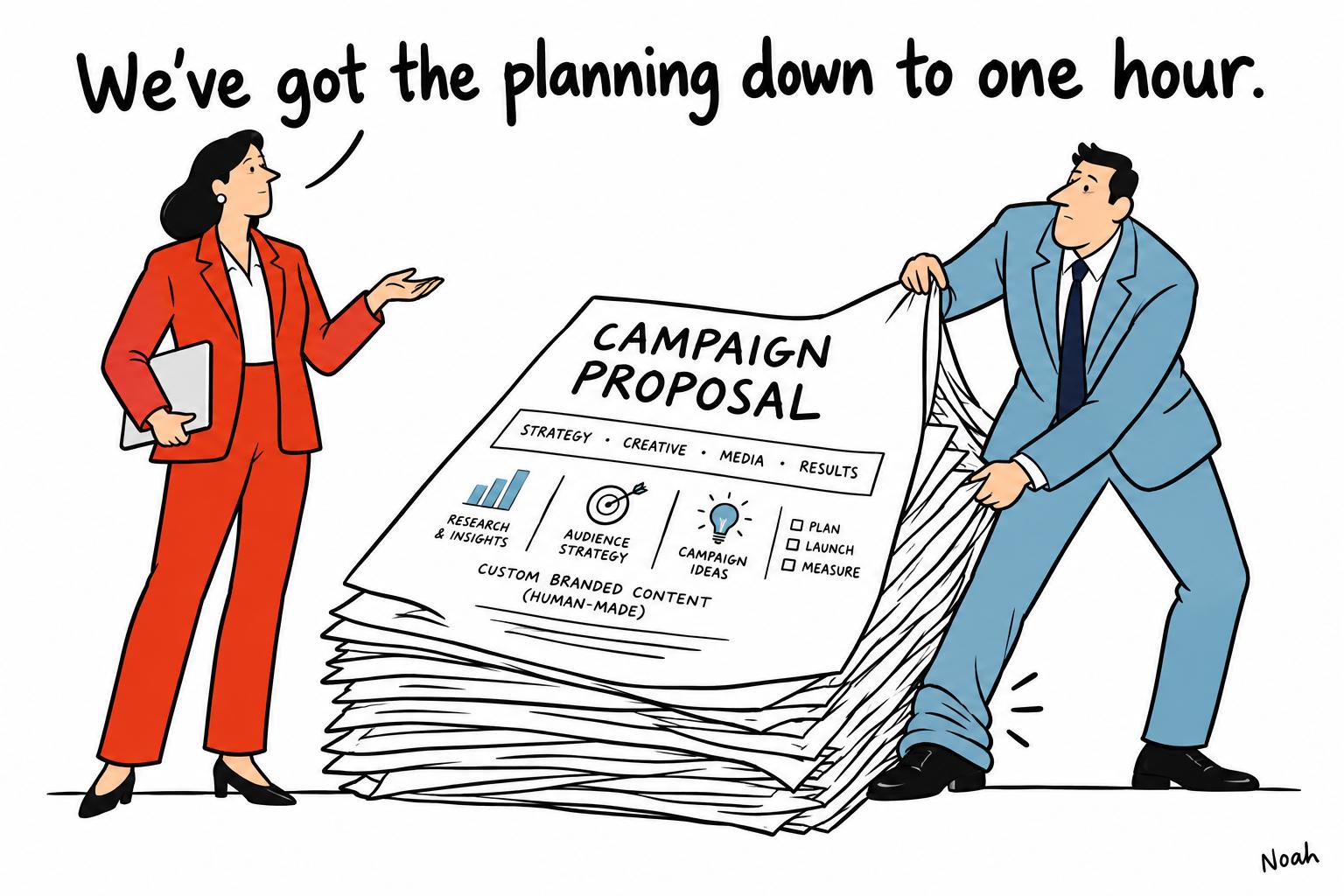
Cartoon · AI-generated
The publisher is testing AI tools to speed proposal planning and reduce campaign errors, while keeping custom branded content in human hands.
At The Wall Street Journal, artificial intelligence is being put to work less as a showpiece than as a way to clear routine obstacles from the advertising sales process. Josh Stinchcomb, the Journal’s global chief revenue officer, told AdExchanger that an internal search system can locate information buried in company messages and recap previous conversations with prospective clients, helping sales staff prepare for meetings without manually retracing old email and Slack threads. He described it as a time-saver for finding material that staff already have access to but cannot always retrieve quickly.
Another system supports digital campaign operations by checking order details against creative assets and insertion orders, while automating the capture of campaign screenshots. Stinchcomb told AdExchanger that these tasks are laborious and that automating them can reduce launch mistakes and the inventory losses that lead to make-goods.
The more substantial productivity gain may come in media planning. Stinchcomb said planners typically need four or five hours to turn a request for proposal into a campaign plan, in part because they must consult several systems to establish available inventory. A tool being tested can interpret an RFP, compare it with previous campaigns aimed at similar audiences and produce a suggested plan in about an hour. With thousands of plans produced each year, the Journal expects the saved time to help its staff pursue larger proposals. Stinchcomb said its win rate on proposals worth more than $1 million had risen by five percentage points; a broader launch of the planning tool was planned for early the following year.
That automation is part of a wider reorganisation of publisher sales teams as advertisers seek more complex campaigns and clearer outcomes. Digiday reported that sellers make up about a quarter of the Journal’s advertising sales team, with colleagues working across client success, strategy, product marketing and custom content. The Journal also groups staff into industry-focused teams, combining sector expertise with operational support. The aim, Stinchcomb told Digiday, is to let sellers concentrate on winning business while specialists handle delivery and client needs.
The Journal’s preference for automation has a clear boundary: its custom branded content is not intended to be written by AI. Stinchcomb told AdExchanger that technology may assist the process, but the finished work must offer an original perspective and hold readers’ attention. He argued that systems which mainly rework existing material are poorly suited to producing distinctive content. Campaign Asia similarly reported that the Journal had tested AI in branded-content production but had not used it to create the creative elements of its offering, as the results fell short of client and reader expectations.
That distinction also reflects the value the publisher places on its editorial environment and audience. Campaign Asia described the Journal’s advertising proposition as grounded in first-party data, brand safety and a professionally engaged readership. For a publisher selling both access to that audience and custom creative work, operational efficiency need not mean handing over the parts of the business that depend on trust, judgement and originality.
News Corp’s broader AI strategy combines commercial partnerships with efforts to protect its intellectual property. In May 2024, the company announced a multi-year agreement allowing OpenAI to use content from publications including The Wall Street Journal in its products. The Associated Press reported that the deal formed part of a growing set of licensing arrangements between media organisations and AI developers, amid wider debate over whether publishers should license their material or challenge its use. News Corp’s 2026 proxy statement later described AI integration, content licensing and intellectual-property protection as strategic priorities, presenting partnerships and legal action as parallel strands of its approach.
Paragraph 1: [2] Paragraph 2: [2] Paragraph 3: [2] Paragraph 4: [3] Paragraph 5: [2], [4] Paragraph 6: [4] Paragraph 7: [5], [6], [7]
Inspired by headline at: [1]
Sources by paragraph: - Paragraph 1: [2] - Paragraph 2: [2] - Paragraph 3: [2] - Paragraph 4: [3] - Paragraph 5: [2], [4] - Paragraph 6: [4] - Paragraph 7: [5], [6], [7]
Source: Noah Wire Services · Original