Why AI-assisted style guides are becoming the control layer for consistent publishing
Cartoon · AI-generated
As publishers turn one source story into articles, newsletters, social posts and more, practical style guides are helping AI and human teams protect accuracy, accessibility and brand voice across every channel.
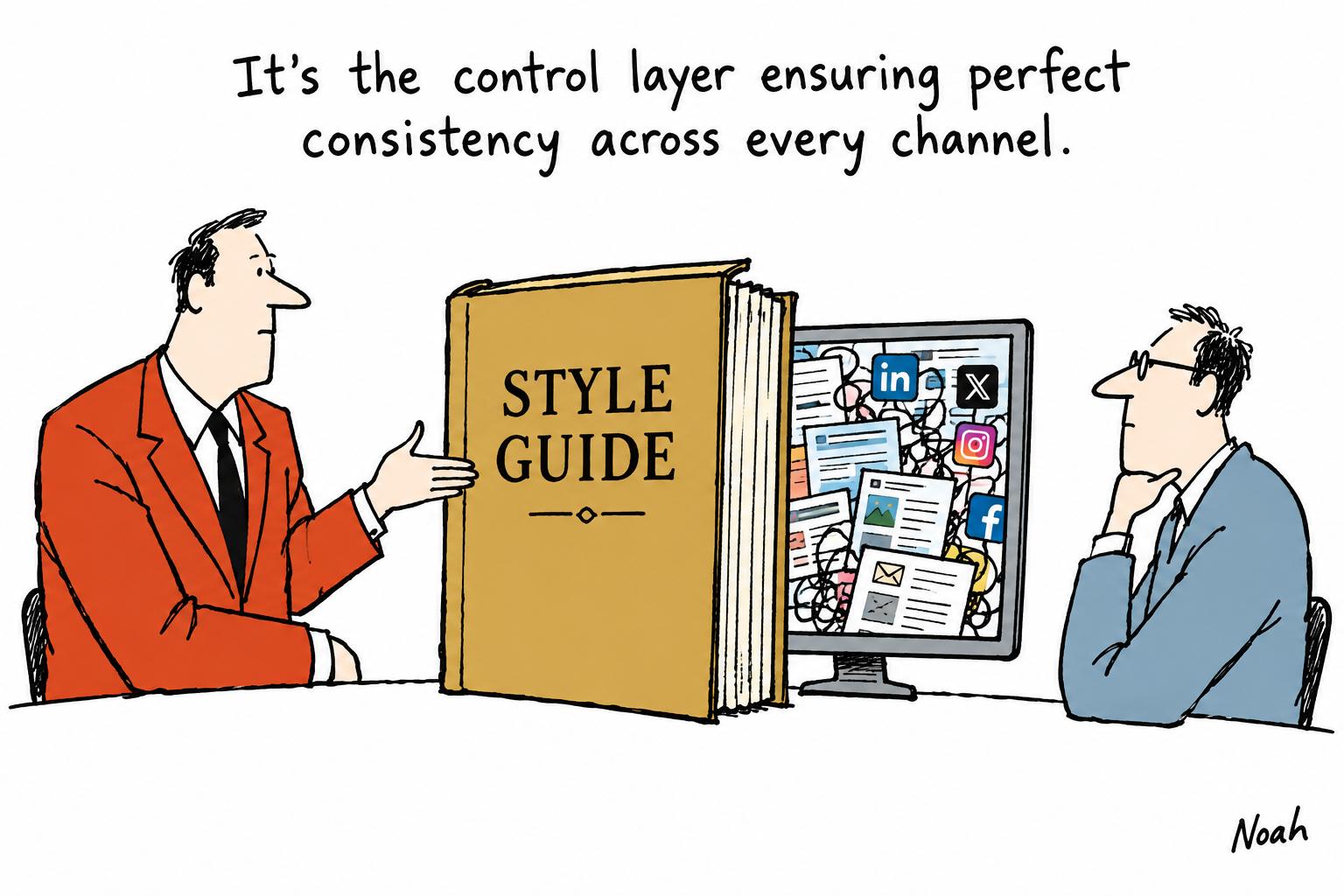
AI-assisted editorial style guides are becoming an increasingly important tool for digital publishers trying to keep a coherent identity across articles, newsletters, flipbooks, landing pages and social posts. Rather than replacing editorial judgement, the most effective guides act as a control layer: they give writers, editors and AI systems the same starting point for voice, structure, terminology and metadata, so every version of a story feels as if it belongs to the same publication.
That matters because the more formats a newsroom or content team produces from the same source material, the more opportunities there are for small but costly inconsistencies. A product name can shift from one channel to another, a newsletter teaser can overstate what the article actually covers, an image caption can introduce a different term, or a meta description can be written from scratch in a rush. According to guidance from US360 and AI Scope Digital, the most useful editorial frameworks are built to create uniformity across writers, editors, contributors and AI-assisted workflows, while still leaving room for human oversight.
A practical guide does not need to be sprawling to be effective. The strongest versions focus on a handful of core areas: voice and tone, preferred terminology, article structure, metadata, accessibility and adaptation by channel. Lasting Content’s template for AI-assisted publishing also points to the importance of evidence rules, banned phrases, source handling and editor QA checks, which help teams define not just how content should sound, but what it must contain before it can be published. The best guides are specific enough for AI to follow and short enough for editors to maintain.
That specificity is crucial because AI introduces new people and processes into publishing workflows. Prompt writers, marketers, SEO editors, localisation teams and content operations staff may all touch the same asset before it reaches readers. Omniscient News argues that detailed system prompts, embedded style references and before-and-after examples can help preserve brand voice when AI is involved, but those measures work best when they are supported by clearly written standards. In practice, this means defining preferred forms of a brand term, identifying language that should never appear, and explaining how the same story should be reframed for different outputs without drifting off message.
The article workflow itself should be designed around the guide. The most efficient teams attach relevant rules to the brief before drafting begins, then use them again during editing, packaging and final publication checks. AI can help produce the first draft, but it should also be asked to surface ambiguity or flag where a prompt conflicts with house style. Once a piece is ready to repurpose, the same standards should govern excerpts, captions, alt text, newsletter copy and social previews. The point is not to force every channel to say exactly the same thing, but to make sure each one supports the same promise.
Human editors remain essential at every stage. AI can check for missing metadata, skipped headings or empty alt text, but it cannot decide whether a claim is accurate, whether a comparison is fair, whether a simplification has gone too far, or whether a topic deserves legal or subject-matter review. Digiocial’s approach to AI content standards is useful here: it stresses a three-stage review process covering factual accuracy, voice consistency and value added. That logic aligns with a broader editorial principle: automation should make review faster and more disciplined, not less rigorous.
Keeping a style guide alive is just as important as writing it. Fabric’s work on style-guide management highlights the value of keeping standards current and visible, so teams are not working from outdated instructions. For publishers, that means revisiting the guide after template changes, naming updates, SEO shifts, accessibility findings, CMS migrations or recurring editorial corrections. Saving examples of good rewrites, weak AI outputs and resolved disagreements can make the guide more usable over time, especially for teams that depend on it inside briefs and prompts rather than as a static reference document.
Ultimately, the value of an AI-assisted editorial style guide lies in its practical usefulness. It should help publishers move faster without becoming sloppier, and scale content without diluting the brand. A well-built guide gives AI tools a clearer brief, gives editors a shorter list of things to fix and gives readers a more consistent experience across every format the publisher produces.
Inspired by headline at: [1]
Sources by paragraph: - Paragraph 1: [2], [3] - Paragraph 2: [2], [3] - Paragraph 3: [1], [5] - Paragraph 4: [4], [5] - Paragraph 5: [1], [4] - Paragraph 6: [6], [7] - Paragraph 7: [1], [7] - Paragraph 8: [1], [2], [5]
Source: Noah Wire Services · Original