The Seattle Times draws a hard line: AI may assist, but humans write the news
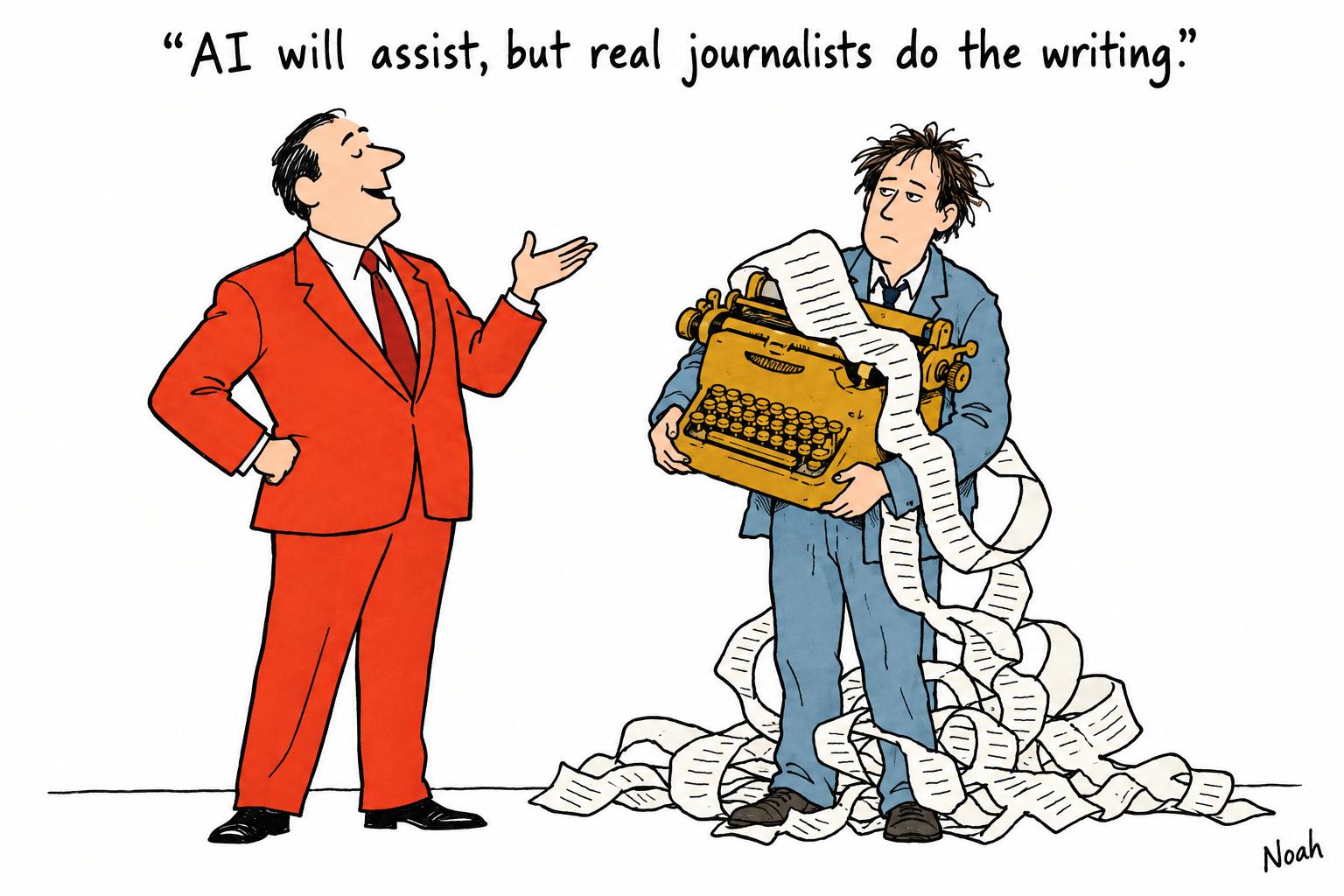
Cartoon · AI-generated
The Seattle Times says AI will remain a limited, supervised newsroom tool rather than replace reporters, as the newspaper challenges Microsoft and OpenAI over the use of its journalism.
The Seattle Times has drawn a bright line around artificial intelligence: it says it does not publish news reports written by machines, and it has no intention of shifting towards an AI-led newsroom. In a note to readers posted on its website, the paper said journalism depends on human judgement, verification, context and relationships, and warned that those qualities cannot be replicated by automated systems.
The message was framed not as a rejection of technology altogether, but as an argument for caution. The paper said it has moved slowly and selectively, using AI only in limited ways and always under editorial oversight. One example is its weekly News Quiz, where the technology helps with drafting and formatting before a human editor makes the final selections. The site also says it uses an audio player that can read stories aloud, and that these are the only reader-facing AI tools it currently offers.
Behind the scenes, The Seattle Times said it occasionally uses AI to transcribe interviews, organise data in investigations and scan public meeting videos for possible story leads. Even then, it stressed that reporters must verify any findings themselves. The paper also said its business teams are experimenting with limited back-end uses, such as advertiser lead generation, while newsroom use of AI remains subject to approval by senior editorial leadership.
The paper’s stance comes amid wider industry anxiety over how generative AI is reshaping media economics and editorial standards. In September 2026, The Seattle Times and Newsday filed a copyright lawsuit against Microsoft and OpenAI, alleging that the companies trained models on large volumes of their journalism without permission, including material behind paywalls. Reports on the case said the publishers were seeking damages and the destruction of datasets and models built with their work, while also warning that AI-generated content could undercut the value of original reporting.
The newspaper said its internal policy, first drafted in 2023 and most recently updated in March, is meant to keep the newsroom on the defensive as the technology evolves. It emphasises transparency, scepticism and the obligation to verify information before publication. Ryan Blethen, who became publisher in January, told a concerned reader that AI should support journalism rather than replace it, a view that reflects the newspaper’s broader effort to preserve a large reporting staff in a market where news organisations are under growing pressure from automation and changing audience habits.
Inspired by headline at: [1]
Sources by paragraph: - Paragraph 1: [2] - Paragraph 2: [2] - Paragraph 3: [2], [3] - Paragraph 4: [3], [4], [5], [6], [7] - Paragraph 5: [2], [3]
Source: Noah Wire Services · Original