The Telegraph’s podcast club runs on YouTube’s terms
The publisher’s Ukraine show charges for extras while keeping its reporting free. The Economist’s latest results show why another British publisher uses video to make a different sale.
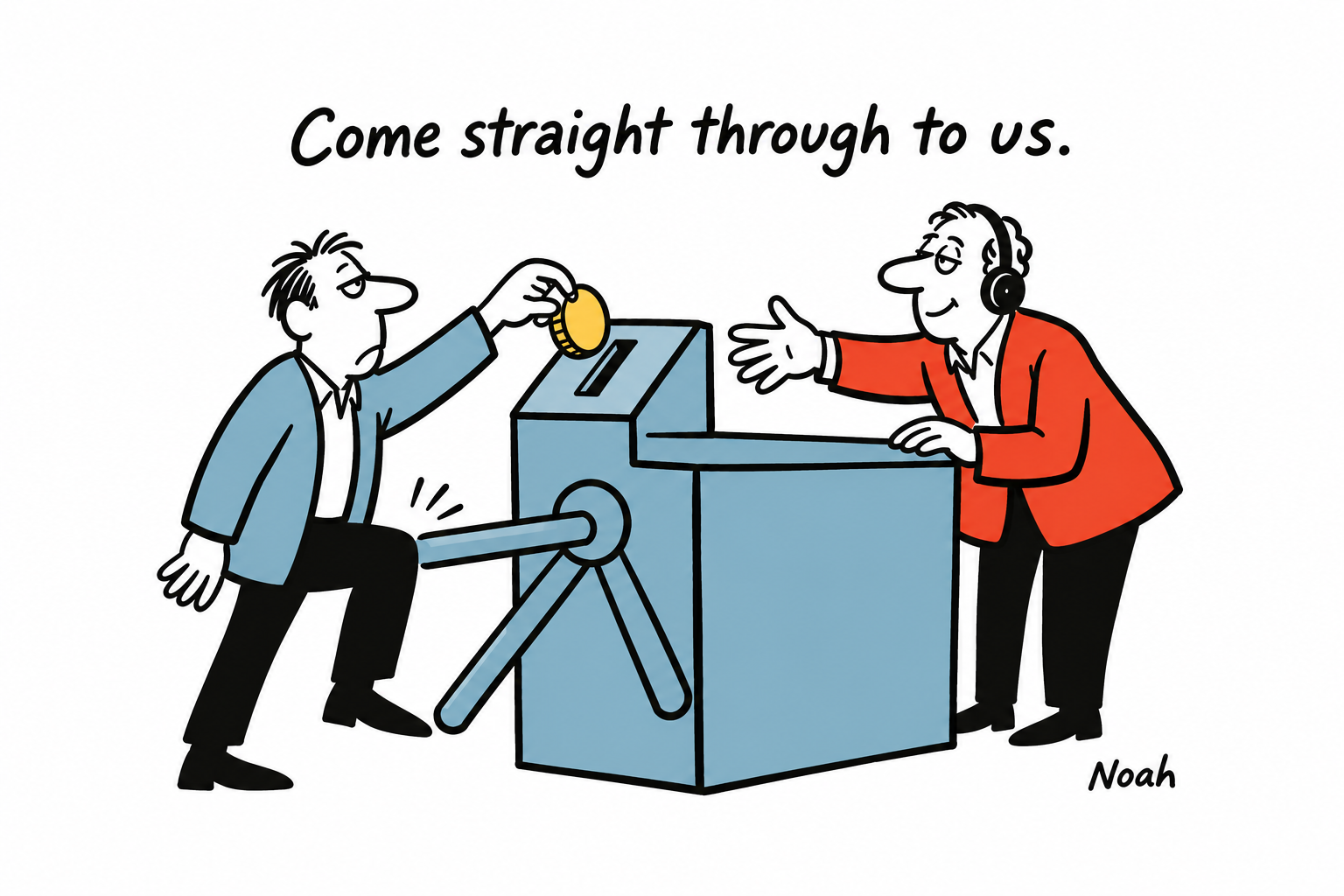
Cartoon · AI-generated
To get a mug from The Telegraph’s Ukraine podcast, some of its earliest paying members had to send the newsroom an email. The show’s notes asked for two things, a YouTube handle and a postal address. They had already paid elsewhere. The Telegraph’s UTL+ club, which the show says launched on 26 October, sells a monthly membership through YouTube. The ordinary episodes of Ukraine: The Latest remain free. Members are offered bonus videos, behind-the-scenes material and discounts on tickets and merchandise.
That is a practical way to charge people where they already watch. YouTube handles the membership and takes a share. The Telegraph has to make the extras worth renewing. The decision for publishers is whether the easier sale earns enough to justify the platform’s cut and the limits of a customer relationship held on someone else’s service.
On 19 November, the publisher named Matthew Bayley as a deputy editor, after he led work on audio and video including Ukraine: The Latest and The Daily T. It is a sign that the skills needed to build recurring shows now carry weight at the top of the newsroom. The appointment announcement left the club’s early performance undisclosed.
“The pipe dream would be that everyone comes back to the Telegraph app and the homepage and instantly becomes a subscriber,” Bayley told Digiday in August, when he was executive editor of audio and visuals. He said the Telegraph was still concentrating on audience at the time. The trade publication reported an average of 2.4 million weekly YouTube views across three of the publisher’s daily news podcasts. It is a count of views across three programmes. A conversion rate would require a separate count of distinct viewers who saw the offer. The paid club now gives the Telegraph a way to measure how many people will make a second decision after pressing play.
The pipe dream would be that everyone comes back to the Telegraph app and the homepage and instantly becomes a subscriber
A membership without a new checkout
YouTube’s published terms give creators 70% of membership revenue after applicable taxes and fees are deducted. YouTube handles billing, and the creator’s share of an approved refund comes back out of its earnings. The platform’s dashboard can tell publishers how long someone has been a member and which videos prompted sign-ups. Its developer documentation lists channel names and IDs among the member-profile fields. A publisher can recognise the handle that paid and still need the listener to share an email address separately.
The mug offer makes the distinction concrete. The show can fulfil a gift once the listener writes in, and can invite listeners to subscribe to its own mailings separately. A YouTube Join button alone does not give the show a newspaper subscription or permission to put that person on a marketing list. YouTube can also pause channel memberships under its rules. If a membership stays paused for 120 days, the service cancels subscriptions paid for on the website. An app purchase can be cancelled sooner. The publisher can keep making the programme. Its payment relationship on that channel still depends on YouTube.
Take a hypothetical show with 1,000 paying members and £4 of eligible monthly revenue from each after taxes and applicable fees. At YouTube’s published 70% share, the publisher gets £2,800 before refunds or production costs. If it costs £3,000 a month to produce the extras and serve the membership, the fees alone leave a £200 shortfall. A club could still pay for itself by selling event tickets or introducing people to the newspaper. That extra contribution has to be measured, and these figures are an illustration rather than UTL+’s price or results.
Three jobs for paid video
Goalhanger shows what changes when the membership belongs to the show and can travel between players. The Rest Is History Club offers an ad-free private feed that members can connect to services including Apple Podcasts and Spotify. It also offers direct members extras such as its newsletter and access to a Discord discussion space. The show has a separate Apple Podcasts route with a different bundle. Goalhanger reported 243,000 members across its business at the end of 2025, up from 110,000 at the start. Those accounts establish scale for a company with several hits. They leave open what a single news podcast would earn.
The Economist has a different reason to keep video close to the publisher. Insider is included in its broader subscription, which also pays for journalism in other formats. The group also introduced Economist Play in Canada, Denmark, Norway and Sweden in July, selling videos, audio, newsletters and games at a lower price than its broader package. Both routes let the publisher sell under its own name and choose how video fits into its offers. The group’s latest interim report puts subscriptions at 1.357 million, up 8% year on year, and attributes unusually strong acquisition and engagement to some big Insider interviews. The group points to almost eight million YouTube views for Zanny Minton Beddoes’s July interview with Elon Musk by early November. That shows the free distribution opportunity. The interim figures provide no count of how many of those viewers became subscribers or stayed for a second term.
The Times offers a smaller version of the same distinction. An eligible Times subscriber can link an existing subscription to Apple Podcasts to hear bonus episodes. Apple provides a convenient player, while the offer gives readers another reason to continue paying for The Times. The Telegraph’s UTL+ offer instead asks for a payment attached to a specific YouTube channel. Those are different jobs for the same technology. One new member may make the podcast healthier. An existing newspaper subscriber who comes back to use another benefit may make the wider subscription more valuable.
Noah gives only a 27% chance that either the Financial Times or the publisher of The Times and The Sunday Times starts selling a new recurring paid membership for a named podcast to UK customers, separate from its general news subscription, after 25 November 2026 and by 25 November 2027. The existing Times bundle already gives the publisher a way to reward subscribers for listening.
Count the people who come back
There is a case for keeping the Telegraph’s first paid step small. A new bonus video or a discount on an event can be offered without shutting the free feed that explains the story to a much bigger audience. In its 17 November episode notes, the team pointed members to an extra video about Ukraine’s winter preparations. An extra briefing like that gives a regular listener a reason to pay. Someone in the newsroom still has to make it every time. A busy news week can attract new members precisely when the team has the least spare capacity to serve them.
The Telegraph has staged the podcast live in the United States before. Noah estimates only a 39% chance of the publisher staging an in-person UK edition of Ukraine: The Latest with admission sold to the public after 25 November 2026 and by 25 May 2027. For the same event by 25 November 2027 the chance is still only 48%. Free events and appearances at someone else’s conference are excluded. A ticketed edition would test whether viewers will pay for a live experience as well as for bonus video.
One of the three shows in the Telegraph’s August viewing figure, Iran: The Latest, aired what it called its final episode on 20 November. A free news series can finish when the editors judge its run is done. A paid club also has to decide what members will get if the format changes.
The two numbers that matter first are what a group of new joiners costs to serve and how many pay again after their first month. A show with low production costs may clear that hurdle even if few members ever buy a newspaper subscription. A show that sells a larger subscription or materially improves retention can justify a different budget. Both arguments depend on tracing a result back to the show and accounting for the cost of doing the work.
Noah estimates only a 36% chance of a new UK customer being able to buy a recurring Ukraine: The Latest membership or subscription outside YouTube on 25 November 2027, without buying a general Telegraph subscription. Donations and one-off tickets are excluded. A second checkout could give the team more options. It would also need enough members to justify running a second offer.
The mug offer gives some members a reason to identify themselves to the publisher after paying on YouTube. For a publisher weighing its own club, the next test is whether members feel they get something worth coming back for, and whether the publisher can still reach them if their habits change. The club will be worth extending if enough listeners renew for the journalism and the Telegraph can keep in touch with them beyond YouTube.
Sources
- The Telegraph’s 16 November episode notes, via Apple Podcasts
- Telegraph Media Group: Matthew Bayley appointment
- Digiday’s 31 August interview with Matthew Bayley
- YouTube Help: membership revenue and reporting
- Google’s channel member data fields
- YouTube Help: membership programme and pauses
- The Rest Is History: subscription routes and benefits
- Goalhanger Podcasts Ltd 2025 accounts, Companies House
- The Economist Group interim results to 30 September 2026
- The Economist Group: Economist Play regional pilot
- The Economist: what the Premium subscription includes
- The Times: connect an existing subscription in Apple Podcasts
- Ukraine: The Latest, 17 November episode notes via Acast
- Iran: The Latest, Telegraph’s Acast feed and final episode
- Telegraph Media Group 2023 results and 2024 update, past US live edition
- Research notes and forecast definitions
Source: Tomorrow’s Publisher