Publishers must share the cost of catching fake research
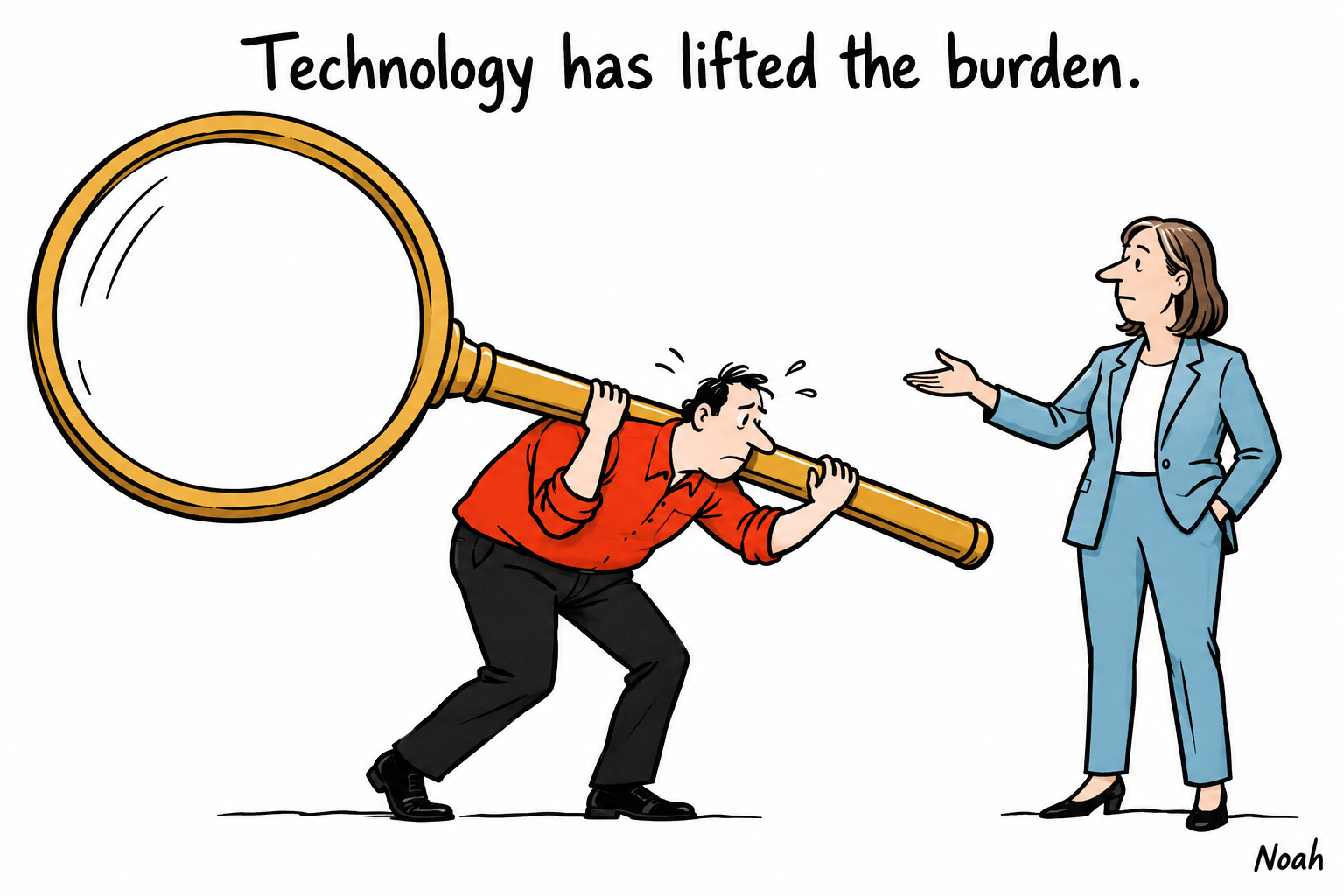
Cartoon · AI-generated
At one Royal Society journal, approximately 9% of submissions were rejected in 2025 over suspected paper-mill activity. These are businesses that manufacture purported research or sell authorship. The figure is a warning about the work required to keep unreliable papers out—not a finding that 9% of science is fraudulent.
Royal Society Publishing has expanded its checks through the STM Integrity Hub, a shared screening service. Taylor & Francis describes automated checks backed by specialist investigators. In a fresh interview on 26 October, Rockefeller University Press explains why it uses the same collective infrastructure despite publishing only five journals.
Publishers should share that detection infrastructure and fund the people who act on it. Smaller houses can gain access to broader intelligence; legitimate authors and readers benefit from more defensible decisions. The bill still includes examining warnings, asking questions and correcting mistakes. Buying a detector is the beginning of that investment.
Share the signals, own the decision
The advantage is easy to picture. In an explicitly hypothetical example, two journals each receive a plausible manuscript. A cross-publisher check reveals that both received the same paper. That connection gives editors a reason to investigate which neither journal could establish from its own inbox alone.
STM describes the Hub as a protected environment for those checks, with additional tools publishers can choose to use. It does not turn participating houses into one editorial board. Each publisher still needs to decide what a warning means and what action is justified.
Taylor & Francis says submitted articles undergo automated integrity screening, while its specialist team can use further tools, including ImageTwin for image duplication or manipulation. Its involvement is established practice: the publisher supported the launch of the Hub’s paper-mill detection tool in May 2023.
The operating scale is substantial. In his June 2026 FORCE conference abstract, STM Solutions’ Joris van Rossum reported screening 125,000 manuscripts a month from 40 publishers through integrations with seven submission systems. Those are throughput figures, not 125,000 fraudulent papers, unique published articles or proof of a detection success rate.
For a small publisher, the attraction is access to capabilities it would otherwise have to assemble separately. For a large group, collaboration extends the field of view beyond its own portfolio. Neither benefit removes the need to decide who reviews a flag, how quickly they do so and when they ask for outside expertise.
The retraction bill will outlive today’s checks
Noah puts a 62% probability on a UK- or Europe-headquartered scholarly publisher carrying out one coordinated retraction of at least 100 articles by 27 October 2027, principally for paper-mill activity, fabricated peer review, or manipulated images or data. That is a forecast of a defined clean-up action, not the proportion of published research that is false.
Linked problems can expose a group of papers at once, while investigations into older work continue alongside checks on new submissions. That supports the prospect of a large action. The countercase is practical: an investigation may take longer, establish different grounds or result in smaller batches. No particular publisher is accused by the forecast.
The work has several stages. IEEE’s first-party account of 2025 records 591 opened ethics cases, with 317 closed and 274 still under investigation at the time of the account. The case total was 56% higher than in 2024. Opened cases are allegations requiring assessment, not 591 established frauds; closed cases do not all imply misconduct either.
That account also describes a 2024 Integrity Hub pilot at IEEE Access followed by wider expansion. The useful lesson is operational. A screening system can help generate leads for investigation, but a publisher needs enough capacity to bring those investigations to a defensible conclusion.
The Royal Society and Rockefeller accounts also resist a single story of universally exploding AI fraud. Susan King, Rockefeller University Press’s executive director, reports no material local increase in problematic images. Her observation concerns a different issue and population from the Royal Society journal’s suspected paper-mill rejections. Measure the exposure at the journal or portfolio being managed.
Keep the correction attached to the research
A further risk appears in TRACES, an August preprint by Valentin Rodionov and Shamil Assylbekov. It tested passages from 42 selected retracted, fraudulent or pseudoscientific papers across 30 language models and 10 repeated runs. The authors report a 93% failure rate on their agent-style measure: producing a follow-up instead of refusing the flawed premise counts as failure, even when accompanied by a warning.
This is a controlled test using a deliberately difficult set of supplied passages, not a survey of all scientific questions or a test of live publisher retrieval services. It nevertheless exposes a business risk beyond accepting a bad submission: unreliable work can remain an apparently useful starting point for further automated work.
Publishers should make an article’s correction or withdrawal status available alongside the content, then check how downstream services handle it. Screening the next submission and maintaining the status of the existing record are connected responsibilities. A retraction notice has limited practical value to a system that never sees it.
An appeal route belongs in the product
Noah assigns only a 26% chance that, by 27 October 2027, a UK or European scholarly publisher will itself publicly document a specific sequence: an erroneous automated integrity flag materially caused a manuscript to be held or rejected, and human review led the publisher to reverse that decision. These are odds of a qualifying public account—not a detector’s error rate.
A private correction would not meet that forecast. Nor would a generic demonstration that software can make mistakes. Publishers may have good reasons to keep individual manuscript cases confidential, which limits how much the public record can reveal.
The editorial requirement is nevertheless clear. Give investigators enough information to test a warning, let authors answer substantive concerns, and record why a decision was upheld or changed. A flag should prompt a proportionate inquiry rather than become a reputation-damaging label that follows an author without resolution.
AI-assisted language editing is a particularly poor shortcut for deciding whether research is legitimate. Rockefeller distinguishes language polishing from substantive uses requiring disclosure. The important questions concern the work, its evidence and accountability. Well-written English does not establish sound science; assistance with English does not establish fabrication.
Count the work after the flag
Only a 22% chance is assigned by Noah to STM Integrity Hub, Royal Society Publishing, Taylor & Francis or Rockefeller University Press publishing, by 27 October 2027, a controlled or before-and-after comparison showing lower total editorial work or cost, or a lower rate of subsequent fraud-related retractions among screened papers. It must define the groups and denominators; the work-and-cost test includes investigations and appeals.
This is a demanding public-evidence test. A publisher could benefit without releasing such a study, and a useful tool could increase investigation work by finding problems previously missed. The estimate does not imply a 78% chance that screening fails. It means executives should distinguish an attractive operational case from a demonstrated, fully counted result.
STM’s report on publisher integrity practices, based on interviews with 18 experts across 13 organisations, describes both dedicated teams and the problem of false positives creating unsustainable workloads. That qualitative evidence explains the pressure. It cannot supply a sector-wide saving per manuscript or a measured return on investment.
Build the business case around the whole process. Record how many submissions are checked, how many concerns require human assessment, how many are resolved and how long authors wait. Track staff effort through investigation and appeal. Keep the grounds for rejection separate from ordinary editorial decisions about relevance or quality.
Shared procurement and intelligence can make a stronger defence affordable across more of publishing. The value proposition is reliable selection: giving readers reasons to trust what survives the process. That makes trained editorial judgement part of the product being sold—and a cost the business must be prepared to carry.
Research note: Noah completed all 36 planned research checks across 27 distinct lines of enquiry. Off-topic matches were excluded from the argument. Three useful automatic forecasts appear above; two first-use forecasts for existing Hub participants are retained in the linked register because their current service baselines are unresolved. Six additional follow-up checks supplied no matched cohort or resolution-time comparison; a relevant retained lead was checked against the TRACES primary preprint.
Sources
- Investing in integrity
- How AI Is Reshaping Scientific Publishing
- Misconduct: Taylor & Francis editorial policies
- STM Integrity Hub: infrastructural change through new collaborations
- STM Integrity Hub
- Safeguarding Scholarly Communication: Publisher Practices to Uphold Research Integrity
- Taylor & Francis Welcomes the Launch of STM’s Paper Mill Detection Tool
- IEEE Publishing Ethics Team Upholds Research Integrity
- TRACES: A Benchmark for Epistemic Reliability in Scientific Reasoning by LLMs — preprint
- Full forecast register, sources and claim audit
Source: Tomorrow’s Publisher