Current Affairs makes its AI ban part of the union contract
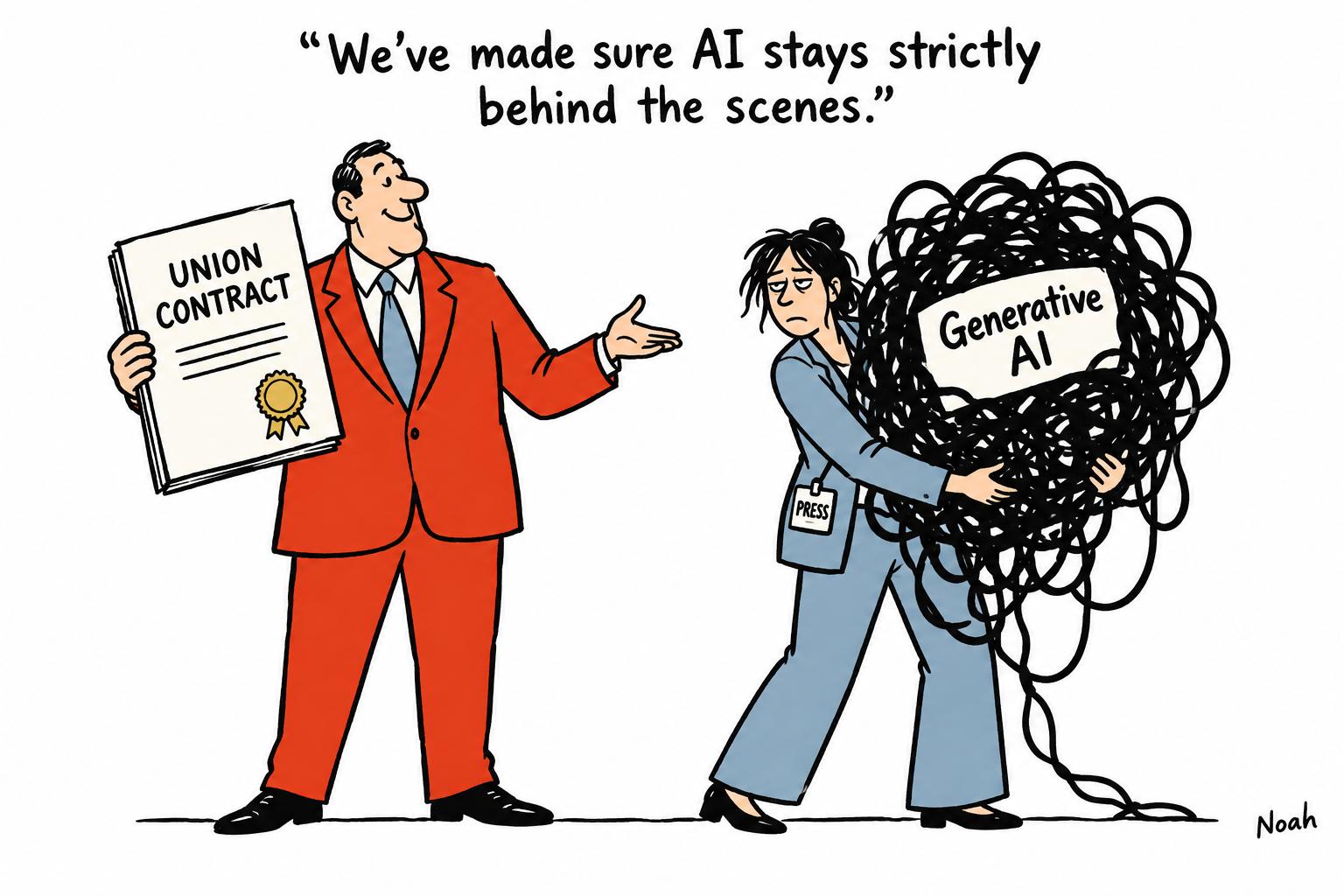
Cartoon · AI-generated
The magazine’s new agreement bars generative AI from writing articles or creating publication artwork, while allowing limited use of the technology behind the scenes.
Current Affairs has turned its anti-AI stance into enforceable workplace policy, embedding restrictions on generative AI in a newly ratified union contract with the Chicago News Guild. The magazine says the agreement bars AI from writing articles or creating art for publication, while still leaving room for staff to use automation in their day-to-day work. Editor Nathan J. Robinson presented the move as part of a broader argument that journalism should remain recognisably human, with editorial judgement and creative responsibility resting with the people whose names appear on the page.
In Robinson’s account, the policy is not a rejection of technology itself but of the idea that tools designed to assist workers should instead replace them. He argues that readers should not be handed material that mimics genuine thought while being generated by machine systems. Current Affairs says the contract gives that principle real force: journalists can still use AI in support of their reporting process, but they cannot rely on it to draft or illustrate the finished work that appears under their bylines. The publication contends that this protects both editorial independence and reader trust.
The magazine’s position also reflects a wider anxiety across the creative industries, where AI has increasingly been used to cut costs, increase output and reduce staffing. Robinson has criticised what he sees as a rush by media companies to chase efficiency at the expense of originality, and has urged readers to support outlets that prioritise quality over volume. Elsewhere in Current Affairs, he has argued for stronger limits on AI systems that are designed to sound lifelike, warning that blurred lines between human and machine can be exploited for commercial and political gain. The publication has also run material stressing the risks of job displacement, concentration of power in the hands of technology firms and the possibility that some AI products may be too dangerous to exist at all.
By writing the ban into a labour agreement, Current Affairs is trying to make the policy difficult to reverse. The magazine presents that as a safeguard against future management decisions that might weaken its standards in the name of speed or scale. It also casts the contract as a possible model for other newsrooms facing the same pressures, especially at a time when some publishers are experimenting with AI-generated content and others are moving cautiously amid public concern over accuracy, authenticity and the future of work in media.
Inspired by headline at: [1]
Sources by paragraph: - Paragraph 1: [2], [3] - Paragraph 2: [2], [3] - Paragraph 3: [2], [4], [5], [6], [7] - Paragraph 4: [3], [5]
Source: Noah Wire Services · Original