WSJ adopts cautious AI approach to enhance reader engagement
- The Wall Street Journal emphasizes AI tools that genuinely improve reporting and reader understanding.
- Focus on supporting journalists with automation for routine and investigative tasks.
- Vision for personalised storytelling and strengthening audience relationships.
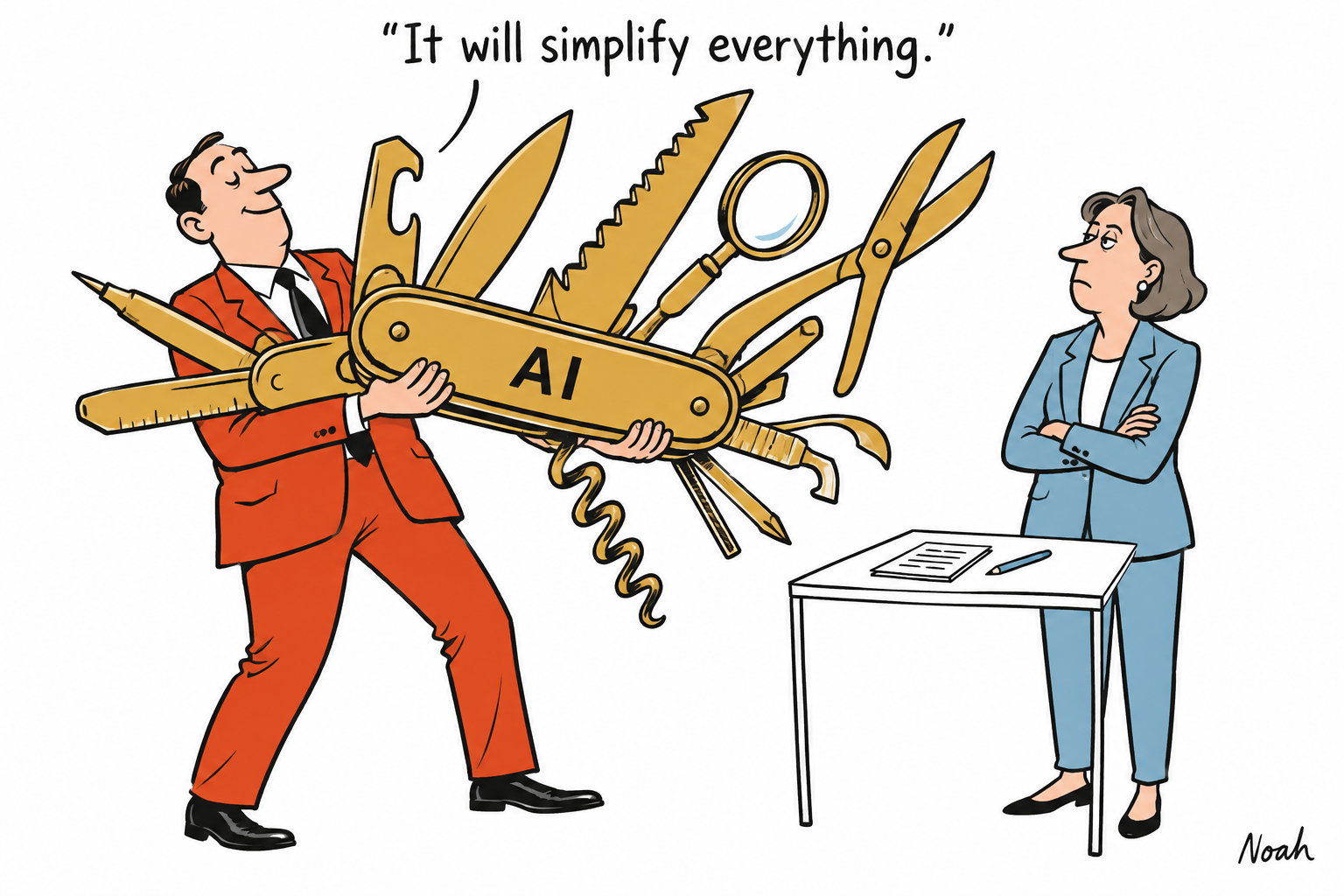
Cartoon · AI-generated
The Wall Street Journal is taking a measured approach to artificial intelligence, with its head of digital, Taneth Evans, saying every new tool must prove it genuinely improves journalism or helps readers understand the world more clearly.
Speaking on The Media Copilot podcast, Evans described a newsroom culture that is open to experimentation but unwilling to adopt technology for its own sake. The Journal, she said, is looking for AI that supports reporting, improves workflows and strengthens the reader experience, rather than simply adding novelty.
That cautious stance reflects a broader shift in publishing. As AI tools become more capable, news organisations are under pressure to decide where automation adds value and where editorial judgement must remain firmly human. At the Journal, according to Evans, audience needs come first. The question is not whether a tool is fashionable, but whether it helps journalists do better work and gives readers a more useful product.
She argued that this is already changing day-to-day newsroom operations, particularly in investigative work and routine production tasks. One example is the paper’s use of AI systems for financial and economic news, where structured data can be converted into draft narratives before editors refine the copy to protect accuracy and preserve standards. The aim, according to the company, is to remove repetitive work and free reporters for more ambitious analysis.
Evans has also pointed to a future in which journalism becomes more adaptive. Rather than forcing every reader through the same article format, she sees scope for personalised storytelling shaped by how people prefer to consume information. That does not mean diluting the reporting, she said, but presenting trusted journalism in forms that are more flexible and more engaging.
The Journal’s strategy appears to extend beyond AI itself. Under Evans and editor-in-chief Emma Tucker, the publication has also put greater emphasis on audience relationships, search and social platforms, while moving away from a narrow fixation on page views. Internal projects such as Talent Lab are designed to help reporters reach readers through vertical video and other formats, even when that does not deliver immediate traffic back to the site.
Source: Noah Wire Services · Original