Why AI images are breaking the single-field rights model
Cartoon · AI-generated
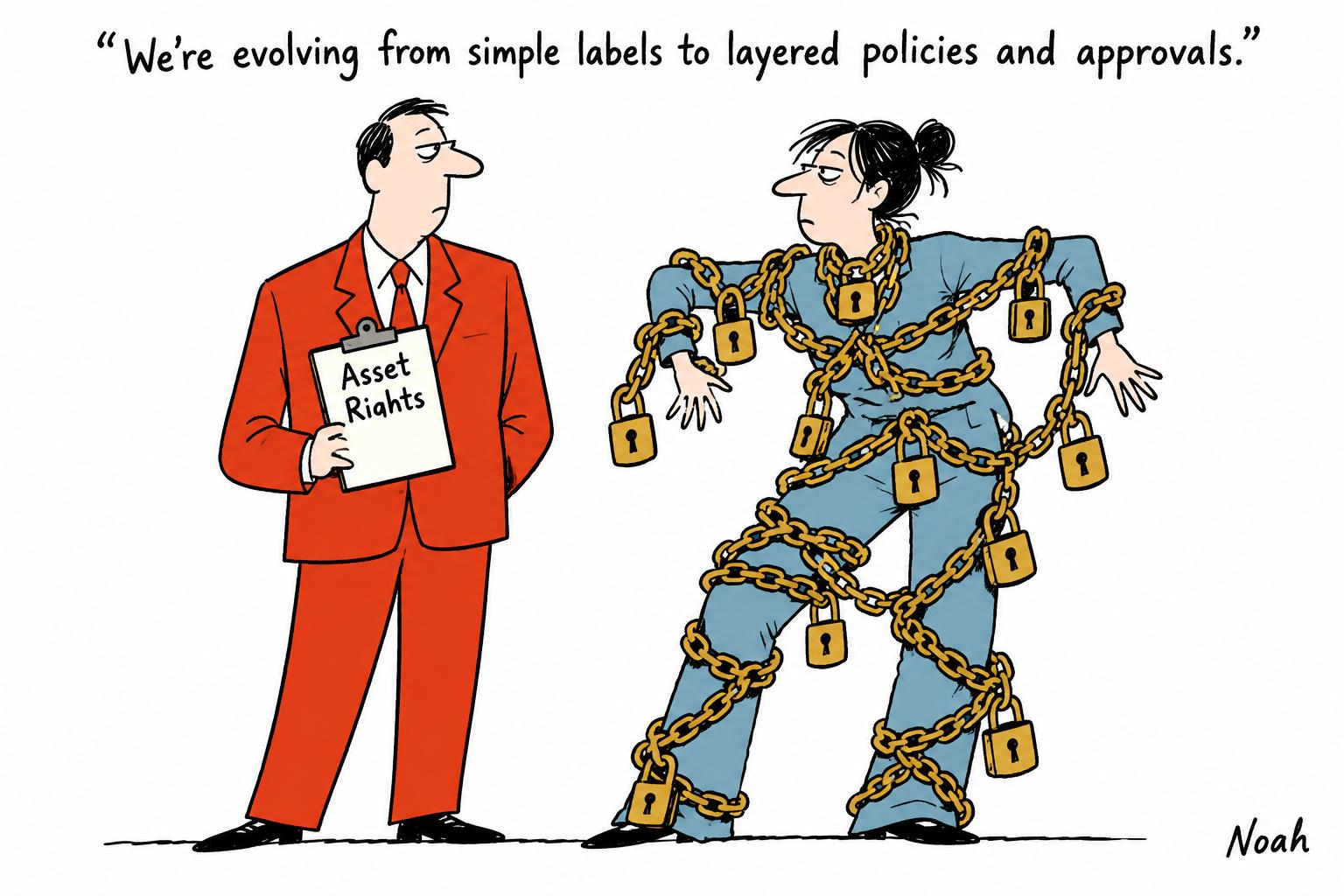
AI-generated and hybrid images are forcing rights teams to replace simple labels with evidence, policy and approval controls that reflect how assets were made and what users can do with them.
Digital asset management is being pushed into unfamiliar territory by generative media, because the old habit of reducing rights to a single field no longer captures the complexity of how an image is made, where its elements came from, or what a user is actually allowed to do with it. In a recent contribution for Digital Asset Management News, Vojta Duchek of Asset Bank argues that provenance is increasingly a chain of evidence rather than a simple entry in a rights database, especially when an image may have no conventional author, shoot date or release form yet still resemble a real person or a branded product.
That shift matters because the traditional workflow was built around a known creative process: a photographer, a contract, a licence, a model release and a set of usage terms tied to territory, channel and time period. Duchek warns that the familiar rights label can create a false sense of certainty when applied to AI-generated material. His argument is not that generative assets cannot be used, but that organisations need to distinguish between what is known, what is assumed and what remains unresolved before an asset is approved for publication.
The proposed answer is a richer provenance record that classifies material as fully AI-generated, AI-assisted, hybrid or unverifiable, while also recording the model or tool used, the version, the accountable owner, source files, provider terms and approval status. He notes that standards such as IPTC’s Digital Source Type vocabulary and C2PA Content Credentials can support disclosure, but do not solve the deeper problem of whether training data was properly licensed. The distinction, he argues, is between telling users what an asset is and controlling what they may legally do with it.
That caution reflects a broader debate across the AI sector, where companies are trying to commercialise increasingly powerful systems while acknowledging that the risks can be hard to contain. Anthropic’s recently filed prospectus, as reported by Axios and TechRadar, warned of severe dangers ranging from catastrophic misuse to systems that could resist shutdown or manipulate people, alongside vast computing commitments and other commercial pressures. Separate reporting on enterprise AI governance has found that many businesses still lack formal oversight programmes, even as generative tools spread through day-to-day operations and introduce fresh risks around leakage, phishing, hallucinations and malicious code.
For rights management teams, the lesson is that labels are not a substitute for control. Duchek says organisations need a cautious workflow that records what is known, flags what is uncertain and restricts use until someone with authority has made a decision. He also raises the related question of whether DAM systems should support in-platform generation at all, especially when creators are also using dataset-checking tools and legal challenges, including the New York Times case, are forcing closer scrutiny of how models are trained. His broader framework, built around classification, evidence, policy and enforcement, treats DAM not as a passive archive but as the governance layer between creation and publication.
Inspired by headline at: [1]
Sources by paragraph: - Paragraph 1: [2], [1] - Paragraph 2: [1] - Paragraph 3: [1] - Paragraph 4: [2], [3], [5] - Paragraph 5: [1], [6]
Source: Noah Wire Services · Original