How copyright complaints and fake death claims are being weaponised against journalists
Cartoon · AI-generated
A growing digital-suppression industry is exploiting copyright systems, platform rules and automated moderation to hide investigative reporting and silence journalists.
For many journalists, the mechanics of getting a story published are only part of the battle. A webinar hosted this week by the Global Investigative Journalist Network highlighted a more corrosive problem: bad actors are learning to exploit copyright complaints, platform reporting systems and automated moderation to push legitimate reporting out of view. The point is not simply to remove a story, but to make it harder to find, harder to share and, in some cases, impossible to keep online at all. That broader ecosystem is reflected in the services openly marketed by firms such as Clean Reputation and Erasiq, which promote content removal, suppression and platform-specific enforcement as routine parts of online reputation work.
The tactics described are often low-tech but effective. According to the webinar accounts, hostile actors may copy an investigation, paste it on a separate site or social account and backdate the material so it appears to pre-date the journalist’s original publication. Others dress up stolen material with altered audio or regional markers, then use that counterfeit version to persuade automated systems that the legitimate report is the infringing copy. Companies including WebTrep and The Reputation Management Company openly describe strategies built around formal removal requests, policy-based disputes and search-result suppression, showing how the wider reputation-management industry has normalised the language of takedown and visibility management.
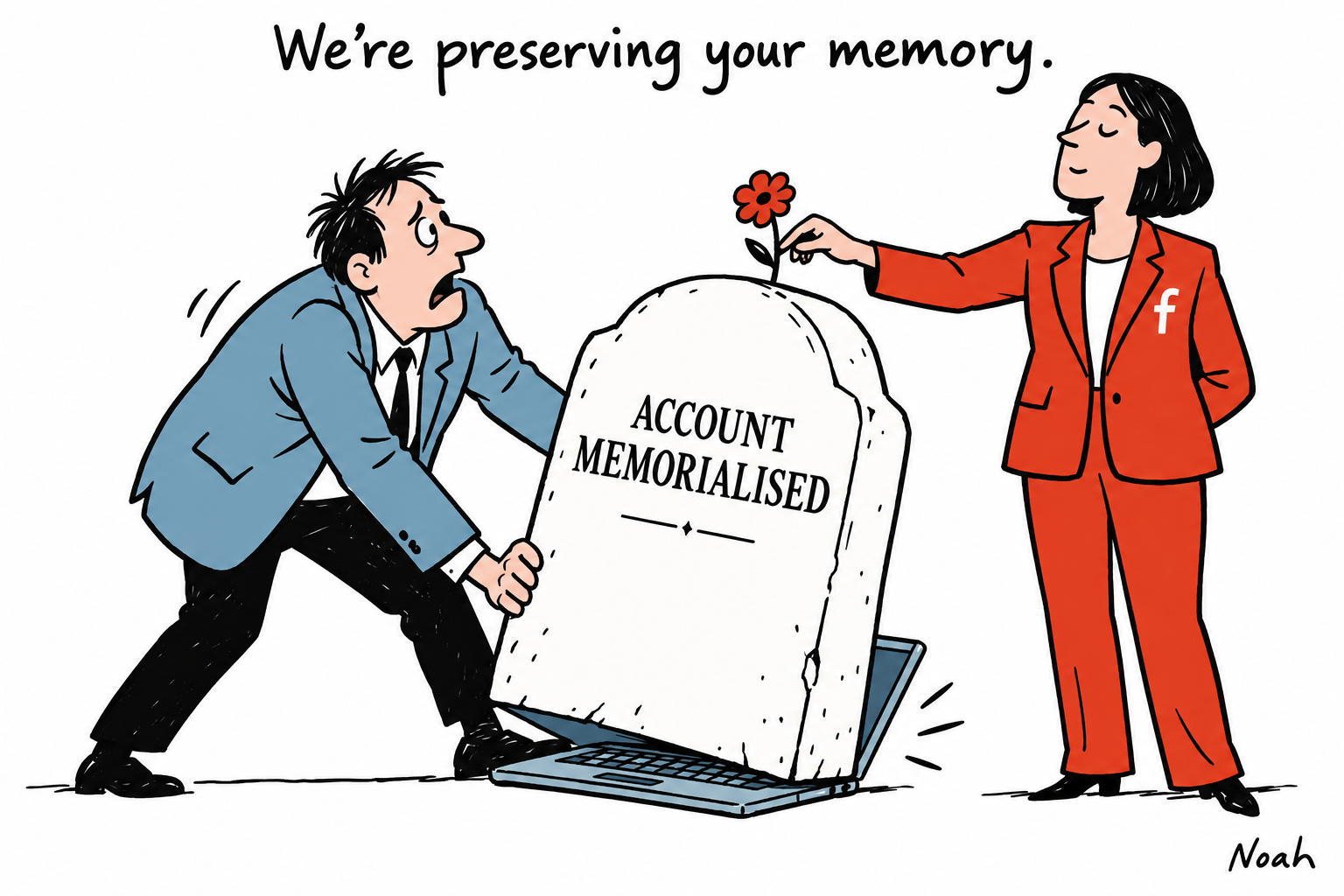
The abuse is not limited to text and video. The webinar also described the misuse of Facebook’s memorialisation process, which can freeze an account after a user is declared dead. In the most serious cases, attackers are said to submit falsified death certificates to trigger that process and disable a journalist’s ability to post. Erasiq and Reputn both advertise discreet, confidential services aimed at removing posts, pages and other content across major platforms, which underlines how sophisticated the market for digital suppression has become. In practice, that means a tool designed for grief can be twisted into a weapon against speech.
A similar pattern appears on the web itself, where copyright complaints can be used to target entire investigative sites. Once hostile actors have cloned material and created a fake paper trail showing it elsewhere first, they can file bogus claims under the US Digital Millennium Copyright Act and seek removal from search results, even when the affected outlet is based outside the United States. Erase.com and similar firms present themselves as specialists in removing harmful articles, reviews and URLs, or in pushing unwanted material down the rankings when deletion is not possible. That commercial ecosystem helps explain why journalists now face not only political pressure and legal threats, but also industrialised forms of digital erasure.
The result is a chilling environment for investigative reporting. What looks like a routine moderation action can, in reality, be a coordinated effort to silence scrutiny and weaken the reach of public-interest journalism. The webinar’s message was that reporters and digital-rights advocates need to treat these attacks as a structural problem rather than isolated abuse: by tracing the networks behind them, pressing platforms to review claims with human oversight, and challenging a system that too often lets machines do the censoring for them.
Inspired by headline at: [1]
Sources by paragraph: - Paragraph 1: [2], [3] - Paragraph 2: [4], [5] - Paragraph 3: [3], [6], [7] - Paragraph 4: [4], [5], [7] - Paragraph 5: [2], [3], [6]
Source: Noah Wire Services · Original