Google’s secret AI publisher payments range from millions to less than $1,000
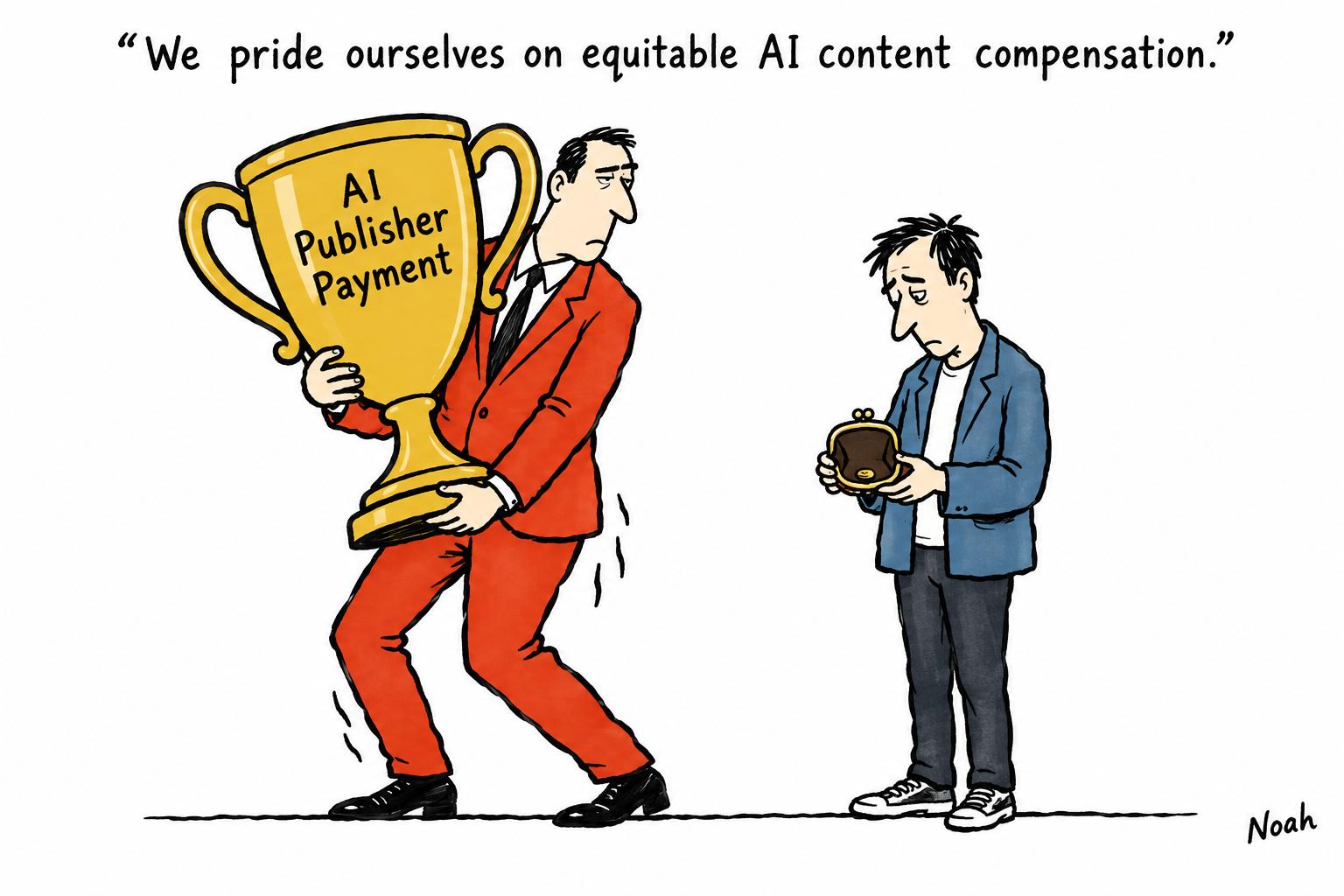
Cartoon · AI-generated
Google is paying about 100 publishers whose work informs its AI answers, but opaque calculations and sharply uneven payouts are fuelling concern over the value of their content.
Google has begun quietly paying a limited group of digital publishers when their reporting and reference material materially shape answers generated by its artificial intelligence tools, in a move that marks a notable shift in how the search giant treats the value of publisher content. The pilot, which has been running for less than a year, covers roughly 100 invited outlets and applies to responses produced in AI Overviews, AI Mode in Search and the Gemini chatbot. According to reporting on the scheme, the payments are intended to reflect the usefulness of a publisher’s work in producing responses that are factually fresh and accurate.
The sums involved are strikingly uneven. One early participant is said to have received more than $1 million over a year, while another, which joined later, reportedly earned somewhere between $50,000 and $60,000. At the lower end of the spectrum, many smaller blogs and mid-sized websites have received less than $1,000 across the period in which they have been included, an amount that in some cases amounts to only a tiny fraction of their advertising income. That wide spread underlines how differently Google appears to value individual sources under the programme.
What has drawn the sharpest criticism is the lack of transparency around how those figures are calculated. The pilot uses a pay-for-value approach rather than a conventional revenue-sharing model, meaning compensation is tied to the contribution a piece of content makes to an AI-generated response rather than to clicks, impressions or referral traffic. Participating publishers can see monthly earnings through a widget in Google Search Console, but they are not shown the underlying formula, nor are they told why payments rise or fall from month to month. As a result, even publishers inside the scheme say they cannot verify whether the sums reflect the real worth of their material.
That opacity has become more significant because, in practical terms, joining the pilot does not appear to change whether Google uses a publisher’s content at all. According to the reporting, the search engine continues to draw on the same sources for AI answers whether or not a publisher accepts payment. For some larger publishers, that has created an awkward choice: either participate in a system they consider opaque, or decline while still seeing their material contribute to Google’s products without any direct return.
The pilot is also emerging against a more hostile regulatory backdrop. In the United Kingdom, Google was told in June to give publishers the option of opting out of AI features in search, while the European Union has launched scrutiny over the effect of falling organic traffic on publishers and has ordered changes to the service. In the United States, publishers have also stepped up their legal and commercial pressure on the company. Google has long argued that the main benefit it offers publishers is referral traffic from search results, but the new programme suggests the company is now willing, at least selectively, to concede that AI systems extract value more directly from publisher content than it once acknowledged.
Inspired by headline at: [1]
Sources by paragraph: - Paragraph 1: [2], [3] - Paragraph 2: [1], [4] - Paragraph 3: [2], [5] - Paragraph 4: [1], [3] - Paragraph 5: [1], [2], [4]
Source: Noah Wire Services · Original