Baltimore Sun’s AI cartoons sharpen the fight over authorship and accountability
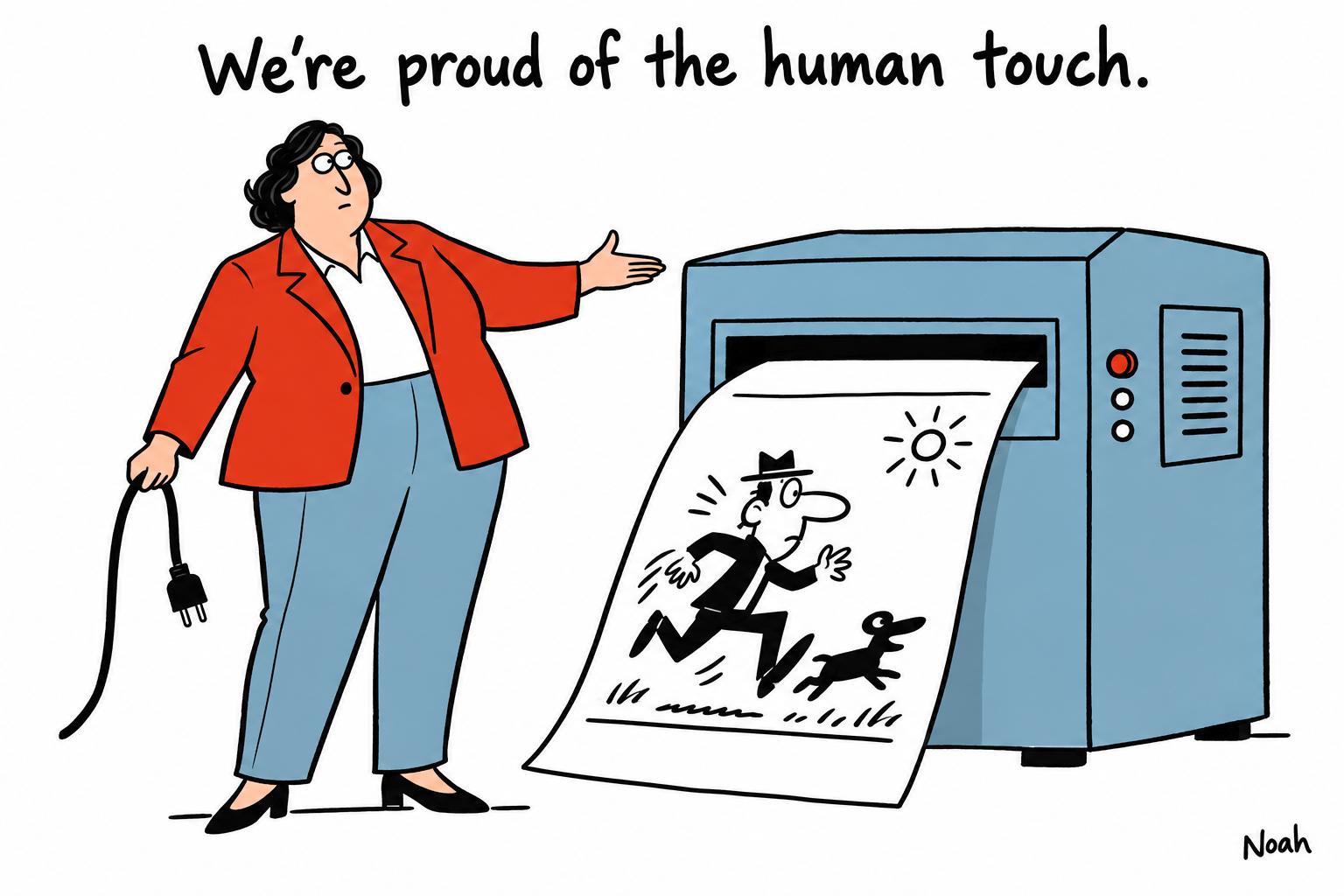
Cartoon · AI-generated
The newspaper’s shift to generated illustrations raises questions about creative labour, misattribution and what readers should be told about how journalism is made.
The Baltimore Sun’s move from a long-serving human cartoonist to AI-generated illustrations has fuelled a debate extending well beyond one newspaper: what readers are entitled to know about how journalism is made, and whether automation can replace the judgement and creative labour behind it.
The newspaper began publishing generated images after parting ways with Kevin Kallaugher, known as KAL, a two-time Pulitzer Prize finalist. The Association of American Editorial Cartoonists says the Sun published an AI-generated illustration on 4 September 2026 and has urged its editors to stop using such imagery for cartoons and other creative work. The association’s open letter is an advocacy statement, not an independent account of the newspaper’s staffing or editorial decisions.
Kallaugher told Baltimore Fishbowl that the appearance of multiple generated cartoons made the practice seem more like a continuing policy than a single experiment. He has drawn a distinction between using technology to gather visual references and asking an image generator to produce finished artwork. For him, the issue is not simply the presence of AI, but the replacement of the human interpretation and craft central to editorial cartooning.
The dispute also concerns what the images communicate to readers. FAIR, a media-watchdog organisation critical of the Sun’s approach, argues that the cartoons rely on generic figures and explanatory wording rather than the visual wit and concise satire associated with the form. Its assessment reflects an editorial critique, but points to a broader question: even when an image is labelled as AI-generated, does it offer the insight readers expect from a cartoon?
Misattribution provides another reason for concern. Nieman Journalism Lab reported that ChatGPT-generated cartoons had appeared with signatures belonging to real New Yorker contributors, including Emily Flake and Brendan Loper, who said they had not created or endorsed the images. A signature can suggest both authorship and approval. The report notes that imitation of an artist’s style does not, on its own, establish copyright infringement, but the possibility that audiences may mistake generated work for an artist’s own raises questions about reputation and identity.
Cartooning for Peace has proposed measures to make cartoons easier to identify and trace, including metadata and other identification systems. Its recommendations also call for greater transparency or independent auditing of training databases, an explicit opt-in approach to using copyrighted work, and mechanisms for compensation where unauthorised use causes economic or moral harm. These are proposals for addressing risks, rather than evidence that each has occurred in every newsroom.
The argument over automation is not confined to illustration. FAIR cites the Financial Times’ apology after an undisclosed AI process was used to condense a column. Separately, Columbia Journalism Review reported that more than 90 unionised media workers across 17 McClatchy publications were laid off in September 2026, according to the NewsGuild. Journalists expressed concern about automation and the effects of staff reductions, but the review said no direct link had been established between the layoffs and AI plans.
That distinction matters for both workers and readers. CJR documented some use of AI-assisted tools to repackage stories and produce content, while reporting that journalists lacked clarity about future expectations. The uncertainty can make it harder for staff to understand how their work is being handled and for audiences to know who is responsible for what they read or see.
The Sun controversy brings those questions into sharp focus. Disclosure can tell readers that an image was generated, but it does not resolve concerns about creative quality, labour or attribution. The challenge for publishers is to explain where automation is used while preserving clear accountability for the work and avoiding the impression that a machine’s output is the work of a named human artist.
Inspired by headline at: [1]
Sources by paragraph: - Paragraph 1: [2], [3] - Paragraph 2: [3] - Paragraph 3: [2] - Paragraph 4: [4] - Paragraph 5: [5] - Paragraph 6: [6] - Paragraph 7: [4], [7] - Paragraph 8: [7] - Paragraph 9: [2], [4], [5]
Source: Noah Wire Services · Original