AI newsrooms move from experiment to infrastructure as outlets chase speed and local coverage
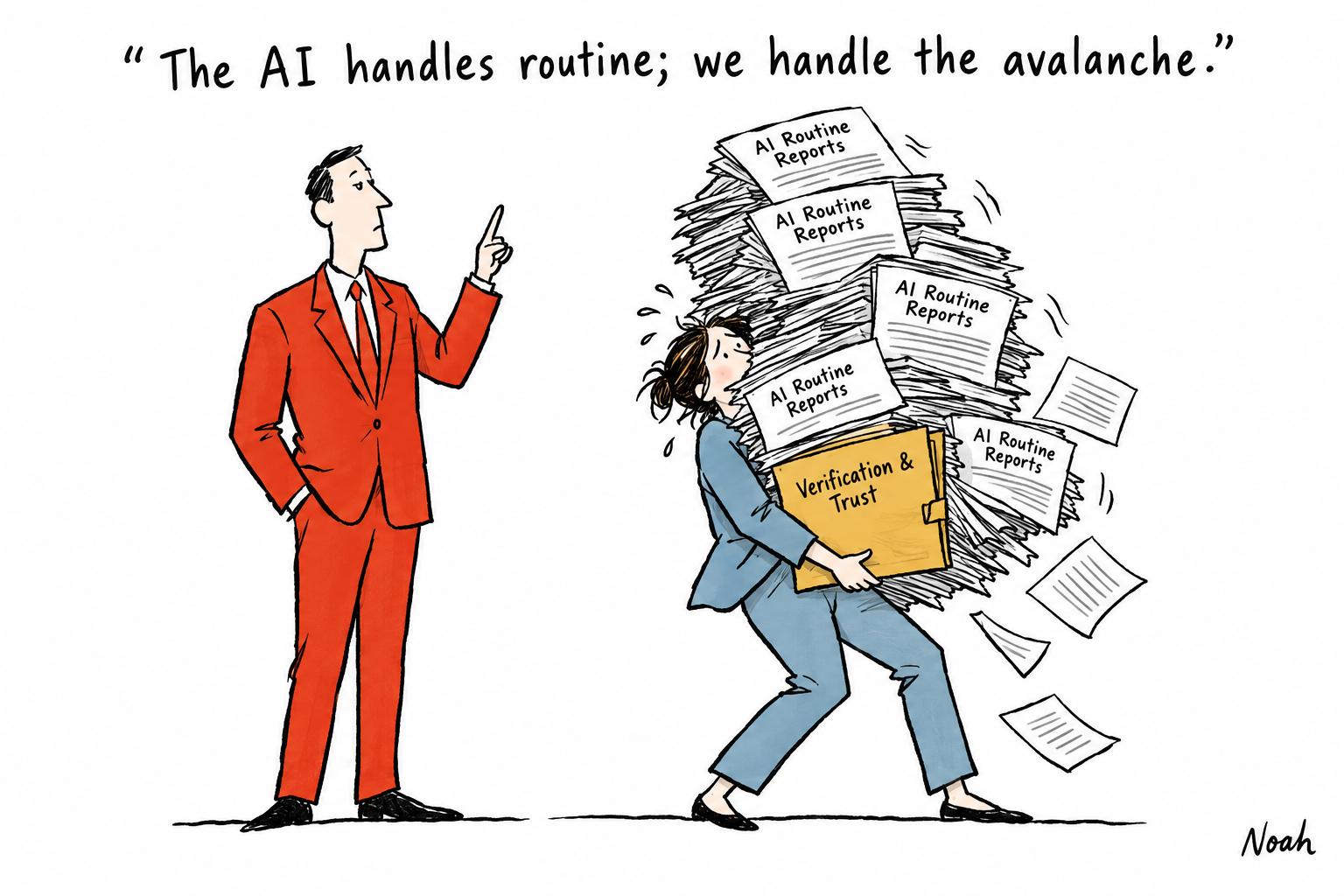
Cartoon · AI-generated
A Reuters Institute report finds roughly 30 AI-driven newsroom platforms worldwide, highlighting a growing division of labour in which machines handle routine reporting while journalists retain responsibility for verification, context and trust.
A growing number of news organisations are experimenting with AI-driven workflows that can scan sources, gather material, draft copy and even help shape editorial priorities, according to a Reuters Institute report that examined projects in the United States, Canada, Croatia and Italy. The study, by journalist Gretel Kahn, found about 30 such platforms worldwide in the Gindeks database, underscoring how quickly the technology is moving from novelty to newsroom infrastructure. Reuters Institute observers and other media analysts say the shift reflects both a scramble for efficiency and a broader search for ways to sustain journalism as costs rise and local coverage contracts.
Among the clearest selling points is speed. The US site Runtime Wire, for example, was able to publish a story within roughly six minutes of spotting a development at a cyber-security conference in Las Vegas, arriving hours before Wired on the same subject. Its founder, Ryan Mirkett, keeps final editorial responsibility in human hands and says items that cannot be substantiated, or are too weakly evidenced, are left unpublished. That model, the Reuters Institute report suggests, shows how automation can accelerate routine reporting without eliminating editorial judgement, provided the newsroom has firm rules about evidence and verification. IBM’s analysis of AI in journalism similarly argues that the technology is best used as a tool for drafting, data analysis and audience engagement, not as a replacement for professional oversight.
Italy’s Redazione Zero has taken a more automated approach, with AI agents selecting and writing stories before independent systems check them, rather than requiring a human editor to review every item first. To reduce the risk of error, the outlet has adopted an editorial charter that rules out crime, court reporting and medical advice, and it generally requires at least two independent sources. Readers can challenge published material, and the site says complaints will receive a response within 48 hours. The Reuters Institute report presents that framework as one attempt to balance scale and speed against the reputational damage that even a small number of mistakes can cause. Blinx has separately warned that AI-generated content can undermine newsroom credibility if safeguards are too weak or vaguely enforced.
The strongest case for these systems may be in places where local journalism has thinned out. In Croatia, Moj Kraj covers more than 124 towns by monitoring over 2,000 local sources, while Tucson Daily Brief in Arizona combines automated publication of routine items with human review for more sensitive stories. In Canada, Journal Metro has been relaunched with AI tools producing first drafts, which are then checked by the editor-in-chief for accuracy and context. The Reuters Institute’s broader annual reporting on news trends has repeatedly pointed to AI as one of the defining forces in media, but also one that raises difficult questions about trust, misinformation and the future of newsroom jobs. The conclusion drawn by the report is that the most workable model may be a division of labour: machines handling repetitive tasks, with journalists concentrating on investigation, context and the editorial decisions that require human accountability.
Inspired by headline at: [1]
Sources by paragraph: - Paragraph 1: [2], [4], [5] - Paragraph 2: [1], [2], [3] - Paragraph 3: [1], [2], [3] - Paragraph 4: [1], [4], [5], [6], [7]
Source: Noah Wire Services · Original