AI-made game wikis are flooding search results and squeezing out fan communities
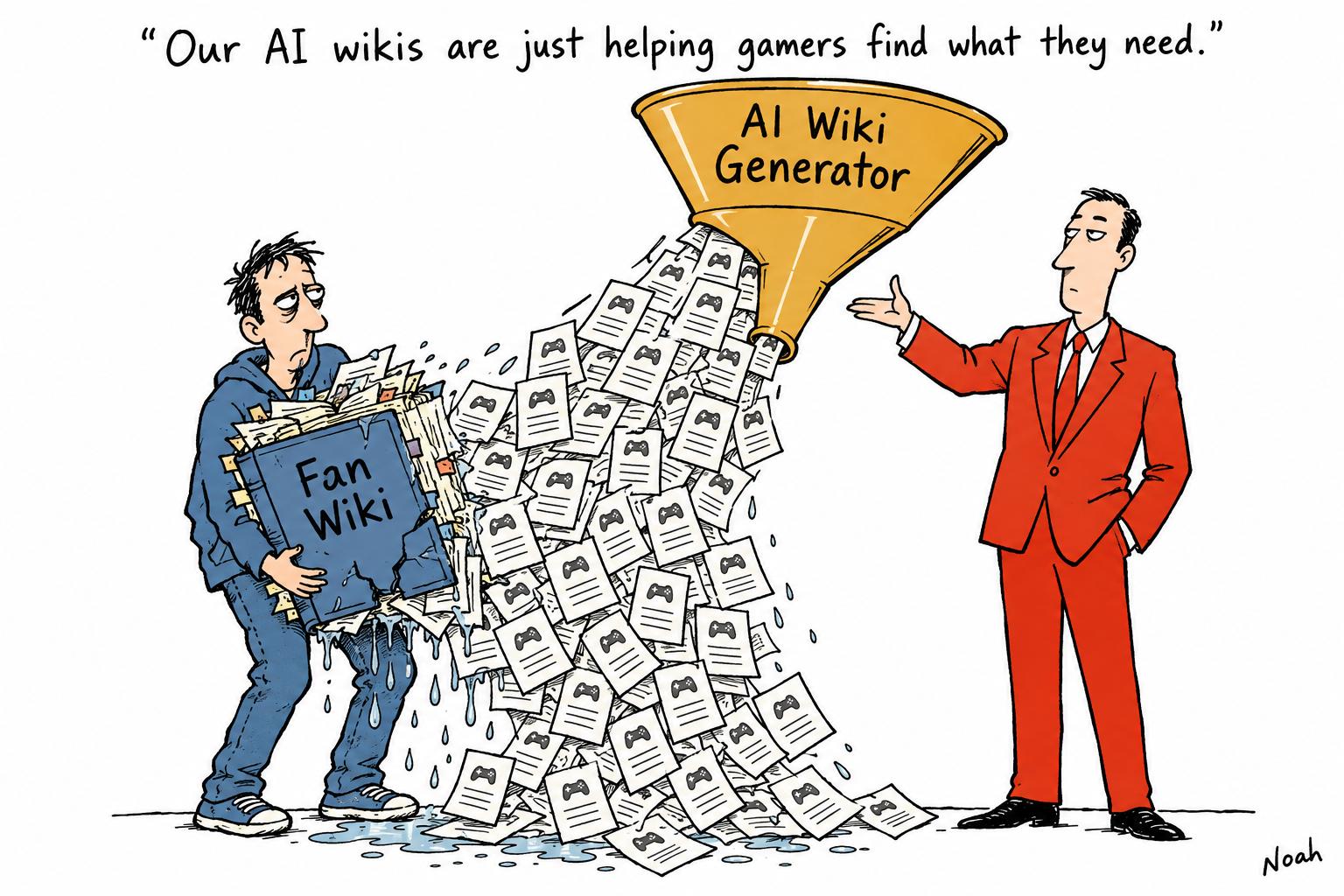
Cartoon · AI-generated
Fabricated walkthroughs and lore pages are targeting smaller games, diverting traffic from volunteer-run resources and driving up their hosting costs.
An increasingly visible side effect of generative AI in gaming is the rise of fan-wiki lookalikes that present themselves as helpful reference sites while filling search results with material that is wrong, recycled or entirely invented. In the case of a Nighthawks-branded site that surfaced high in search rankings, Eurogamer found a page that was not even a true wiki: it allowed only emailed corrections, not open editing, and mixed fabricated game details with unrelated references to the 1981 film and Edward Hopper painting of the same name.
The problem is not limited to one title. Eurogamer’s reporting points to a wider scatter of similarly styled sites, some genuinely editable and others only borrowing the language of fan collaboration. They tend to target smaller independent games, where players searching for walkthroughs or lore are less likely to find a large, established community already maintaining accurate pages. In practice, that leaves a gap that AI-generated content can exploit, especially when search engines rank the impostors above the real thing.
Tim Bender, chief executive of publisher Hooded Horse, told Eurogamer that his company has been forced to spend time chasing down these pages as they appear in search results for its games. Hooded Horse has taken the unusual step of building its own wikis and working with fans to keep them current, yet even that has not stopped AI-made rivals from encroaching. Bender described the situation as a constant game of "whack-a-mole", and said the ease with which generative tools can mass-produce pages means bad actors can flood search results and capture traffic intended for legitimate resources.
Volunteer maintainers say that the damage goes beyond mere annoyance. FlamingMojo, a member of the Independent Game Wiki Network, said AI-generated versions have harmed the reputation of genuine fan wikis because players arrive at the wrong page, encounter nonsense, and assume the broader community is unreliable. He also noted that the issue has become especially acute around newly released games: in the days after Wardogs launched in September, he saw at least five such sites appear, all competing with community-run documentation before those pages had time to mature.
The economics of fan wikis help explain why the problem has become so sticky. Many independent projects generate little or no revenue, whether because advertising is limited by larger hosting platforms or because maintainers pay for hosting themselves. Bender argued that even a modest amount of ad income can be enough to tempt operators into mass-producing low-quality pages, while FlamingMojo said some sites may be chasing something beyond advertising, including data collection or software downloads. In one case, he said, a site linked users to additional software tied to a paid subscription, and his security tools flagged it as potentially unsafe.
There is also a technical cost for the communities that do the real work. FlamingMojo said publicly visible data from the Dune: Awakening Community Wiki showed about 7 million requests from AI crawlers in 30 days, including 5 million from Meta alone. He said some bots can be steered away with standard controls, but others simply hammer pages repeatedly and at a pace smaller sites are not built to absorb. According to him, server costs have risen sharply as a result, while volunteer editors are still expected to keep pace with search traffic, new releases and misinformation all at once.
For Bender, the issue sits within a broader struggle over who controls useful information online. Generative AI, he suggested, has made it easy for low-quality material to crowd out work that people have spent time building carefully. Yet FlamingMojo said the answer may also lie in the same communal instincts that gave fan wikis life in the first place. In his view, the best defence against AI pollution is still collective effort: many contributors making small, steady additions and treating the resource as something shared rather than consumed.
Inspired by headline at: [1]
Sources by paragraph: - Paragraph 1: [2], [3] - Paragraph 2: [2], [4] - Paragraph 3: [1], [2] - Paragraph 4: [1], [2] - Paragraph 5: [1], [2], [4] - Paragraph 6: [1], [2] - Paragraph 7: [1], [2], [6]
Source: Noah Wire Services · Original