AI-linked articles reach 18% of Russian media output as sourcing thins
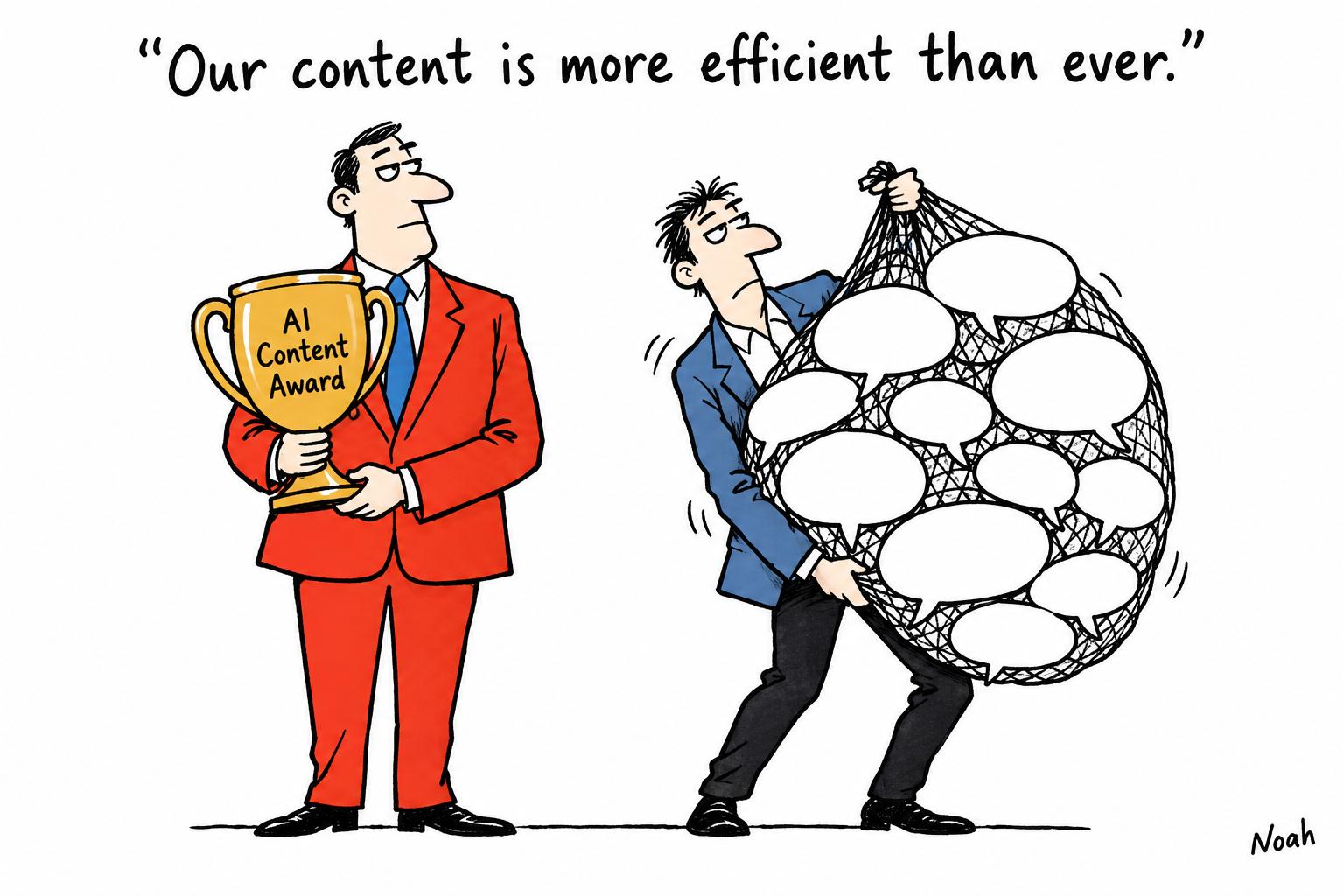
Cartoon · AI-generated
A study of more than 250,000 articles found a sharp rise in material showing signs of AI generation, alongside fewer quotations and expert voices.
A new study of Russian media suggests that artificial intelligence is no longer a marginal presence in newsroom workflows. According to research by Kirill Pshinnik, co-founder of the online university Zerocoder, and reviewed by Russian Business, 18% of articles in Russian media in the second quarter of 2026 showed clear signs of being generated by neural networks. The analysis, which covered 254,614 articles from 174 outlets between 2020 and the first half of 2026, also found that such pieces contained direct quotations 2.1 times less often and expert remarks 2.6 times less often than articles judged to have been written by people.
The findings point to a steep acceleration in the use of AI-assisted content since ChatGPT launched in November 2022. Before the end of 2022, the share of articles with signs of AI generation did not exceed 0.1% in any quarter, but by the fourth quarter of 2023 it had risen to 0.88%, then to 5.7% in the fourth quarter of 2024, 14% in the final quarter of 2025 and 18% in the second quarter of this year. The researchers stress, however, that their method identifies only signals of neural-network generation and does not prove that any individual text was created by AI. They used two detectors and based the result on the average of their assessments.
The spread of AI-marked material appears uneven across the Russian media landscape. The study found the highest concentration in thematic, lifestyle and large regional outlets, which it grouped as a second tier of media, where 23% of articles showed AI traits in the second quarter of 2026. Federal publications stood at 10%, while city and niche outlets were at 7.9%. Even so, the market remains mixed: almost half of the outlets examined had no more than 5% of articles with AI characteristics, while one in five had more than 30%.
Researchers also said the style of AI-tinged texts differed from that of human-written reporting. In a separate comparison of 2025 and the first half of 2026, articles with strong AI signals averaged 773 words, compared with 1,090 words for texts classified as human-authored. They also contained fewer quotations and fewer outside voices, although the authors cautioned against reading the data as proof that AI use itself causes the drop in sourcing. The study did, however, identify a cluster of words that appeared 4.1 times more often in AI-like texts than in human ones, including terms translated as "key", "form", "balance" and "critically".
The research lands in a broader debate over how newsrooms should handle machine-generated material. In August, the Russian Union of Journalists issued recommendations calling for clear labelling of AI use, including disclosure at the beginning or end of a piece and, where relevant, a description of whether the technology was used for drafting, translation or editing. It also said that human editors should remain responsible for facts, quotations and data, particularly in sensitive areas such as health, finance and safety. Against that backdrop, the latest study suggests that AI is not only entering Russian journalism at scale but may also be reshaping the texture of reporting itself.
Inspired by headline at: [1]
Sources by paragraph: - Paragraph 1: [2] - Paragraph 2: [2] - Paragraph 3: [2] - Paragraph 4: [2] - Paragraph 5: [3]
Source: Noah Wire Services · Original