AI is rewriting scientific publishing — but human judgement remains the final test
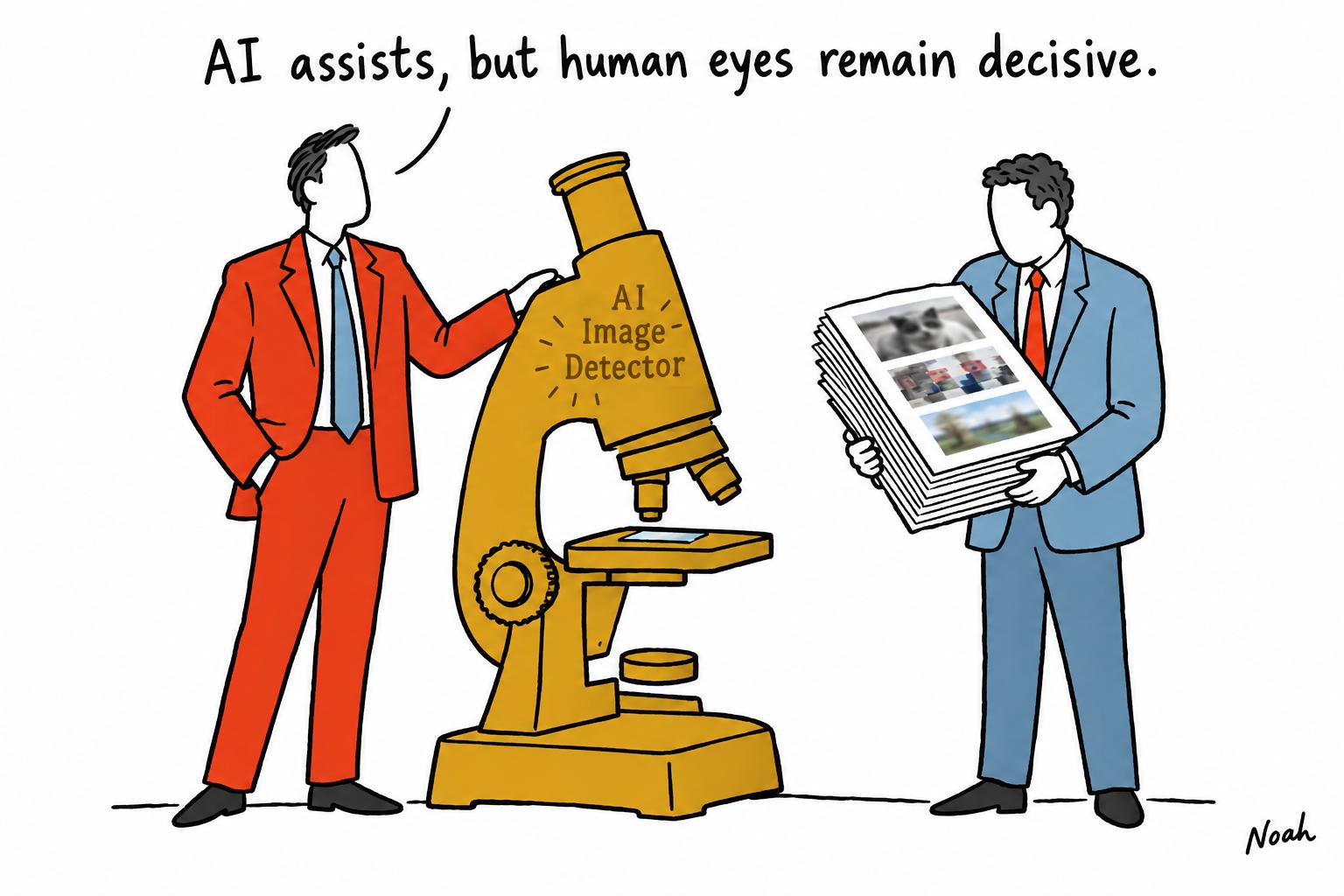
Cartoon · AI-generated
Rockefeller University Press is using AI to detect image manipulation, reshape how readers find research and support manuscript checks, while keeping scholarly judgement at the centre of publication decisions.
Artificial intelligence is already altering how scientific papers are checked, discovered and read, but Susan King, the executive director of Rockefeller University Press, argues that the technology is strengthening, rather than replacing, the human relationships that underpin scholarly publishing. In an interview with Mirage News, she said the press is using AI not only to improve efficiency but also to reinforce research integrity, especially in areas such as image screening and manuscript vetting.
One of the clearest changes, King said, has been in the policing of manipulated or duplicated images. Rockefeller University Press has been screening images for more than two decades, but AI now allows staff to compare figures in submitted papers with material in preprints and across published literature far more quickly. That work sits alongside the publisher's participation in the STM Integrity Hub, a shared industry platform designed to flag problems such as duplicate submissions and papers associated with fraudulent "paper mill" activity. Research published elsewhere has also stressed that AI-based image analysis can help publishers identify duplication and manipulation more effectively, while preserving the reliability of the scientific record.
King also described a shift in how readers reach journal content. As AI-generated summaries become more common and researchers increasingly use AI search tools, she said traffic patterns are beginning to change, with more referrals from AI systems and less dependence on conventional search channels such as Google Scholar. That creates a practical problem for libraries and publishers, because usage statistics have long helped institutions judge whether a journal is worth the subscription cost. If readers consume content through AI layers rather than by visiting journal websites directly, she suggested, the field may need a new way to measure value and impact.
In response, Rockefeller University Press is experimenting with licensing arrangements that make its content easier for AI systems to access in a controlled way. King said the press has partnered with Cashmere to surface journal material through AI tools, and she sees structured access as a way to reduce the risk of inaccurate summaries produced by systems that rely on incomplete training data. Her view echoes wider discussions in scientific publishing about the need for machine-readable access, rather than leaving AI systems to improvise from fragmentary information, a practice that can contribute to so-called hallucinations.
Despite her enthusiasm for automation in some areas, King drew a clear line around where human judgement still matters most. She said AI could help with manuscript submission by extracting metadata such as author names, institutions and funders, and it may eventually assist reviewers by checking statistical methods or other technical details. But the core intellectual questions, she argued, remain human ones: whether a study is genuinely novel, whether it changes the field and whether it advances knowledge in a meaningful way. In her view, AI can support science, but it cannot replace the scholarly judgement that gives publishing its ultimate value.
Inspired by headline at: [1]
Sources by paragraph: - Paragraph 1: [1] - Paragraph 2: [1], [2], [3] - Paragraph 3: [1] - Paragraph 4: [1] - Paragraph 5: [1], [2], [3]
Source: Noah Wire Services · Original