











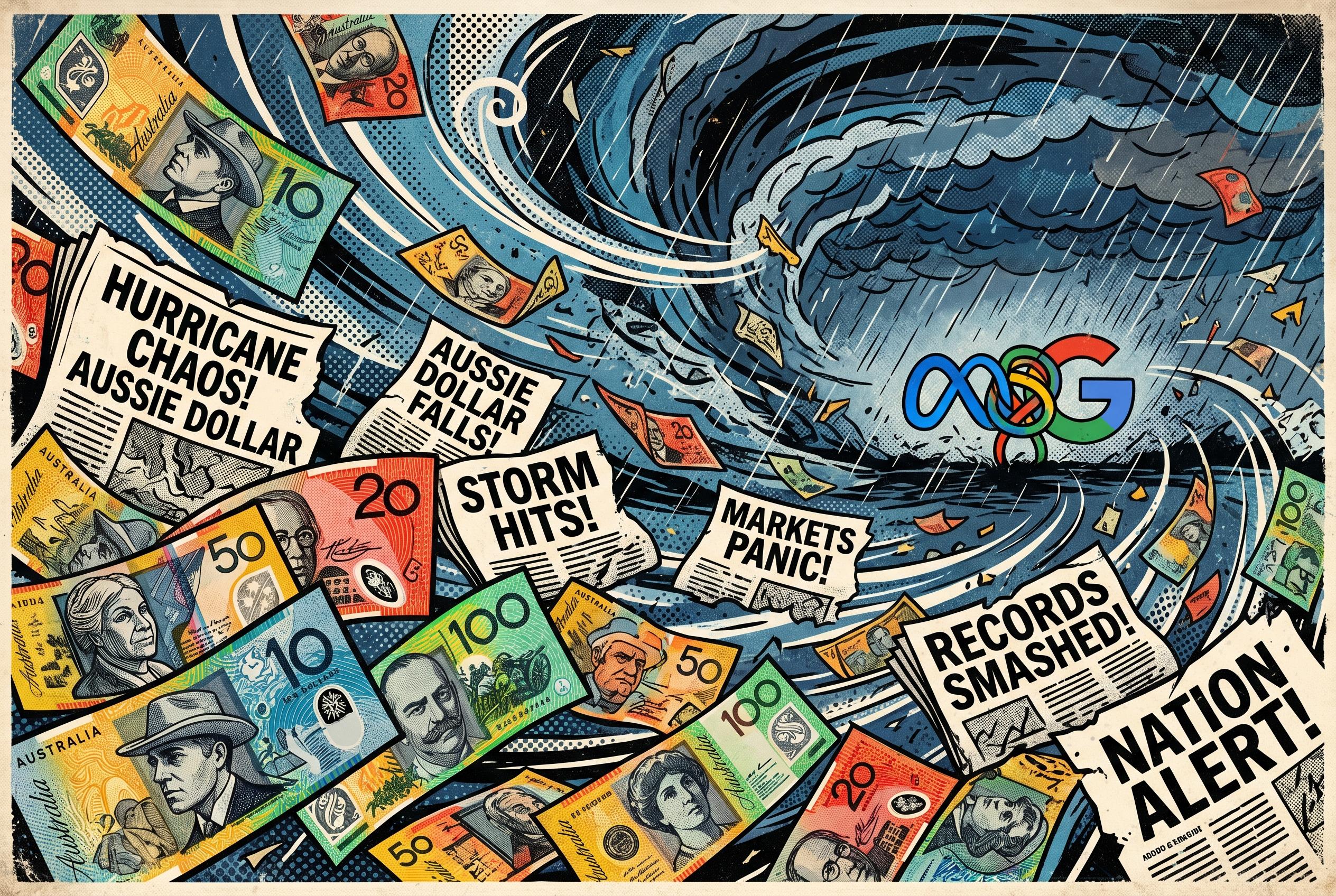
Meta has criticised Australia’s plan to make large digital platforms contribute financially to news organisations, arguing the proposal would entrench publisher dependence on technology companies rather than help create sustainable media businesses.
The dispute highlights a broader debate over how governments should support journalism in the digital age. While Australia argues platforms should help fund news production, Meta says forcing technology companies to subsidise publishers risks delaying the industry’s adaptation to changing consumer habits and advertising markets.
In a submission to the government, the owner of Facebook, Instagram and WhatsApp described the proposed News Bargaining Incentive as “grossly unfair”. The company argued that guaranteeing revenue from platforms would shield publishers from competitive pressures at a time when they need to develop more durable business models.
Meta also called the proposal “poorly designed” and “economically incoherent”, claiming it would breach Australia’s obligations under its free trade agreement with the United States. A healthy media sector cannot be built through taxes imposed on foreign companies, the company argued, particularly when the levy is not linked to any clear exchange of value.
Under the Labor government’s proposal, social media and search companies would face a 2.25% charge on Australian revenue unless they enter commercial agreements with local publishers. Companies that strike sufficient deals could reduce the rate to an effective 1.5%, while funds raised through the scheme would be distributed according to the number of journalists employed by participating outlets.
The measure is primarily aimed at Meta, Google and TikTok owner ByteDance. However, it would not apply to artificial intelligence companies such as OpenAI, despite concerns from publishers that AI products are also diverting traffic away from news websites.
The scheme is intended to replace Australia’s News Media Bargaining Code, which led to a series of commercial agreements between publishers and platforms but was later undermined when Meta removed news content from Facebook.
Prime Minister Anthony Albanese announced the policy in April, saying the government was committed to supporting Australian journalism and local reporting. Officials estimate the measure could generate between A$200 million and A$250 million annually for domestic media organisations.
Australia’s news industry has faced years of financial pressure as advertising revenues have shifted from print publications to digital platforms. According to the Media Entertainment and Arts Alliance, more than 19,500 journalism jobs have been lost since 2008, illustrating the scale of the challenge the government is attempting to address.
Source: Noah Wire Services
- https://www.aljazeera.com/economy/2026/6/4/grossly-unfair-meta-slams-australias-bid-to-make-platforms-pay-for-news?traffic_source=rss – Please view link – unable to able to access data
- https://www.abc.net.au/news/2026-06-04/meta-hits-out-at-labor-goverments-media-bargaining-incentive/106758104 – Meta, the parent company of Facebook and Instagram, has criticised the Australian government’s plan to make social media companies pay for news content, labelling it a ‘grossly unfair’ and ‘discriminatory tax’. The proposal, known as the News Bargaining Incentive (NBI), would impose a 2.25% levy on the Australian revenues of platforms like Meta, Google, and TikTok unless they strike commercial deals with local news publishers. Meta argues that the law is poorly designed and will fail to deliver a diverse and sustainable news industry.
- https://www.abc.net.au/news/2026-04-29/meta-slams-australias-news-bargaining-payment-plan/106618808 – Meta has attacked the Australian government’s threat to tax tech giants if they fail to pay for news content. Under the plan, Meta, Google, and TikTok would be taxed just over 2% of their Australian revenue, a levy they could offset by striking commercial deals with news outlets. Meta argues that news organisations ‘voluntarily’ post content on their platforms because they ‘receive value from doing so’.
- https://peopledaily.digital/news/grossly-unfair-meta-slams-australias-bid-to-make-platforms-pay-for-news – Meta, the parent company of Facebook, WhatsApp, and Instagram, has criticised Australia’s latest plans to force digital platforms to support media outlets financially, labelling the proposals ‘poorly designed’ and ‘grossly unfair’. Meta stated that the government’s News Bargaining Incentive (NBI) would shield news publishers from needing to undertake the innovation necessary for a sustainable media landscape.
- https://www.aljazeera.com/amp/economy/2026/6/4/grossly-unfair-meta-slams-australias-bid-to-make-platforms-pay-for-news – Meta, the parent company of Facebook, WhatsApp, and Instagram, has criticised Australia’s latest plans to force digital platforms to support media outlets financially, labelling the proposals ‘poorly designed’ and ‘grossly unfair’. Meta stated that the government’s News Bargaining Incentive (NBI) would shield news publishers from needing to undertake the innovation necessary for a sustainable media landscape.
- https://techcrunch.com/2026/04/28/australia-forces-big-tech-firms-to-pay-for-news-or-face-a-2-25-tax/ – Australia is getting serious about making Big Tech pay for news. The country’s government unveiled draft legislation on Tuesday that would require companies like Meta, Google, and TikTok to pay for the journalism they aggregate or reshare, or face a levy on their local revenues. Communications minister Anika Wells said at a press conference today: ‘People are increasingly getting their news directly from Facebook, from TikTok, and from Google.’
- https://www.theguardian.com/australia-news/2026/apr/28/albanese-tech-companies-australian-media – Anthony Albanese has urged Google, Meta, and TikTok to make deals with Australian media outlets to avoid a dedicated 2.25% levy on local revenues, warning digital giants should not be able to exploit the work of journalists to boost profits. But tech giants Google and Meta have criticised the government’s change. Google rejected the need for the reform and was scathing Labor didn’t include AI platforms, while Meta – which manages Facebook and Instagram – said the government’s position was ‘simply wrong’.
Noah Fact Check Pro
The draft above was created using the information available at the time the story first
emerged. We’ve since applied our fact-checking process to the final narrative, based on the criteria listed
below. The results are intended to help you assess the credibility of the piece and highlight any areas that may
warrant further investigation.
Freshness check
Score:
10
Notes:
The article is recent, published on 4 June 2026, and presents original content without evidence of prior publication or recycling.
Quotes check
Score:
8
Notes:
The direct quotes from Meta’s submission to the Australian government are consistent across multiple reputable sources, indicating originality. However, the exact earliest usage of these quotes cannot be determined from the available information.
Source reliability
Score:
9
Notes:
Al Jazeera is a reputable international news organisation. The article is not based on a press release but provides independent reporting on Meta’s response to Australia’s proposed legislation.
Plausibility check
Score:
9
Notes:
The claims made in the article align with known industry trends and Meta’s previous positions on similar issues. The article provides specific details, such as the proposed 2.25% levy and the distribution of funds based on the number of journalists employed by media outlets, which are consistent with other reputable sources.
Overall assessment
Verdict (FAIL, OPEN, PASS): PASS
Confidence (LOW, MEDIUM, HIGH): HIGH
Summary:
The article is recent, original, and based on independent reporting from a reputable source. The claims made are plausible and supported by specific details consistent with other reputable sources. There are no indications of paywall restrictions or reliance on non-independent sources.