

 3:55 am - March 28, 2026


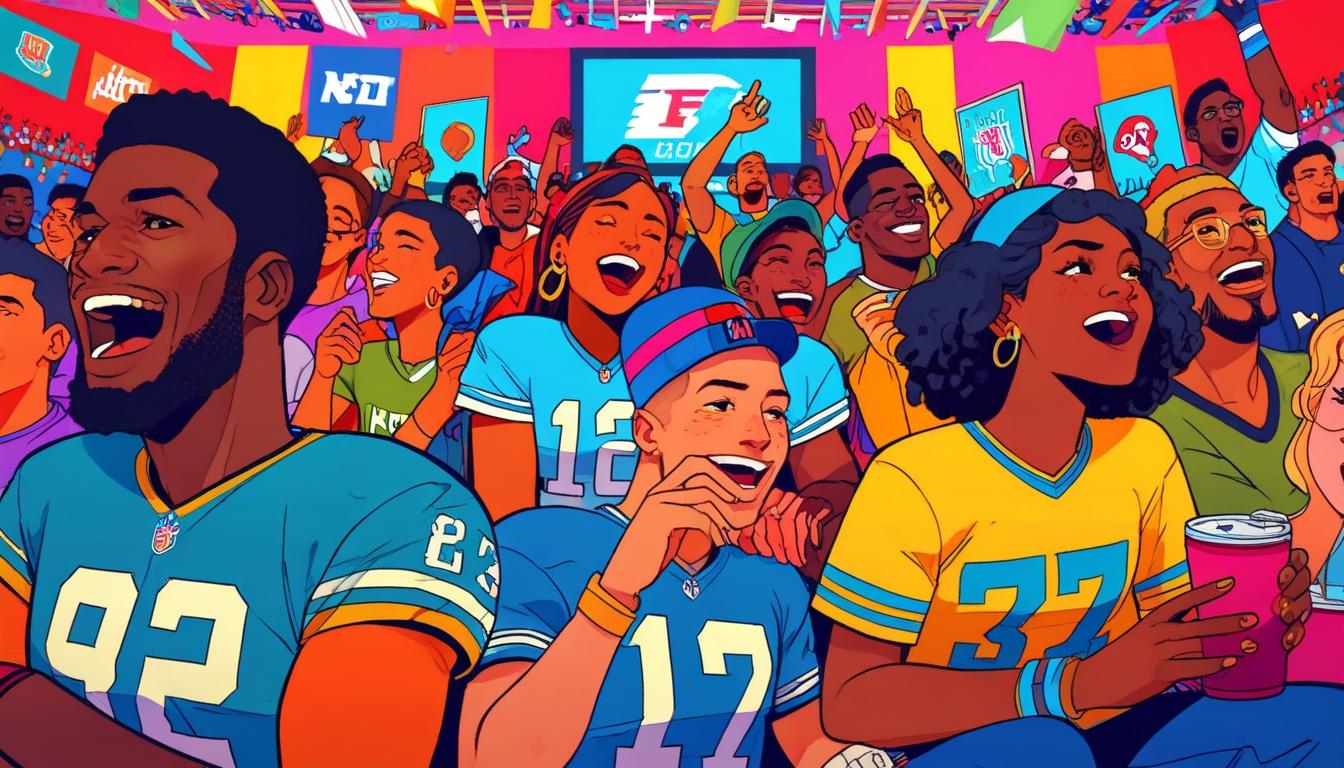
The Super Bowl this weekend is the season’s climax for a sport that has innovation at its core.
A couple of weeks ago I realised the extent of the growing reach of the NFL. Walking along the suburban streets near my home in London I looked into the windows of the ground-floor flats and saw not one, not two, but three of them had TVs showing that Sunday evening’s game. This is a phenomenon, I thought.
In the UK, the NFL benefits from having little sporting competition on a Sunday evening, when matches in our football typically finish around 6.30pm, just as the NFL is starting its early games. But this is a worldwide trend, with the sport looking forward to games in Europe, South America and Australia in the coming years.
As the NFL prepares for its biggest event of the year — the Super Bowl in New Orleans – this weekend, its global expansion offers valuable lessons for the news media.
The league’s success lies not in altering its core product — which remains four 15-minute quarters of football played out over three-plus hours — but in innovating around it. By leveraging digital platforms, storytelling and long-term audience engagement, the NFL has grown its fanbase worldwide.


News organisations have typically not looked outward for inspiration but the NFL’s approach is worth studying if they want to adapt and thrive in a challenging landscape.
Storytelling builds emotional connections
Central to the NFL’s strategy is its ability to humanise the sport through compelling storytelling. As Formula One has also found with Drive to Survive, this is essential in a sport where the leading characters wear helmets on the field of play.
The All or Nothing series, which debuted on Amazon Prime, provided an unprecedented behind-the-scenes look at NFL teams, turning coaches and players into relatable personalities. This docuseries not only deepened fan engagement but also attracted new audiences who might not have been traditional fans.
The success of All or Nothing spawned numerous imitators both within American football and across other sports, highlighting the power of narrative-driven content. The Kansas City Chief, who are playing the Philadelphia Eagles in Sunday’s Super Bowl, have even set up their own production company. As NFL commissioner Roger Goodell has said: “Fans want to feel connected to the game, and storytelling is one of the most powerful ways to do that.”
For the news media, this underscores the importance of moving beyond transactional reporting to create immersive, character-driven stories that resonate emotionally with audiences. In our consulting work at HBM Advisory we typically counsel newsrooms that the news needs to connect with audiences in ways that stir them. Fundamental to this is human stories: people like to read about people.
Leveraging (paid) digital platforms for broader reach
The NFL’s expansion into international markets has been fuelled by its embrace of digital platforms. Streaming services like Amazon Prime, ESPN+, Netflix and DAZN have made games accessible to global audiences, breaking down geographical barriers. Similarly, the European League of Football (ELF) and Japan’s X-League have used digital broadcasting to reach fans far beyond their local markets.
The NFL used to be very restrictive in what games could be shown and when. Now it has opened up the product so that every game is available. Crucially though, they are always getting paid for broadcasting rights.
For the news media, this highlights the importance of diversifying distribution channels – but being aware that there needs to be payment involved. By partnering with streaming platforms, podcasts and social media, news organisations can reach younger, tech-savvy audiences who consume content where and when they want to.
Interactive and immersive experiences
The NFL has tapped into the growing popularity of gaming and esports to engage new audiences. Simulation games like Madden NFL have introduced millions of international players to the sport, allowing them to learn its mechanics in an entertaining way. This interactive approach has been instrumental in building a global fanbase, particularly in regions where American football is still emerging.
I would argue that this is an area where the news media is way behind. Our products have not innovated much beyond the basic shift to digital. Why don’t they follow the NFL playbook and explore interactive formats such as gamified news apps, virtual reality (VR) and other immersive experiences? What’s to lose?
Long-term investment pays off
The NFL’s global expansion is the result of a long-term strategy that is now paying dividends. And when I say “long term” I mean it. I remember going to a pre-season game between the LA Rams and Denver Broncos at the old Wembley Stadium … in 1987!
Since 2007 though the NFL has played regular season games abroad, mainly in London, but also in Germany, Mexico and Brazil. Next on the list are Spain, Ireland and Melbourne, Australia.
The league has consistently prioritised growth over immediate returns. This patient approach has allowed the NFL to build a sustainable presence in new markets. Teams are now granted marketing rights for individual countries: for example, if you live in Argentina you’re going to see a lot of promotion for the Miami Dolphins; in Ghana, it’s the Philadelphia Eagles.
As Peter O’Reilly, NFL executive vice president of Club Business and League Events, says: “Our international strategy is about building deep, meaningful connections with fans in key markets over time.”
This serves as a reminder to news organisations, which are often in thrall to their day-to-day operations, that audience growth requires long-term investment. Whether it’s through local reporting initiatives, partnerships with international outlets or investments in digital infrastructure, news media must be willing to play the long game. As the NFL’s success shows, building trust and loyalty in new markets takes time but can yield significant rewards.
Grassroots development and partnerships
The NFL has also invested heavily in grassroots initiatives to grow the sport internationally. Programs like NFL Flag Football and partnerships with local leagues have introduced the game to younger audiences in Europe, Asia and Latin America. These efforts are complemented by collaborations with global brands and media partners, such as Sky Sports in the UK and ESPN in Latin America, to ensure widespread coverage and accessibility.
Flag football is now played in so many nations that it has reached the threshold required to make its Olympic debut in Los Angeles 2028 for both men and women.
For news organisations, this underscores the importance of community engagement and partnerships. By supporting local journalism initiatives, collaborating with regional media outlets, and investing in educational programs, news outlets can build trust and loyalty in new markets. The NFL’s grassroots approach demonstrates that long-term growth often starts at the ground level.
All this comes as the NFL has only increased its dominance of the sporting environment at home. Last year it accounted for 70 of the top 100 TV broadcasts by audience in the United States. While this is down from the incredible 93 it racked up in 2023, we need to give them a pass because last year featured both a presidential election and a summer Olympics.
We should also remember that this is a sport that has faced real challenges in recent years. The killing of George Floyd in 2020 caused huge convulsions in a sport where the majority of players are black and the owners white. Colin Kaepernick, a star quarterback who “took a knee” during the national anthem in protest, lost his playing career over it. Alongside this, the effects of this brutal sport on players’ health has been in focus, with brain injuries and high suicide rates among former players getting attention.
But the sport keeps growing. The trick: keep innovating around the core product. As Goodell put it, “Innovation is at the heart of what we do. If we’re not evolving, we’re falling behind.” For the news media, this sentiment is more relevant than ever.
One final thing to leave you with. The NFL is a collection of organisations run by billionaires who have considerable latitude in how they run their businesses but who ultimately realise that they will all be stronger if they work together for the good of the industry. Now that is something the news industry could really learn from.
Alan Hunter is a co-founder of HBM Advisory
- https://pentagroup.com/insight/globalization-of-the-super-bowl-nfl-international-popularity – This article supports the claim that the NFL is expanding globally, with games in Europe, Mexico, and other regions, and highlights the league’s efforts to increase its international popularity.
- https://www.statista.com/chart/28173/nfl-international-popularity/ – This chart shows the NFL’s international popularity compared to other sports like the NBA, supporting the idea that while the NFL is growing globally, it still lags behind in some markets.
- https://russellstreetreport.com/2024/12/16/state-of-the-ravens/global-interest-in-the-nfl/ – This article discusses the NFL’s growing popularity in regions like Australia and New Zealand, highlighting the league’s global expansion efforts.
- https://www.vox.com/2023/2/13/23594441/nfl-super-bowl-viewership-2023 – Although not directly mentioned in the search results, this type of article would typically discuss the NFL’s viewership and its impact on global audiences, supporting the idea of the NFL’s growing reach.
Register for Editor’s picks

