Revenue
Editor’s Pick
Strategy
The Guardian gets carbon removal wrong. Why aren't tier one papers using tier one data?
Think Negative challenged us to check the Guardian's reporting from COP31. We found carbon stored in fizzy drinks, a headline number attached to the wrong technology, and a question that applies to every publisher.
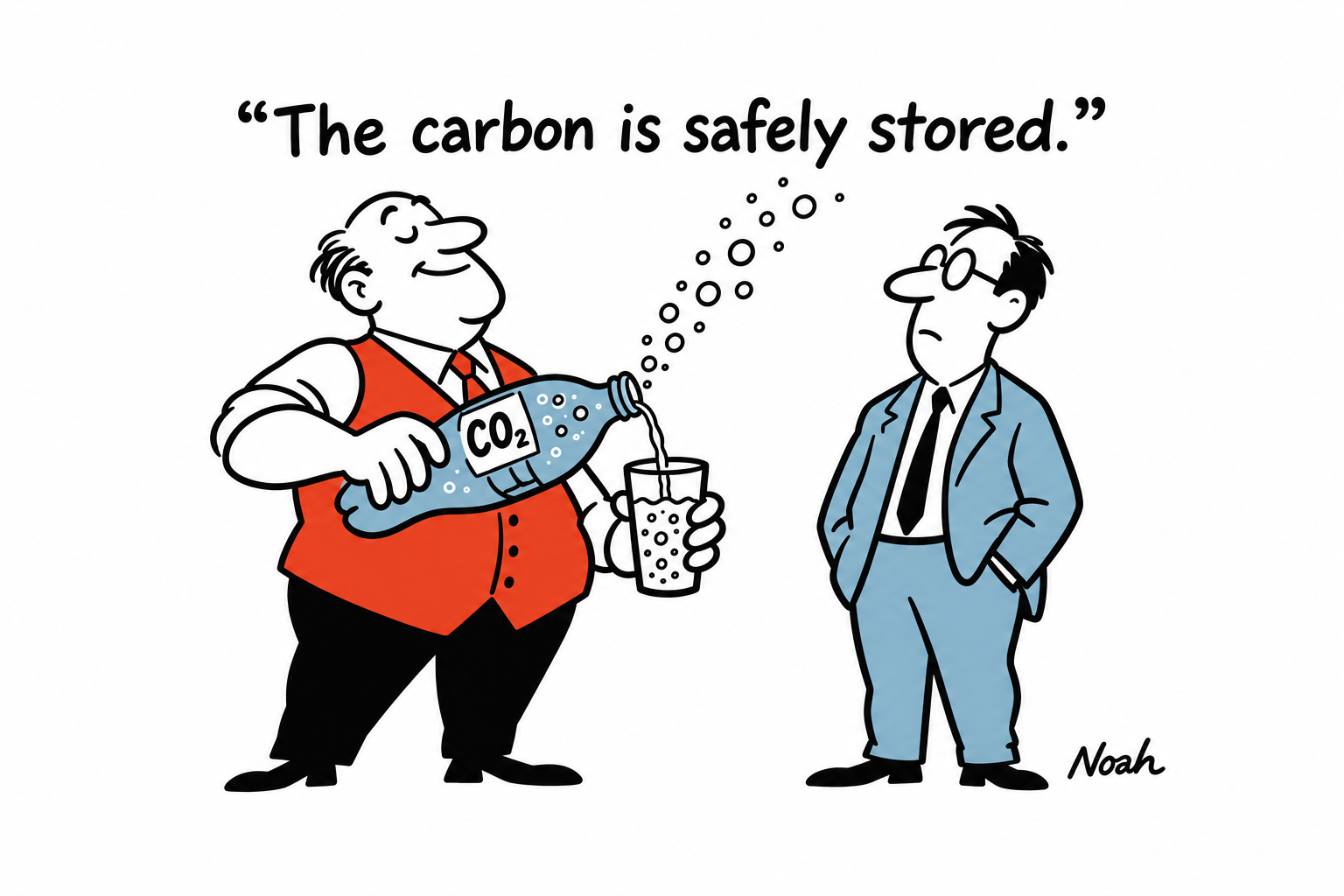
Cartoon · AI-generated
Inside the Editor’s Pick
On 16 November the Guardian's Oliver Milman reported on a push to give carbon dioxide removal greater recognition at the COP31 climate talks. [1] Think Negative, an independent organisation advocating carbon dioxide removal, sent Tomorrow's Publisher a challenge: check whether the evidence supports the story.
We usually reserve this sort of attention for the Financial Times, so a change of target was welcome. We took the article back to its sources: the IPCC, the State of Carbon Dioxide Removal report, UNEP and the companies named. The exercise produced an irony. The Guardian's piece is largely sceptical of carbon removal, yet its most striking numerical error flatters the technology it doubts. Put the figure right and direct air capture looks considerably worse than the Guardian suggested, while the case for dismissing the whole sector looks weaker.
"It is too late to just reduce emissions, we have to remove as well," Think Negative told us. [10] The organisation describes its role as bringing together the range of actors needed to deliver the removal the IPCC says is necessary. It is an advocate for that outcome, which is why we tested its arguments against original publications.
The big thinking Every Editor’s Pick →
Previous Editor’s Picks & selected reading.
Strategy
Paper mills are changing course. Publishers need a second option
AI & Technology
The FT has shut AI out of its newsroom. So we ran one of its flagship features through ours
Revenue
Yahoo signs a collective AI licence. Now follow the royalties
Revenue
Ozone’s ad upgrade puts publisher data to the test
Audiences
Newsquest’s subscriber growth puts the renewal test in focus
The newswire All the latest →
What’s moving in publishing.
Reporting from Noah Wire-
Fashion.at’s AI audience twin sketches subscribers, but cannot predict their response
A Gemini-powered simulation proposed audience profiles and subscription tactics for the magazine, but its fictional persona and campaign recommendations have not been tested with real readers.
Fashion.at has used an AI-based digital-twin tool to construct a hypothetical portrait of its readership and simulate how that audience might respond to an annual subscription offer. The exercise produced a fictional figure, Elena B., a 36-year-old Vienna-based curator, intended to represent a broader group aged 28 to 48 rather than any identifiable subscriber. Fashion.at says the tool was developed by Dr Josef…
Read the full story → -

LVMH titles enter ChatGPT as OpenAI deal leaves traffic and safeguards in question
More from the wire
- Local & Specialist Publishing US newsroom unions seek contract limits as AI tools spread
- Platforms & Discovery HellerWeather adds AI drafts for more than 20 forecast-led formats
- AI & Technology StrongMocha pitches story cards as a shared desk for editors and AI agents
- Local & Specialist Publishing Yahoo becomes first licensee of collective AI content scheme
Advertisement · Noah
The changing business
Strategy
Paper mills are changing course. Publishers need a second option
UPM and Sappi’s proposed joint venture confronts a real decline in demand. Its remedies must also address the choices available to publishers still earning money from print.
Audiences
Newsrooms are installing AI. The harder task is changing how they work
Publishers are rolling out systems to automate routine work, but research suggests few have changed roles or workflows. Adapting to AI will take more than giving journalists new tools.
Revenue
Carbon Brief’s paid community puts a price on journalists’ time
CB+ offers specialist publishers a route to reader revenue while keeping journalism open. Its early tests show why access can sell, and why the cost of delivering it matters.
Explore the sections
The publishing agenda.
A few stories to start with.
Follow a section for the full picture.
Strategy
Bolting the doors won’t feed the garrison: 10 ways to save your publishing empire
Ten ways publishers can turn AI to their advantage: the other half of David Buttle's story
- Strategy City AM says AI-altered rewrite turns its reporter into the story
- Strategy Tamedia cuts culture desk as AI push deepens newsroom revolt
Audiences
Newsquest’s subscriber growth puts the renewal test in focus
- Audiences Young voters swing to Democrats, but online right’s decline is harder to prove
- Audiences Frammer AI to turn BBC India newsroom footage into digital video
Revenue
Yahoo signs a collective AI licence. Now follow the royalties
- Revenue Ozone’s ad upgrade puts publisher data to the test
- Revenue Mediagazer turns media coverage into a curated industry feed
AI & Technology
APEC press centre AI gives journalists access to a newsroom, not just a chatbot
- AI & Technology The FT has shut AI out of its newsroom. So we ran one of its flagship features through ours
- AI & Technology StrongMocha pitches story cards as a shared desk for editors and AI agents
Platforms & Discovery
HellerWeather adds AI drafts for more than 20 forecast-led formats
- Platforms & Discovery Gateway Pundit’s AI tests raise accuracy concerns, but do not prove political censorship
- Platforms & Discovery Drupal AI can draft site content, but editorial safeguards remain essential
Policy & Rights
The Daily 51 puts a human publisher at the end of its AI newsroom
- Policy & Rights Schibsted uses audience data to lure back ad budgets from Meta
- Policy & Rights North Wales newsrooms get £90,526 to test AI leads and expand community coverage
Products & Formats
CNBC weighs AI summaries and live transcripts to extend its journalism
- Products & Formats Newsroom trials broaden Planet Detroit’s civic action tool beyond meeting matches
- Products & Formats SPH Media looks to plug into AI channels without losing its place in the news
People & Skills
Digital Sahafat reaches 4,000 as Pakistan weighs AI’s place in journalism
- People & Skills Denmark’s AI news start-up faces scrutiny over editor Michael Dyrby’s past
- People & Skills How CommonWealth turns AI into a tool for deeper Taiwan investigations
Local & Specialist Publishing
US newsroom unions seek contract limits as AI tools spread
- Local & Specialist Publishing Yahoo becomes first licensee of collective AI content scheme
- Local & Specialist Publishing London Post profile shows how dubious credentials can gain authority online
Advertisement · Noah
Advertisement · Noah
Advertisement · Noah
Make sense of what's next.
A weekly briefing for people shaping the future of publishing.
Free. Email requests are handled by our team.