












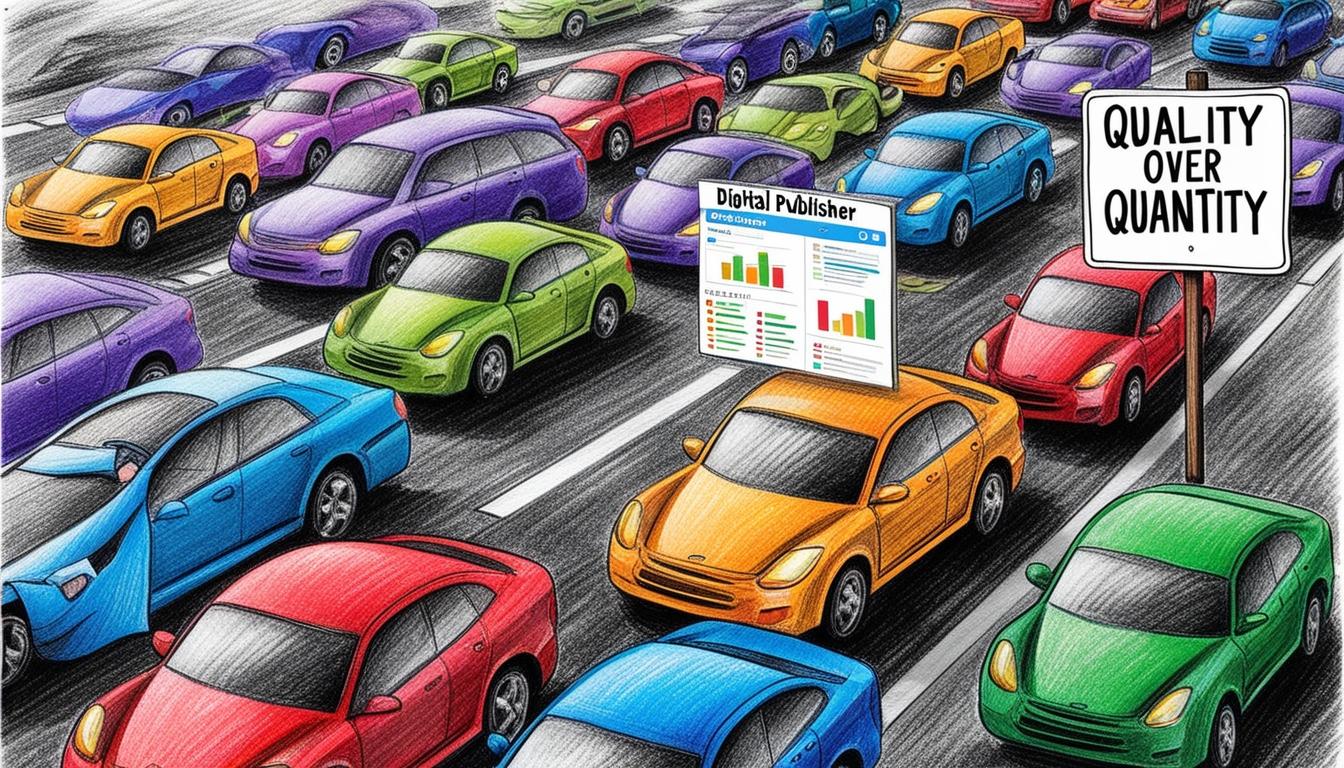
As digital publishers cling to traffic numbers, the need for quality engagement metrics becomes increasingly vital for success and sustainability.
I’ve dubbed this piece “the traffic jam,” and I can assure you it has nothing to do with the 405 in Los Angeles, the M25 in London or the Boulevard Périphérique in Paris at rush hour. Rather, it’s about how so many digital publishers still cling to the idea that sheer volume of clicks, views and page impressions is the be-all and end-all of success.
For far too long at HBM Advisory, we have watched publishers treat traffic like the holy grail, convinced that if reach increases, everything else will magically fall into place. This applies to both subscription- and advertising-oriented publications.
In fairness, it wasn’t a ludicrous notion back when more eyeballs directly equalled more ad impressions and, consequently, more revenue. However, this model has well and truly lost its shine. Algorithm changes mean advertising returns are declining fast and regulations clamping down on third-party data have only added to publishers’ woes.
Yet we still see newsrooms, and publishing businesses as a whole, clinging to traffic metrics as if they were a comforting security blanket.
It’s understandable: page views are straightforward to measure, and a spike on the analytics dashboard can feel reassuring. They are also often the biggest number (“80,000 page views!!!”) and we have all been trained to equate bigger with better.
But we’ve come to a crossroads: if publishers don’t pivot away from quantity to quality, they risk losing both audience trust and commercial viability.
When we evaluate a client’s digital strategy, we look far beyond how many clicks an article gets. Instead, we’re more interested in who those readers are, how often they return, how deeply they engage and whether they might take out a subscription or sign up for membership.
The truth is, the economics of digital advertising have changed dramatically. Nowadays the most lucrative advertising deals revolve around first-party data and highly engaged audiences – much like hosting a small but refined gathering, rather than filling a venue with people who are only half-listening. Over the past few years, we have helped publishers of all stripes recognise that advertisers will pay more to reach these smaller, better-defined audiences than vast numbers of one-time visitors who vanish without a second glance.
Of course, reach does still matter when it comes to sourcing new prospective subscribers. Any publisher hoping to grow must keep attracting a healthy influx of casual readers from which future loyalists can emerge. There’s only so far you can grow by improving conversion rates if the pool of fresh readers goes stagnant. Even so, this is still an argument for quality over quantity – your acquisition funnel needs to be filled with people likely to engage and return, not fleeting visitors who read a single piece and vanish.
This is where engagement metrics come in. Instead of focusing on how many people glance at a headline, the emphasis shifts to how long they stick around, how frequently they return, and whether they value the content enough to pay for it.
We have come across plenty of editorial leaders who feel uneasy about letting audience data influence editorial decisions, fearing it could dilute journalistic integrity. Believe me, I’m all for editorial independence and I am ever respectful of the concept of “church” versus “state”.
But we don’t operate in a void. We arrange workshops that bring editorial and commercial teams together, showing how an engagement-centric approach can produce higher-quality journalism alongside a healthier bottom line. Let’s be honest: a piece that fosters meaningful debate and encourages return visits is exactly what advertisers want, too. And if you bank on subscription revenue, those deeply interested readers are far more likely to reach for their wallets.
Of course, this isn’t a quick fix. Moving from “How many read it?” to “Who’s reading it and why?” requires new skills: an understanding of what your analytics are really saying, breaking down data silos and encouraging journalists to see readers as more than just numbers on a chart.
We frequently encounter spirited discussions in our workshops, where editors initially baulk at the idea of “chasing metrics,” only to begin accepting that good data can actually amplify the power of journalism. It takes patience, relevant dashboards and a shared vision that nurturing a loyal audience is the surest path to longevity.
Ultimately, publishers can’t keep gazing wistfully at the days when smashing a page view record felt like the ultimate victory. In a landscape where advertisers want better returns, regulators are safeguarding data privacy, and readers increasingly demand substance and higher quality reading experiences, the ability to engage audiences is growing more indispensable by the day. Those that master this will enjoy deeper relationships with their readers and stronger appeal to advertisers.
That, in a nutshell, is the real traffic jam at issue here – not the 405 nor the M25 nor the Périphérique in gridlock – but an outdated obsession with raw volume. If we can steer clear of that pile-up, we might just find ourselves driving towards a more sustainable future for digital publishing.
Michael Brunt is a co-founder of HBM Advisory
- https://www.greenzeen.io/post/unlocking-your-digital-publications-potential-key-metrics-for-success – This article supports the idea that metrics beyond page views, such as engagement rates and conversion metrics, are crucial for understanding audience behavior and optimizing content strategy.
- https://www.parse.ly/which-metrics-matter-for-digital-publishers/ – It highlights the importance of metrics like time-on-page and social shares for evaluating content success, aligning with the shift from quantity to quality in digital publishing.
- https://www.domo.com/blog/3-metrics-digital-publishers-need-to-pay-attention-to/ – This blog post emphasizes the need for digital publishers to focus on engagement metrics beyond page views, such as engagement time and video completion rates, to ensure a holistic view of performance.
- https://www.hbmadvisory.com/en-gb/ – This is the website of HBM Advisory, a company that helps publishers evaluate and improve their digital strategies by focusing on quality over quantity in audience engagement.


