












- Young users swiftly evade age checks using fake IDs, faces and third-party accounts
- Experts warn that verification flaws may lead to misuse and privacy risks
- The law’s success depends on overcoming technical limitations and ensuring safe alternatives
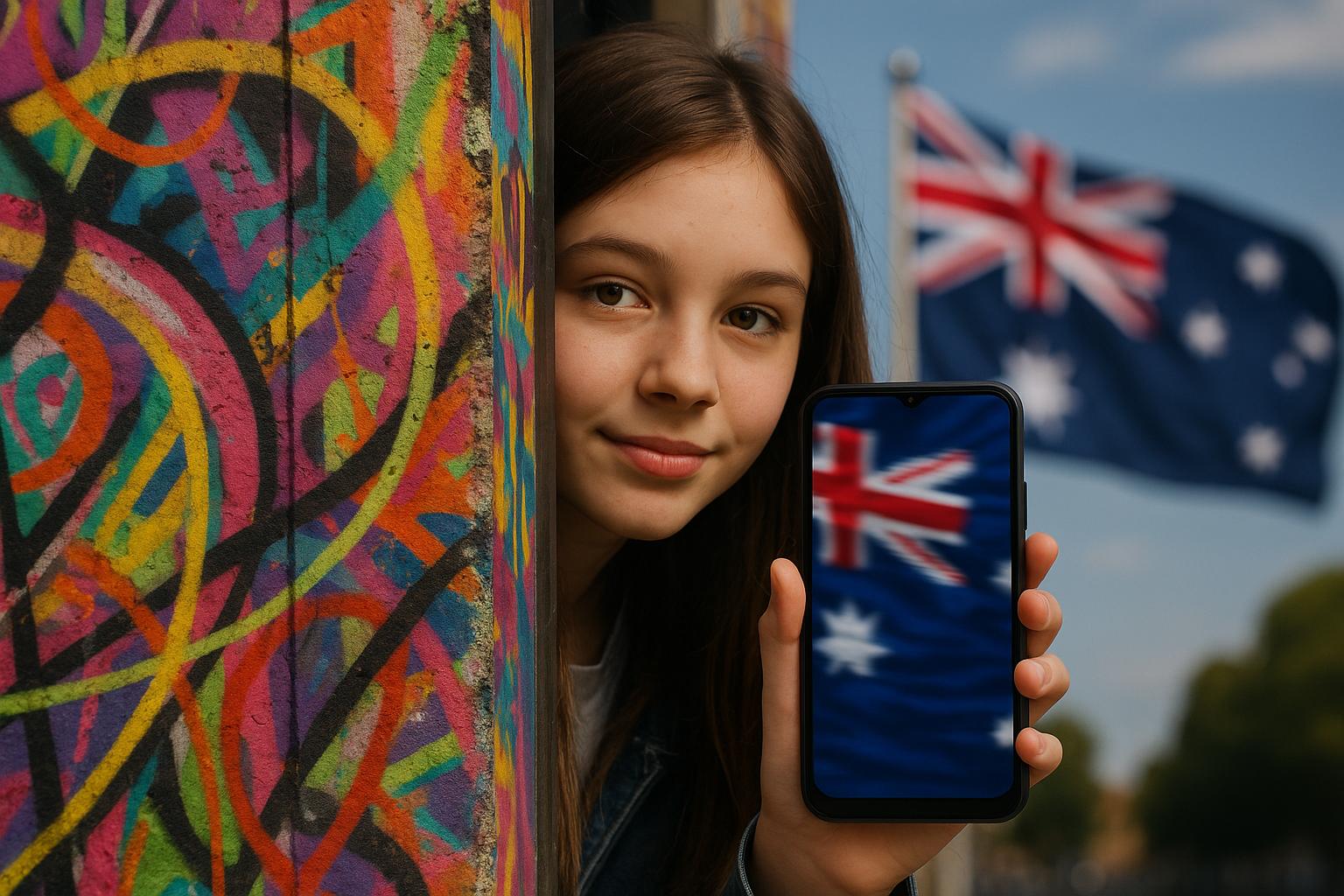
Australia’s world-first ban on social media accounts for under-16s came into force on 10 December 2025, requiring major platforms to remove existing accounts held by younger users and block new registrations. But early signs show how quickly the policy is running into technical and human obstacles.
Children have been able to evade checks within minutes by using parents’ accounts, older siblings, VPNs, fake identities or basic disguises. Thirteen-year-old Isobel told the BBC she bypassed Snapchat’s checks in under five minutes by using a photo of her mother; she said she could still access Snapchat even after being removed from TikTok.
Other young users described uploading non-human images, including one case involving a golden retriever, or sharing adult IDs to satisfy verification prompts. Reddit threads have filled with tips on mesh masks, makeup and other tricks to appear older.
Experts say these gaps are unsurprising. “They may try to alter their appearance to try to trick facial scanning age estimation,” said Lisa Given, professor of information sciences at RMIT University. “Or they may have a sibling, parent or another person over 16 do the facial scan for them to get past the age checks.”
Given added that facial-scanning tools carry an error margin of “one to three years,” making it possible for a 14-year-old to be misclassified as 17.
Tests cited by ABC News show how easily age-estimation systems can be fooled. Inexpensive masks and party disguises, including a $22 old man mask and a Guy Fawkes mask, were enough to mislead commonly used tools. Cyber-safety experts warn that verification prompts could also open the door to scammers who may use prove-your-age ruses to extract sensitive data.
The eSafety Commissioner’s guidance outlines what platforms may demand. Services can use facial analysis, account data or ID documents, but the Social Media Minimum Age legislation forbids forcing Australians to provide a government ID or to use an accredited digital ID service. Platforms must offer reasonable alternatives so people aged 16 or over are not locked out for refusing to supply government ID.
Technical proposals range from IP blacklisting to deeper network inspection and cross-referencing device signals, but all carry trade-offs. Heavy approaches such as deep packet inspection or broad IP blocking risk harming adults’ privacy and legitimate access and can still be bypassed with VPNs. Security specialists warn that younger users may turn to low-quality VPNs that expose them to malware or data theft.
The government casts the ban as a public-health intervention aimed at reducing harms linked to bullying, misinformation and body-image pressure. Prime Minister Anthony Albanese has called it a cultural shift and urged young people to explore offline activities over the summer.
Source: Noah Wire Services
- https://www.ndtv.com/world-news/dog-photos-vpns-fake-ids-how-australian-teens-are-beating-social-media-ban-9784465 – Please view link – unable to able to access data
- https://www.ndtv.com/world-news/dog-photos-vpns-fake-ids-how-australian-teens-are-beating-social-media-ban-9784465 – Australia’s social media ban for under-16s took effect on December 10, 2025, blocking access to major platforms like Facebook, Instagram, TikTok, and YouTube. The law mandates platforms to remove accounts held by users under 16 and prevent new registrations, with fines up to $49.5 million for non-compliance. Despite strict rules, many teens have found workarounds, such as using their parents’ accounts, VPNs, fake IDs, or enlisting older siblings to complete facial verification scans. Experts warn that facial recognition systems have error margins, allowing some underage users to bypass the ban.
- https://www.reuters.com/legal/litigation/australia-social-media-ban-takes-effect-world-first-2025-12-09/ – On December 10, 2025, Australia began enforcing a groundbreaking ban on social media for individuals under 16, making it the first country to implement such legislation. The law mandates that ten major platforms, including TikTok, YouTube, Instagram, and Facebook, block access to minors or face fines up to A$49.5 million (USD $33 million). The move aims to combat mental health harms linked to social media overuse among teens, such as bullying, misinformation, and body image issues. Prime Minister Anthony Albanese hailed it as a major cultural shift and encouraged youth to explore offline activities during the upcoming summer break.
- https://www.abc.net.au/news/2025-12-01/cyber-security-story-scam-warnings-scams/106036670 – The incoming ban on social media for all Australians under the age of 16 may unintentionally create new ways for scammers to target Australians and access their personal data, cyber safety experts warn. The rules, which will come into effect on December 10, will require users to verify their age, potentially giving scammers the perfect cover story to access highly convincing ‘prove your age scams’. The goal of these particular scams is to trick people into clicking malicious links or handing over sensitive information, allowing scammers to commit identity theft.
- https://www.abc.net.au/news/105836134 – Leading facial age estimation tools were easily fooled by a $22 ‘old man’ mask, a Guy Fawkes mask, and other cheap party costumes, researchers have found. From December 10, social media platforms will be forced to block under 16s in Australia from holding accounts, but experts warn age checks can be bypassed, using VPNs, AI, and a range of basic disguises. Facial age estimation tools scan and analyse a person’s face in order to guess their age, and is one of several technologies the ban will depend on.
- https://www.esafety.gov.au/about-us/industry-regulation/social-media-age-restrictions/faqs – The eSafety Commissioner provides guidance on age verification methods for social media platforms, including facial analysis, account data assessment, and potential submission of ID documents. Platforms cannot mandate users to provide official identification. The Social Media Minimum Age legislation prohibits platforms from compelling Australians to provide a government-issued ID or use an Australian Government accredited digital ID service to prove their age. Platforms may offer it as an option but must also offer a reasonable alternative, so no one who is 16 or older is prevented from having a social media account because they choose not to provide government ID.
- https://ondato.com/blog/australia-social-media-ban/ – Australia has implemented a new law aimed at banning social media use for individuals under the age of 16. To enforce this, platforms are expected to curb attempts to bypass the restriction through VPN use. While the eSafety Commission has not provided technical enforcement details, possible methods include IP blacklisting, deep packet inspection (DPI), and cross-referencing IP addresses with GPS data and user histories. However, these methods raise privacy concerns and could unintentionally affect adult users. Despite strong support from parents, many believe that children will still find ways to bypass the ban. VPN use surged in similar international cases, suggesting a likely increase in Australia as well. Yet, tech experts emphasize that simple VPN use may not be enough due to extensive data tracking by platforms. There’s concern that young users may turn to insecure free VPNs, risking data privacy and malware threats.
Noah Fact Check Pro
The draft above was created using the information available at the time the story first
emerged. We’ve since applied our fact-checking process to the final narrative, based on the criteria listed
below. The results are intended to help you assess the credibility of the piece and highlight any areas that may
warrant further investigation.
Freshness check
Score:
10
Notes:
The narrative is fresh, published on 10 December 2025, coinciding with the enforcement of Australia’s social media ban for under-16s. No earlier versions or recycled content were found. The report provides new insights into how teens are circumventing the ban, including using parents’ accounts, VPNs, fake IDs, and alternative verification methods.
Quotes check
Score:
10
Notes:
Direct quotes from individuals, such as 13-year-old Isobel, are unique to this report. No identical quotes were found in earlier material, indicating original content.
Source reliability
Score:
8
Notes:
NDTV is a reputable news organisation. However, the report includes anecdotal accounts from individuals, which are difficult to independently verify. The narrative also references reports from other outlets, such as The Washington Post and the BBC, which adds credibility.
Plausability check
Score:
9
Notes:
The claims about teens circumventing the social media ban using various methods are plausible and align with known challenges in enforcing age restrictions online. The report provides specific examples and expert opinions, enhancing its credibility.
Overall assessment
Verdict (FAIL, OPEN, PASS): PASS
Confidence (LOW, MEDIUM, HIGH): HIGH
Summary:
The narrative is fresh and original, providing unique insights into how Australian teens are circumventing the new social media ban. While some anecdotal accounts are difficult to independently verify, the overall content is plausible and supported by expert opinions, leading to a high confidence in the assessment.


